
Eviction costs average about $3,500 to $10,000 when you combine direct expenses and indirect financial losses. These costs include legal fees, court charges, eviction notices, unpaid rent, property repairs, management expenses, tenant replacement costs, vacancy losses, and lost rental income. Direct costs include court and filing fees of $50 to $500, notice and service fees of $30 to $150+, attorney fees of $500 to $5,000+, and enforcement costs of $50 to $400. Indirect expenses include 1 to 3 months of lost rent and $1,000 to $4,000 in property turnover and repairs, with substantial damage pushing expenses above $5,000.
Tenant challenges, longer proceedings, multiple defendants, service difficulties, legal defenses, appeals, and bankruptcy filings increase costs. Landlords can reduce expenses by resolving violations early, serving correct notices, maintaining records, preventing procedural errors, negotiating voluntary move-outs, and screening tenants before leasing.
How Much Are Court and Filing Fees for an Eviction?
Court and filing fees for a residential eviction commonly range from about $50 to $500. Several factors affect the final amount, including the state, county, local court, and amount being claimed from the tenant. Costs can also vary based on required court procedures, such as filing an eviction complaint, issuing a summons, serving legal documents, or requesting other court actions. Landlords should review the local court’s current fee schedule to calculate expected eviction filing costs before starting the case.
How Much Do Eviction Notice and Service Fees Cost?
Eviction notice preparation and service fees cost about $30 to $150 or more, depending on how the notice is prepared and served. Sheriff or marshal service often costs around $30–$75, while a private process server charges roughly $50–$150, with extra charges possible for rush service or repeated attempts. If an attorney prepares a pre-eviction notice, additional drafting fees may apply. Costs vary significantly by jurisdiction, number of tenants, service method, and how difficult it is to locate the tenant.
How Much Are Attorney and Legal Fees for an Eviction?
Attorney fees for an eviction range from about $500 to $5,000 or more, depending on whether the case is straightforward or contested. A simple uncontested eviction may cost roughly $500–$800 as a flat fee, often covering document preparation, filing assistance, and a court appearance. If the tenant contests the eviction, attorneys may charge about $150–$500+ per hour, bringing total legal fees to several thousand dollars. Court filing, process service, enforcement, and other case expenses are generally separate from attorney fees.
Who Pays Legal Fees in an Eviction?
Landlords and tenants generally pay their own legal fees during an eviction, including attorney costs and related legal expenses. In some cases, the court may require one party to pay the other party’s attorney fees if state law, a lease provision, or a court ruling allows it. Final responsibility depends on who wins the case and the reason for the eviction. Both parties should review the lease terms and local eviction laws before estimating potential legal costs.
How Much Does Eviction Enforcement Cost?
The cost to legally enforce an eviction ranges from about $50 to $400 for direct law enforcement removal, depending on local fees and procedures. The total operational cost of an eviction can average between $3,500 and $10,000 after other expenses are included. These costs can include court and filing fees, legal representation, unpaid or lost rent, and property turnover expenses. The final amount varies by jurisdiction, case complexity, rental property, and the time required to complete the eviction process.
How Much Rent Can a Landlord Lose During an Eviction?
A landlord can lose 1 to 3 months of rental income during an eviction, which may equal roughly $1,000 to $4,000 or more, depending on local rent prices. National Bureau of Economic Research found that evicted tenants owed more than $3,000, equivalent to about 3.5 months of rent, at move-out. The research also found that more than 25% of the rent owed by tenants who were ultimately evicted remained unpaid by the end of the tenancy. Landlords also face separate expenses for court filings, legal representation, eviction enforcement, and property turnover, increasing the total financial impact of an eviction.
How Much Do Property Turnover and Repairs Cost After an Eviction?
Property turnover and repairs after an eviction can cost $1,000 to $4,000, and expenses exceed $5,000+ when substantial damage is involved. Typical costs include $200 to $5,000+ for property-damage repairs, $110 to $350 for apartment cleaning, and $100 to $200 for changing locks, with painting, trash removal, pest treatment, and appliance repairs adding more. The property’s condition at move-out and the extent of required repairs can significantly affect the landlord’s total turnover cost.
What Is the Average Eviction Cost?
The average cost of an eviction ranges from about $3,500 to $10,000, including the full financial impact on a property owner. Total eviction expenses can include attorney fees, court and filing charges, legal document services, eviction enforcement costs, unpaid rent, lost rental income, property repairs, cleaning, and unit turnover expenses.
The final cost depends on several factors, including the eviction timeline, whether the tenant contests the case, local housing regulations, legal complexity, and the condition of the rental property after you recover possession. Uncontested evictions usually remain closer to the lower end of the cost range, while contested cases can increase expenses due to extended court proceedings, additional attorney hours, prolonged vacancies, and delayed rental income.
How Much Does an Eviction Cost in Southern California?
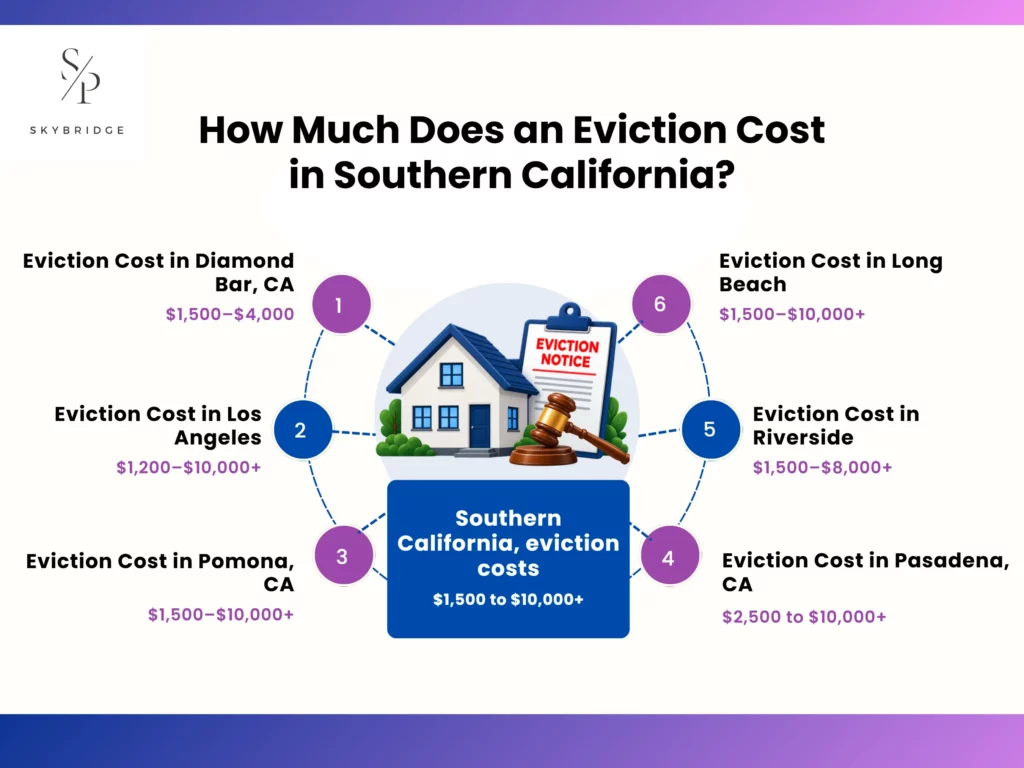
In Southern California, eviction costs range from $1,500 to $10,000+, depending on the city, case complexity, and whether the tenant contests the eviction. Professional eviction support services help landlords manage standard, uncontested cases by coordinating legal representation, handling court filing fees, processing documents, and meeting enforcement requirements. Contested evictions can increase expenses through attorney fees, extended court proceedings, trial-related costs, and additional delays.
Costs vary by location, with Diamond Bar evictions ranging from $1,500 to $4,000+ for uncontested cases and exceeding $10,000 for contested cases. Los Angeles evictions cost range from $1,200 to $10,000+, while Pomona, Pasadena, Riverside, and Long Beach cases can range from $1,500 to $10,000+, depending on legal requirements and case duration.
How Much Does an Eviction Cost in Diamond Bar, CA?
An eviction in Diamond Bar costs about $1,500–$$1,500 to $4,000+ costs between $1,500 and $4,000, including standard legal representation and court-related expenses. If a tenant contests the eviction lawsuit, total costs can exceed $10,000 due to attorney hourly fees, extended legal proceedings, trial-related expenses, and lost rental income during prolonged vacancy periods. The final eviction cost depends on case complexity, legal duration, and property-related losses.
How Much Does an Eviction Cost in Los Angeles?
An eviction in Los Angeles costs between $1,200–$10,000+ or more in total financial impact. The final cost depends heavily on whether the eviction is uncontested or the tenant contests the case in court. Expenses can include legal fees, court costs, lost rent, property repairs, and vacancy losses. Los Angeles Rent Stabilization Ordinance (RSO) requirements and tenant protections can also affect the process, and procedural errors may require a landlord to restart the case, increasing total costs.
How Much Does an Eviction Cost in Pomona, CA?
An eviction in Pomona costs about $1,500–$10,000+, depending on the case’s complexity and duration. An uncontested eviction can remain near the lower end, while a contested case can increase expenses through attorney fees, court filings, and extended proceedings. Landlords can also face costs from lost rental income, sheriff enforcement, property repairs, cleaning, and unit turnover. The final cost depends on the tenant’s response and the steps required to regain possession.
How Much Does an Eviction Cost in Pasadena, CA?
An eviction in Pasadena costs about $2,500 to $10,000+, depending on whether the case is uncontested or contested. Pasadena landlords must also comply with local requirements under the Pasadena Fair & Equitable Housing Charter Amendment (Measure H). Legal or procedural errors often require restarting the eviction process, increasing both the timeline and total cost.
How Much Does an Eviction Cost in Riverside?
An eviction in Riverside costs between$1,500–$8,000+, including direct legal and court expenses. An uncontested eviction generally stays toward the lower end of this range, while tenant disputes and extended court proceedings increase the total expense. Costs include attorney services, court filing fees, document processing, and enforcement fees. Lost rental income, property repairs, cleaning, and unit turnover also increase the overall financial impact of an eviction.
How Much Does an Eviction Cost in Long Beach?
An eviction in Long Beach costs $1,500–$10,000+ for standard legal processing. Attorney representation, court filing charges, document service, and enforcement account for many of the direct expenses. Costs rise when a tenant contests the case or court proceedings take longer to resolve. Unpaid rent, cleaning, property damage repairs, and preparing the unit for a new tenant further increase the landlord’s overall eviction expenses.
What Factors Affect Eviction Cost?
Factors that affect eviction costs include tenant disputes, the length and complexity of the eviction process, the number of tenants or defendants, difficulty serving the tenant, the amount of money claimed, tenant motions or legal defenses, appeals, and bankruptcy filings. Each component affects the amount of legal work, court involvement, and time required to complete the eviction.
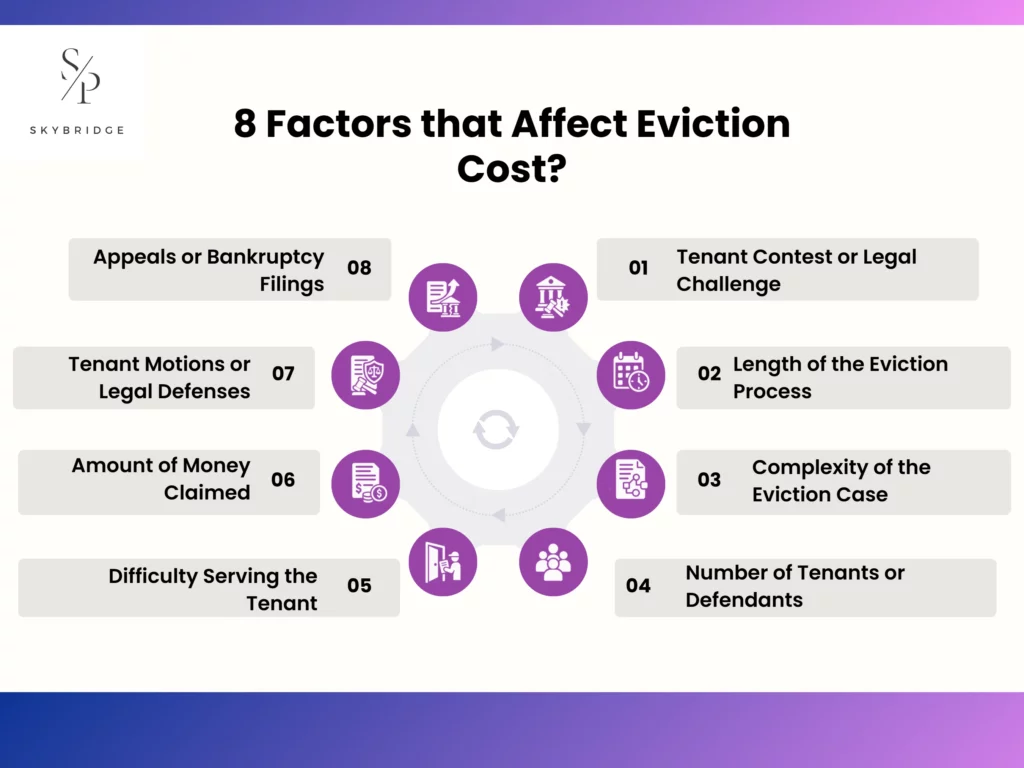
8 factors that affect eviction cost are:
1. Tenant Contest or Legal Challenge
A tenant contesting an eviction increases the amount of legal work required to resolve the case. Attorney preparation, written responses, evidence review, hearings, and court appearances all increase expenses. A straightforward eviction could cost $1,000 to $2,500, while a contested case could reach $5,000 to $10,000+, depending on attorney rates, legal issues, and the number of hearings required.
2. Length of the Eviction Process
Eviction cases lasting several months could add $1,000 to $5,000+ in legal expenses, unpaid rent, and other property-related costs. Longer eviction timelines increase attorney fees and rental income losses. Court schedules, hearings, continuances, and tenant responses can extend the proceedings, requiring landlords to cover ongoing property expenses while waiting to regain possession.
3. Complexity of the Eviction Case
Complex eviction cases can increase total eviction expenses by $1,500 to $5,000+ due to increased legal work and court involvement. Disputed lease terms, rent-control requirements, habitability claims, and multiple legal issues require more research, documentation, evidence review, and attorney preparation. Greater case complexity often results in higher legal fees and longer proceedings, increasing the landlord’s overall eviction cost.
4. Number of Tenants or Defendants
An eviction involving multiple tenants or defendants requires more paperwork and service than a case involving one tenant. Each additional defendant could require separate notices, copies of court documents, service attempts, and case preparation. These requirements could add about $50 to $500+ in service and processing expenses, depending on the number of defendants and local court procedures.
5. Difficulty Serving the Tenant
Landlords must properly serve required eviction documents before the case proceeds. Costs increase when a tenant is difficult to locate, avoids service, or requires repeated delivery attempts. Process-server fees and related service expenses could range from $50 to $500+. The final cost depends on the service method, number of attempts, the tenant’s location, and any alternative service procedures required by the court.
6. Amount of Money Claimed
The amount of money claimed can affect filing costs, which generally range from about $50 to $500. Claims involving higher amounts of unpaid rent or other recoverable charges can fall under different court fee structures or filing requirements. The exact expense varies by the claim amount, state, county, and court where the eviction lawsuit is filed.
7. Tenant Motions or Legal Defenses
Tenant motions and legal defenses increase the issues attorneys and courts must address before an eviction is resolved. Motions, hearings, evidence disputes, discovery, and other legal responses require additional preparation and attorney hours. These legal steps can add $500 to $5,000+ to the case, depending on the defenses raised, the number of hearings, attorney rates, and the time required for resolution.
8. Appeals or Bankruptcy Filings
Appeals or bankruptcy filings can increase eviction expenses by $2,000 to $10,000+ through additional legal fees, lost rental income, and extended proceedings. These filings can delay an eviction and introduce separate legal procedures. Landlords often require additional attorney services to address an appeal or seek relief from a bankruptcy stay before recovering possession.
How Can Landlords Reduce Eviction Costs?
Landlords can reduce eviction costs by preventing filing errors, maintaining accurate records, resolving tenant violations early, negotiating voluntary move-outs, and conducting thorough tenant screening. These proactive steps help minimize legal disputes, court delays, attorney expenses, and lost rental income. Working with an eviction support service can also help landlords follow proper procedures, prepare required documentation, and avoid costly mistakes that may extend the eviction timeline.
6 key ways landlords can reduce eviction costs are:
- Resolve Lease Violations Before Filing: Contact the tenant about unpaid rent, unauthorized occupants, or other lease violations before starting an eviction. When applicable, give the tenant a reasonable opportunity to correct the violation, and document every communication.
- Serve the Correct Eviction Notice: Use the eviction notice required for the specific lease violation and jurisdiction. Verify the notice period, required language, delivery method, and service date before proceeding with the eviction case.
- Avoid Filing and Procedural Errors: Review all eviction forms, deadlines, service requirements, and court procedures before filing. Correct paperwork and timely submissions help prevent dismissals, delays, and the expense of restarting the eviction process.
- Keep Complete Lease and Payment Records: Maintain signed leases, payment histories, notices, tenant communications, inspection records, and other relevant documents. Organized records provide clear evidence and reduce the time required to prepare an eviction case.
- Negotiate a Voluntary Move-Out Agreement: Discuss a written voluntary move-out agreement with the tenant when it provides a practical alternative to court proceedings. Clearly document the move-out date, payment terms, property condition requirements, and other agreed terms.
- Screen Tenants Before Leasing: Verify an applicant’s rental history, income, references, and other legally permitted screening information before approving a lease. Consistent tenant screening helps identify applicants who meet the property’s established rental criteria.