
Rental property maintenance costs range from 1% to 4% of gross rental income, or $500 to $3,000 per unit annually, depending on property age, size, type, location, climate, tenant usage, and material quality. Common expenses include HVAC ($75–$2,000+), plumbing and electrical ($100–$600), roof and gutter maintenance ($100–$1,500), structural repairs ($300–$2,000 for minor work, $15,000+ for major), appliances ($100–$500), flooring ($300–$2,000), cleaning ($120–$280 per visit), painting ($2–$6 interior, $1.50–$4 exterior), pest control ($100–$600), and landscaping ($100–$500 per visit or $1,500–$4,000 annually).
To manage these expenses effectively, landlords often use guidelines like the 1% Rule, 50% Rule, or Square Footage Rule for budgeting. Maintenance costs vary based on property condition, tenant behavior, turnover rates, HOA coverage, and material quality, so planning ahead is key. Investing in preventive maintenance, durable materials, and reliable contractors or property managers helps control costs, extend system lifespan, and preserve long-term property value.
What Is the Average Rental Property Maintenance Cost?
The average rental property maintenance cost ranges from 1%–4% of gross rental income, or about $500–$3,000 per unit annually. Landlords often follow the 1% rule by setting aside roughly 1% of the property’s value each year for upkeep, or estimate costs at around $1 per square foot annually. Factors like square footage, property type, location, and climate directly influence how often maintenance is required and how quickly systems wear out.
Larger single-family homes incur higher costs because they include multiple systems such as HVAC, plumbing, roofing, and landscaping, while multi-unit buildings distribute these expenses across tenants to reduce per-unit costs. Older properties require more frequent repairs, while well-maintained or recently renovated homes rely on preventive maintenance and durable materials to minimise unexpected issues and lower long-term expenses.
How Much Do Common Rental Property Maintenance Services Cost?
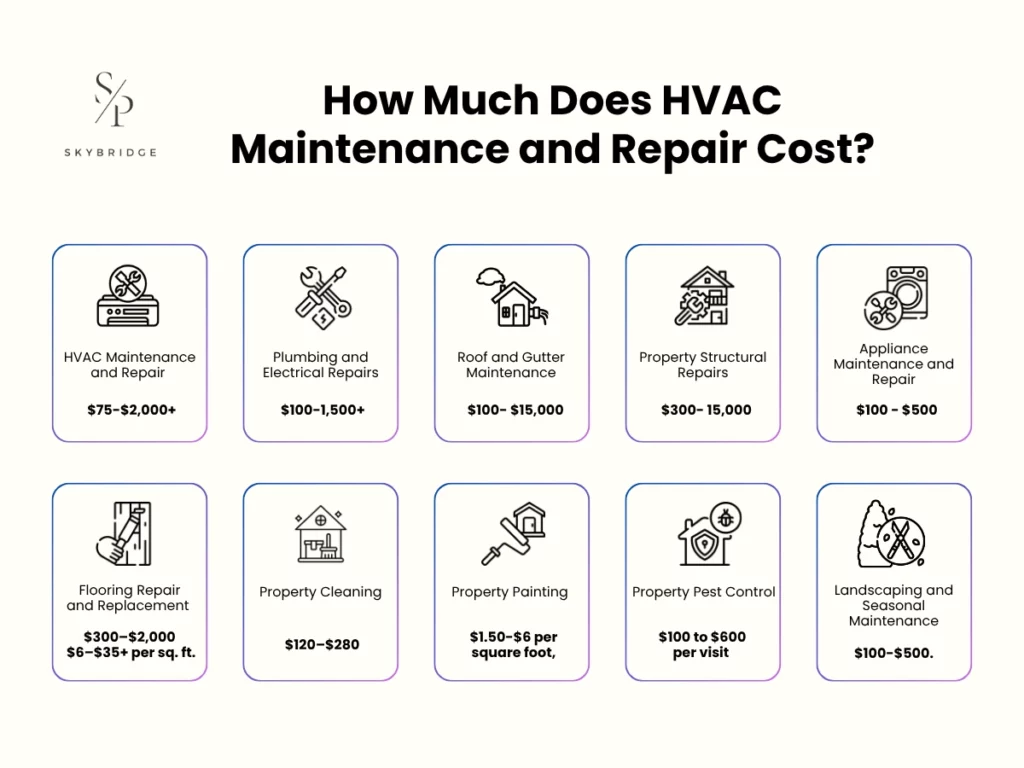
Common rental property maintenance service costs $75–$150 for HVAC, $100–$300 for plumbing and electrical work, and $100–$1,500 for roof and gutter maintenance, while structural repairs range from $300 to $2,000, appliance repairs from $100 to $500, and flooring repairs from $3 to $40 per sq. ft.
Additional expenses include cleaning ($120–$750+), painting ($2–$6 per sq. ft. for interior and $1.50–$4 per sq. ft. for exterior), pest control ($100–$600 per visit), and landscaping ($1,500–$4,000 annually).
How Much Does HVAC Maintenance and Repair Cost?
HVAC maintenance costs $75–$150, while repairs range from $500–$2,000+, depending on the system’s condition and complexity. Costs increase when major components such as compressors or motors need replacement and vary based on labor rates, technician expertise, material costs, emergency service fees, system age, and location.
Regular HVAC maintenance helps property owners maintain system efficiency and avoid costly issues over time. Scheduled inspections, timely filter replacements, and early repairs reduce emergency service needs while extending the system’s lifespan. This proactive approach helps landlords control maintenance costs and maintain stable rental income.
How Much Do Plumbing and Electrical Repairs Cost?
Plumbing repair costs range from $100 to $1,500, while electrical repairs range from $100 to $600 or more. Small plumbing repairs cost $100–$300, while major issues can exceed $1,500. Electrical costs vary based on the complexity of the job. Costs increase when problems such as pipe leaks, wiring faults, or panel upgrades require skilled contractors, and pricing is influenced by labor rates, expertise, materials, emergency fees, system age, and location.
Routine inspections of plumbing systems and electrical systems help property owners detect early signs of wear and prevent unexpected emergencies. Property managers should promptly address minor leaks, faulty outlets, and outdated wiring, as early repairs reduce costly maintenance and improve system reliability in rental properties.
How Much Does Roof and Gutter Maintenance Cost?
Roof maintenance costs range from $300 to $15,000+, while gutter maintenance costs range from $100 to $300. Minor roof repairs fall between $300–$1,500, while full replacements can exceed $15,000, and gutter cleaning costs $100–$300 depending on condition. Costs increase with material deterioration or structural damage, and vary based on factors such as roof size, height, complexity, location, labor rates, weather exposure, debris buildup, and seasonal conditions.
Preventive roof and gutter maintenance helps property owners prevent water damage, protect structural components, and reduce costly maintenance over time. They should schedule periodic inspections, clear debris from gutters, and promptly repair minor roof damage to maintain the property’s condition and control long-term maintenance costs.
How Much Do Property Structural Repairs Cost?
Property structural repair costs range from $3,000 to $15,000+, depending on the extent of damage and repair requirements. Minor repairs like crack sealing cost $300 to $1,000, moderate work such as slab leveling ranges from $500 to $2,000, and major repairs like piering or wall stabilization can exceed $15,000. Foundation repairs cost $2,200 to $8,600, while engineering inspections range from $100 to $250 per hour, with final costs influenced by damage severity, foundation type, repair method, property size, accessibility, location, soil conditions, and project complexity.
Timely structural maintenance helps property owners protect building integrity and prevent major repairs and replacements over time. Property managers should schedule inspections, address early signs such as cracks or uneven floors, and choose appropriate repair methods to reduce costly maintenance and maintain long-term property value.
How Much Does Appliance Maintenance and Repair Cost?
Average appliance repair costs in rental properties range from $100 to $1,000+, depending on the appliance type, its age, the nature of the repair, and the price of parts and labor.
Typical repair costs by appliance:
- Washing machines: $100 to $500
- Refrigerators: $150 to $600 (major sealed-system repairs can exceed $1,000)
- Microwaves: $200 to $350
- Dishwashers and dryers: $175 to $450
- Water heaters and garbage disposals: Higher when major components fail
Regular maintenance helps property owners minimize unexpected breakdowns and extend the lifespan of appliances. Landlords should inspect appliances during tenant turnover, address minor issues early, and replace aging units when repairs become frequent to maintain efficiency and control long-term expenses.
How Much Does Flooring Repair and Replacement Cost?
Flooring repair costs range from $3 to $40 per sq. ft., whereas replacement costs range from $7 to $35 per sq. ft., depending on flooring type, labor, and disposal requirements. Overall costs are also influenced by material type, project size, extent of damage, and room layout.
Repair and replacement costs vary based on flooring type:
- Vinyl/LVP: Repairs $3–$7, Replacement $7–$16 per sq. ft.
- Laminate: Repairs $4–$9, Replacement $6–$14 per sq. ft.
- Hardwood: Repairs $10–$22, Replacement $10–$22 per sq. ft.
- Tile: Repairs $15–$40, Replacement $12–$35 per sq. ft.
Regular inspections, prompt repairs, and the choice of durable flooring help landlords reduce long-term maintenance expenses. Proper upkeep extends the lifespan of flooring, maintains property aesthetics, and reduces costly replacements, supporting consistent rental property value and tenant satisfaction.
How Much Does Property Cleaning Cost?
Property cleaning costs range from $120 to $280 per standard visit, depending on property size and cleaning depth, with hourly rates of $50–$90 per cleaner for agencies and $30–$55 for independent cleaners.
Flat-fee packages cost:
- One-bedroom apartment: $120–$250
- Four-bedroom home: $350–$550
- Deep cleaning or neglected properties: 50–100% higher than standard rates
- Move-out cleaning for deposit preparation: $250–$750+, including scrubbing ovens, refrigerators, and cabinets
Additional costs may apply for add-on services, such as carpet steam cleaning ($75–$200) or interior window washing ($5–$12 per pane). Scheduling regular weekly or biweekly visits helps maintain the property’s condition, reduce long-term expenses, and speed up each session. Consistent cleaning also improves tenant satisfaction and protects property value by preventing buildup that could lead to costly repairs.
How Much Does Property Painting Cost?
Interior painting costs start at $2–$6 per square foot, and exterior painting ranges from $1.50–$4 per square foot for rental properties, with total costs depending on property size, scope, wall condition, paint type, number of coats, design complexity, labor rates, and project type.
- Smaller projects (bedrooms or bathrooms): $200–$1,000
- Full-home interiors: $3,750–$7,500+
- Full exterior painting: $2,800–$10,500+
- National average for interiors: $2,000–$3,200
Regular painting helps property owners protect surfaces, prevent damage, and maintain property appearance. Landlords should inspect painted surfaces during tenant turnover, use durable finishes, and schedule repainting before visible deterioration to reduce long-term maintenance costs and preserve rental property value.
How Much Does Property Pest Control Cost?
Property pest control costs range from $100 to $600 per visit, averaging $170–$180. The monthly service charge for pest control is $40–$75, and quarterly visits cost $100–$300. Treatments for common pests like ants, spiders, or wasps run $200–$500, while rodents start around $300. Severe infestations, such as termites or bed bugs, may cost $1,000–$5,000+, depending on property size, pest type, and treatment frequency.
Regular pest control helps property owners maintain safe living conditions and prevent structural damage. Landlords should schedule routine treatments, address early signs of infestation, and use preventive measures to reduce long-term maintenance costs and protect the rental property’s value.
How Much Does Property Landscaping and Seasonal Maintenance Cost?
Routine landscaping and seasonal maintenance visits cost $100 to $500, while annual maintenance averages $1,500 to $4,000. Full-service visits, including mowing, pruning, and fertilization, cost $200 to $450. Larger properties or high-frequency plans can cost $12,000+, with per-acre pricing of $800-$1,600 per month for extensive grounds. These maintenance costs vary based on property size, design complexity, plant selection and materials, labor rates, location, climate, service frequency, and machine work or land moving requirements.
Regular landscaping maintenance helps property owners maintain exterior condition, prevent overgrowth, and support long-term property value. Rental property owners should schedule seasonal services, manage plant health, and use efficient maintenance plans to reduce costly upkeep and maintain consistent rental income.
How to Estimate the Rental Property Maintenance Costs?
To estimate the rental property maintenance costs, the 50% Rule, the 1% Rule, the Square Footage Rule, and the 1.5x Rule are commonly used. These methods align property value, rental income, or square footage with annual maintenance expenses, helping property owners calculate predictable budgets, plan for repairs, and manage operating costs effectively.
The 4 Key methods used to calculate rental property maintenance expenses are:
- The 50 percent rule
About 50% of the rent a property earns usually goes toward covering expenses such as maintenance, repairs, property taxes, insurance, and management fees. This method helps property owners evaluate overall profitability and expense distribution.
If a property generates $2,000 per month ($24,000 annually), approximately $12,000 is allocated to expenses, including maintenance tasks like repairs, cleaning, and system servicing. This rule provides a high-level estimate, helping investors determine whether rental income supports ongoing property upkeep and maintains cash flow stability. - The 1 percent rule
The 1% Rule estimates that each year, about 1% of the property’s value should be set aside for maintenance and repairs. This approach helps landlords align expenses with asset value and long-term wear and tear, giving a quick way to anticipate repair costs.
For a property valued at $400,000, about $4,000 per year would be allocated to routine maintenance, including HVAC servicing, plumbing repairs, and general upkeep. This rule works best for properties in average condition, while older properties may require higher allocations due to more frequent repairs. - The square footage rule
Maintenance costs can also be estimated at roughly $1 per square foot annually. This method directly connects property size to maintenance needs, making it useful when comparing multiple rental properties.
For example, a 2,000 sq. ft. property would require about $2,000 per year for routine maintenance, covering flooring repairs, painting, minor structural fixes, and general upkeep. Larger properties increase costs due to greater material use, labor, and broader system coverage, including HVAC and electrical systems. - The 1.5x Rule
Another method estimates yearly maintenance costs at 1.5 times the monthly rent, or roughly 5% of gross rental income, known as the 1.5x Rule. This links maintenance budgeting directly to rental income performance.
For instance, if the monthly rent is $1,500, the annual maintenance budget would be about $2,250. This allocation covers routine maintenance, unexpected repairs, and preventive services such as pest control, landscaping, and general upkeep. The rule is effective for income-focused investors who want maintenance costs to scale with rental income and preserve profit margins.
What Factors Influence Rental Property Maintenance Costs?
Rental property maintenance costs depend on property age and condition, location and climate, size, housing type, HOA coverage, tenant usage, and material durability. Older properties, harsh climates, and frequent tenant turnover increase wear on systems such as HVAC, plumbing, and roofing, leading to greater repair needs. Larger or multi-unit properties require more labor and materials, while durable materials reduce long-term costs and lower the frequency of repairs.
- Age and Condition of Property
Older properties increase maintenance costs due to higher wear and tear on systems and structures. Aging HVAC systems, outdated plumbing systems, and deteriorating roofing require frequent repairs and replacements.
A 25-year-old property may require $3,000 to $6,000 annually for repairs, while a newly renovated property may require less than $1,500 annually due to fewer system failures. - Location & Climate
Environmental factors such as location and climate play a major role in property maintenance costs, exposing buildings to different types of wear and stress. Coastal areas can increase corrosion and roofing damage, while cold climates raise heating system usage and the risk of frozen pipes.
Properties in California may require frequent roof maintenance due to sun exposure, while properties in Minnesota face higher plumbing and HVAC costs due to freezing temperatures. - Property Size
Larger properties increase maintenance costs because they require more materials, labor, and system coverage. More square footage increases expenses for cleaning, flooring, painting, and landscaping.
For example, a 3,000 sq. ft. property may require twice the maintenance budget of a 1,500 sq. ft. property due to greater service needs. - Property Type
Maintenance needs and cost allocation differ by property type. Single-family homes require full maintenance coverage, while condos may share costs through HOA fees. Multi-family properties increase maintenance due to shared systems and higher usage.
An apartment building requires frequent plumbing and electrical repairs due to multiple tenants using shared systems. - HOA Rules & Coverage Scope
HOA coverage affects how maintenance costs are divided between property owners and associations. Some HOAs cover exterior maintenance, roofing, and landscaping, while others limit coverage to common areas.
A condo HOA that covers roofing reduces owner expenses, while limited coverage increases individual maintenance costs. - Tenant Behavior and Turnover Rate
The way tenants treat a property affects its condition, and high turnover leads to more frequent maintenance. Frequent tenant changes require repeated cleaning, painting, and minor repairs.
A rental with yearly tenant turnover may need paint, carpet cleaning, and minor repairs each year, while long-term leases need updates less often. - Quality of Material
Material quality affects durability and long-term maintenance costs. Low-quality materials reduce upfront costs but increase repair frequency, while high-quality materials reduce long-term expenses.For example, laminate countertops require more frequent replacement than granite surfaces, increasing maintenance costs over time.
Is Rental Property Maintenance Cost Worth It?
Yes, rental property maintenance costs are worth it because regular upkeep extends the lifespan of systems and prevents costly emergency repairs. Well-maintained properties retain and increase in value while supporting stable rental income. Timely maintenance also improves tenant satisfaction and reduces turnover-related costs.
- Increases Lifespan of Systems: Regular maintenance extends the lifespan of systems such as HVAC, plumbing, and appliances, reducing early replacement costs.
- Enhances ROI: Consistent upkeep maintains rental income and reduces vacancy risk, improving overall return on investment.
- Reduces Emergency Repairs: Preventive maintenance lowers the risk of costly emergency repairs by addressing issues early.
- Increases Property Value: Well-maintained properties retain and increase market value by preserving structural and functional condition.
- Enhances Tenant Satisfaction: Timely maintenance improves living conditions, increasing tenant retention and reducing turnover-related costs.
How to Reduce the Rental Property Maintenance Costs?
To reduce rental property maintenance costs, conduct regular inspections and follow a preventive maintenance schedule, including HVAC checkups and gutter cleaning, to address issues early. Encourage responsible tenant use, invest in durable and energy-efficient upgrades, and work with reliable contractors or property managers to control long-term expenses.
- Regular Inspections
Routine inspections reduce rental property maintenance costs by catching minor issues early, such as leaks, cracks, or appliance problems, before they turn into expensive repairs. Early detection lowers emergency repair expenses, prevents major structural damage, and extends the lifespan of systems and materials. This proactive approach minimizes long-term maintenance costs and protects consistent rental income. - Tenant Maintenance Guidelines
Providing tenants with clear maintenance guidelines directly reduces rental property costs by encouraging proper use and care of appliances, plumbing, and HVAC systems. Well-informed tenants are less likely to cause damage, helping to prevent costly emergency repairs, minimize wear and tear, and extend the lifespan of property components. - Invest in Energy-Efficient Upgrades
Upgrading to energy-efficient systems, appliances, and fixtures helps lower maintenance costs over time. These systems place less strain on plumbing, HVAC, and electrical components, reducing breakdowns and repair frequency. Additionally, energy-efficient upgrades improve tenant satisfaction and retention, which indirectly lowers turnover-related maintenance expenses. - Invest in Preventive Maintenance
Routine preventive maintenance reduces long-term costs by addressing small issues before they become major problems. Regular servicing of HVAC, plumbing, roofing, and electrical systems ensures efficient operation, prevents emergency repairs, and extends the lifespan of property components, ultimately protecting property value and reducing unplanned expenses. - Use Durable, Low-Maintenance Materials
Selecting high-quality, durable, and low-maintenance materials, such as long-lasting flooring, impact-resistant paint, and sturdy fixtures, reduces the need for frequent replacements and labor costs. These materials withstand daily wear and tear, minimize the need for minor repairs, and preserve the property’s appearance and functionality for longer periods. - Build Reliable Contractor Relationships
Establishing strong relationships with reliable contractors lowers maintenance costs by ensuring prompt, professional service at competitive rates. Trusted contractors can quickly identify potential issues, provide expert guidance, and complete high-quality repairs that prevent recurring problems, saving property owners time and money. - Find a Trustworthy Property Management Service Provider
A competent property management company helps reduce costs by coordinating property maintenance services, scheduling preventive care, and enforcing tenant responsibilities. They ensure repairs are done right the first time, minimize emergency calls, and manage vendor relationships, ensuring consistent quality across all property maintenance services and lowering long-term upkeep expenses. - Quality Repairs Instead of Temporary Fixes
Performing thorough, permanent repairs rather than temporary solutions minimizes recurring labor and material costs. Investing in quality repairs protects property value, prevents recurring damage, ensures tenant satisfaction, and reduces overall maintenance expenses over time.It also helps maintain a safer, more reliable living environment, reducing landlords’ liability risks.