Imagine handling an urgent maintenance repair that exceeds your budget while a tenant submits a move-out notice due to a delayed response, all while tracking overdue rent across multiple properties. This scenario reflects common property management challenges, in which rising costs, tenant turnover, and operational inefficiencies combine to reduce net operating income (NOI) and increase daily pressure. When processes such as maintenance tracking, rent collection, and compliance rely on manual systems, delays and errors accumulate, leading to service gaps, dissatisfied tenants, and unstable cash flow across the portfolio.
Without structured systems in place, these overlapping challenges make it difficult to maintain consistency, control costs, and scale operations effectively. As operational tasks increase across properties, coordination gaps widen, response times slow, and financial performance becomes harder to manage, putting long-term property stability at risk.
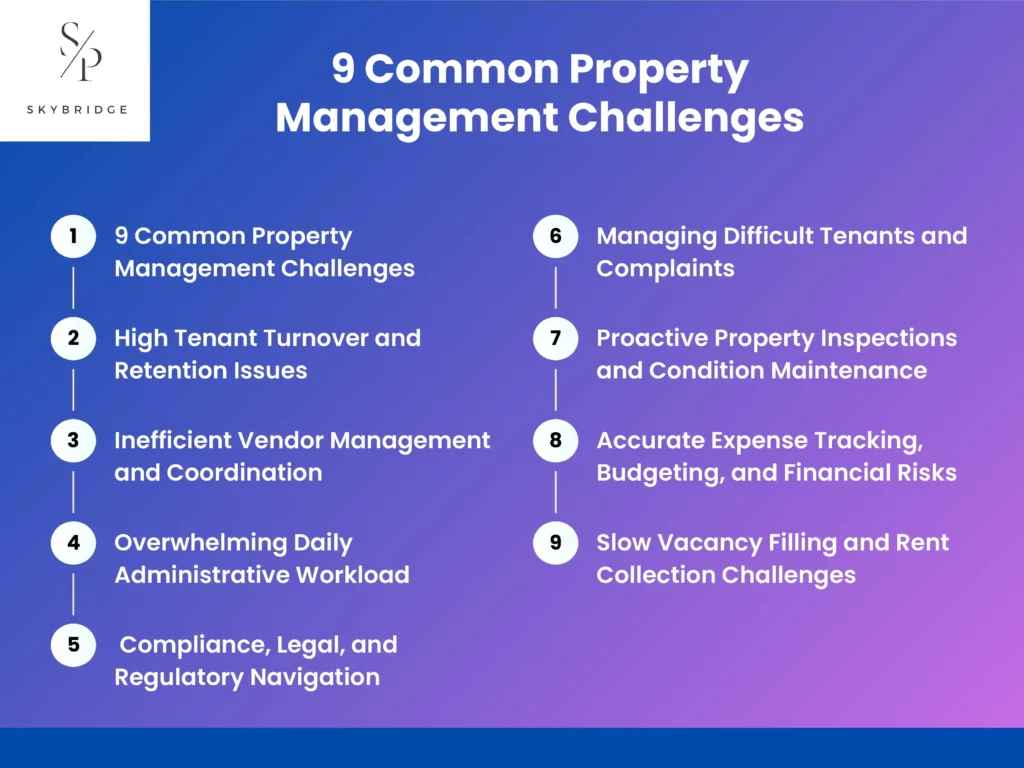
9 Key Property Management Challenges are:
- Rising Maintenance and Repair Costs: Controls repair expenses and protects NOI by using proactive maintenance, timely repairs, and accurate cost tracking.
- High Tenant Turnover and Retention Issues: Reduce vacancies and stabilize income by improving tenant satisfaction through maintenance, communication, and retention strategies.
- Inefficient Vendor Management and Coordination: Improves service quality and cost control by using structured vendor systems and verified contractor networks.
- Overwhelming Daily Administrative Workload: Enhances efficiency and reduces errors by automating tasks and centralizing property management operations.
- Compliance, Legal, and Regulatory Navigation: Minimizes legal risks and ensures compliance by tracking regulations, maintaining documentation, and using automated systems.
- Managing Difficult Tenants and Complaints: Maintains tenant relations and stability by using structured communication, documentation, and enforcement processes.
- Proactive Property Inspections and Condition Maintenance: Prevents costly repairs and maintains property value through regular inspections and early issue detection.
- Accurate Expense Tracking, Budgeting, and Financial Risks: Strengthens financial control and profitability by ensuring accurate tracking, budgeting, and risk planning.
- Slow Vacancy Filling and Rent Collection Challenges: Improve cash flow and occupancy by optimizing marketing efforts and implementing efficient rent-collection systems.
1. Rising Maintenance and Repair Costs
Rising maintenance and repair costs create financial pressure and operational strain, as property managers must handle frequent repair requests while maintaining compliance with habitability laws. Issues such as plumbing failures, HVAC breakdowns, and electrical faults must be resolved under California Civil Code § 1941.1, which enforces the Warranty of Habitability. As properties age, systems like roofing and plumbing require more frequent repairs, while rising material costs further increase expenses. Delayed responses increase repair costs and lead to tenant dissatisfaction, complaints, and potential move-outs, which directly affect occupancy and revenue stability.
If repairs are not completed within a reasonable timeframe under California Civil Code § 1942, tenants may use the “repair and deduct” remedy, which can result in higher, unplanned costs that disrupt budgets. At the same time, California Civil Code § 1929 holds tenants responsible for damage caused by negligence. Managing these challenges requires proactive maintenance, timely repairs, and accurate expense tracking to maintain cost control and long-term profitability.
2. High Tenant Turnover and Retention Issues
Frequent tenant move-outs and low retention rates create recurring vacancies, increase re-letting costs, and directly reduce rental income in property management. This issue often arises when tenants face rent increases, delayed maintenance, poor communication, or dissatisfaction with the location and amenities. Under the Tenant Protection Act (AB 1482 / Civil Code § 1947.12), rent increases are capped and evictions require just cause, which limits flexibility and slows and reduces the profitability of tenant replacement. As tenants leave, each vacancy triggers inspections, repairs, and listings on platforms like Zillow, adding time and cost, while vacant units continue to incur expenses that weaken cash flow and overall property performance.
Improving tenant retention stabilizes occupancy, reduces recurring costs, and supports predictable financial outcomes. Consistent maintenance, clear lease communication, and timely issue resolution improve tenant satisfaction and encourage renewals, helping maintain steady income and reducing ongoing vacancy-related losses.
3. Inefficient Vendor Management and Coordination
Handling multiple vendors without a structured coordination system often leads to scattered spending, inconsistent maintenance quality, and weakened tenant relationships in property management. This challenge arises when operations rely on manual processes and unverified contractors, which slow response times and create service gaps. As scheduling becomes disorganized, maintenance requests, such as plumbing or electrical repairs, face delays, and service quality varies among vendors. This inconsistency disrupts daily property operations and gradually affects tenant satisfaction, especially when issues remain unresolved or require repeated follow-ups.
As these coordination gaps grow, they begin to impact both cost control and service reliability across properties. Without standardized agreements or vetted vendor networks, pricing becomes unpredictable, and accountability remains limited. This issue becomes more complex across multiple locations, where maintaining consistent service standards is difficult. Missed schedules, repeated coordination efforts, and inefficient maintenance workflows increase operating costs over time, making vendor management a critical factor in maintaining efficient and stable property operations.
4. Overwhelming Daily Administrative Workload
Handling lease management, rent collection, tenant communication, and compliance tracking at scale creates a heavy administrative burden, slowing operations and increasing the risk of errors in property management. As property portfolios grow, these responsibilities overlap throughout the day, forcing constant shifts between accounting updates, tenant queries, and legal documentation. When teams rely on manual systems such as spreadsheets or email threads, data inconsistencies emerge, rent entries get delayed, and compliance records become difficult to manage. This ongoing workload reduces response speed and limits overall operational efficiency.
Without a structured system in place, this workload gradually leads to gaps in financial tracking, delayed responses, and increased compliance risks. Missed lease updates, incomplete records, and slow communication can create tenant dissatisfaction and reporting errors. To manage this more effectively, property managers can implement centralized property management software that automates rent reminders, tracks lease data, and organizes compliance records in real time, improving workflow efficiency and operational control.
5. Compliance, Legal, and Regulatory Navigation
Legal and regulatory compliance in property management involves navigating overlapping local, state, and federal laws, creating constant operational pressure and increasing the risk of costly errors across multiple properties. Property managers must handle lease disclosures, tenant rights, safety standards, and eviction rules simultaneously, where even minor mistakes can lead to disputes, delayed actions, or financial loss. Understanding landlord responsibilities helps property owners stay informed and avoid common compliance mistakes that can lead to penalties or legal disputes. Under Civil Code § 1962, accurate lease disclosures are mandatory, and failure to comply with these rules can prevent eviction for unpaid rent, which directly impacts cash flow and operational control.
As these requirements expand, ongoing legal updates add further complexity, making manual tracking difficult and error-prone. Under Civil Code § 1946.2 and § 1954, strict rules govern eviction procedures and property access, where missed notices or incomplete documentation can trigger legal challenges. To manage this effectively, property managers must use centralized systems that track updates, automate alerts, and maintain accurate records, thereby ensuring timely compliance, reducing legal risk, and supporting stable property operations.
6. Managing Difficult Tenants and Complaints
Managing difficult tenants and complaints creates both operational and legal challenges, as unresolved issues such as noise disturbances, lease violations, and repeated complaints can affect tenant satisfaction and disrupt the overall living environment. Under Civil Code § 1927, the Covenant of Quiet Enjoyment requires property managers to ensure tenants can live without disturbance. If a property manager fails to address persistent noise or disruptive behavior, they risk claims of constructive eviction, as inaction can render the property uninhabitable for neighboring tenants, which affects retention and the property’s reputation.
For more common issues such as noise or unauthorized occupants, the Tenant Protection Act (Civil Code § 1946.2) requires a structured approach, starting with a 3-Day Notice to Perform Covenant or Quit. Combining timely communication, documented complaints, and consistent enforcement helps resolve issues early and prevent escalation. This approach improves tenant relations, stabilizes occupancy, and maintains a compliant and balanced property environment.
7. Proactive Property Inspections and Condition Maintenance
Proactive property inspections and condition maintenance help property managers detect early issues, reduce emergency repair costs, and preserve long-term property value. Regular checks of systems such as plumbing, HVAC, roofing, and electrical components allow managers to identify minor problems before they escalate. For example, a small leak, if ignored, can lead to structural damage and higher repair expenses. By addressing issues at an early stage, property managers reduce the frequency of maintenance requests, which directly improves tenant satisfaction and lowers complaint frequency.
Building on this approach, structured inspection schedules and preventive maintenance planning ensure consistent property performance and risk control. Monthly or quarterly inspections, along with seasonal checks such as HVAC servicing before peak usage, help prioritize repairs based on urgency. Using maintenance checklists and tracking repair history improves accuracy and accountability while reducing reliance on reactive fixes. This connected system keeps properties safe, functional, and well-maintained while controlling long-term operating costs.
8. Accurate Expense Tracking, Budgeting, and Financial Risks
Accurate expense tracking, budgeting, and financial management create ongoing challenges, as property managers must handle rent collection, maintenance costs, utilities, taxes, and vendor payments while maintaining compliance. Under Business and Professions Code § 10145 and DRE Regulation 2832, trust funds, such as rent and security deposits, must remain separate, and failure to comply with these rules can result in penalties and financial risk. When transactions are delayed or recorded incorrectly, financial visibility decreases, which leads to budget gaps, cash flow issues, and poor decision-making.
As financial responsibilities expand, unexpected costs such as emergency repairs or seasonal maintenance further strain budgets and cash flow. Understanding property manager fees helps property owners budget more accurately and avoid unexpected costs when working with professional management teams. Without proper planning and reserve allocation, these expenses can disrupt operations and reduce net operating income. To manage this, property managers must use systems that ensure accurate record-keeping, support forecasting, and automate tracking, which helps maintain financial control, reduce risk, and support stable property performance.
9. Slow Vacancy Filling and Rent Collection Challenges
Extended vacancy periods and inconsistent rent collection reduce net operating income (NOI), increase holding costs, and create ongoing cash flow instability. When units remain vacant, expenses such as utilities, maintenance, and marketing continue without offsetting income, while delayed rent payments further widen financial gaps. Under California Civil Code § 1951.2, property managers must make reasonable, good-faith efforts to re-rent abandoned units at a fair market rate, and failure to document these efforts can limit recovery of lost rent, increasing financial risk.
As vacancies persist, the operational workload increases with repeated listings, showings, and tenant screening, slowing occupancy recovery. To address this, property managers must optimize their marketing by using high-quality listings, competitive pricing, and multi-platform exposure to attract qualified tenants more quickly. At the same time, implementing digital payment systems with automated reminders improves rent collection consistency. This combined approach reduces vacancy duration, strengthens cash flow, and supports stable property performance.
Effective Ways to Solve These Property Management Challenges
Effective ways to address these property management challenges include preventive maintenance planning, tenant retention strategies, structured vendor management, administrative automation, compliance monitoring, and automated rent collection. When applied together, these approaches create a more controlled and efficient property management system that reduces costs, stabilizes cash flow, and improves tenant experience. Understanding how these strategies connect to specific operational issues helps property managers address problems more effectively and maintain consistent, well-managed property performance.
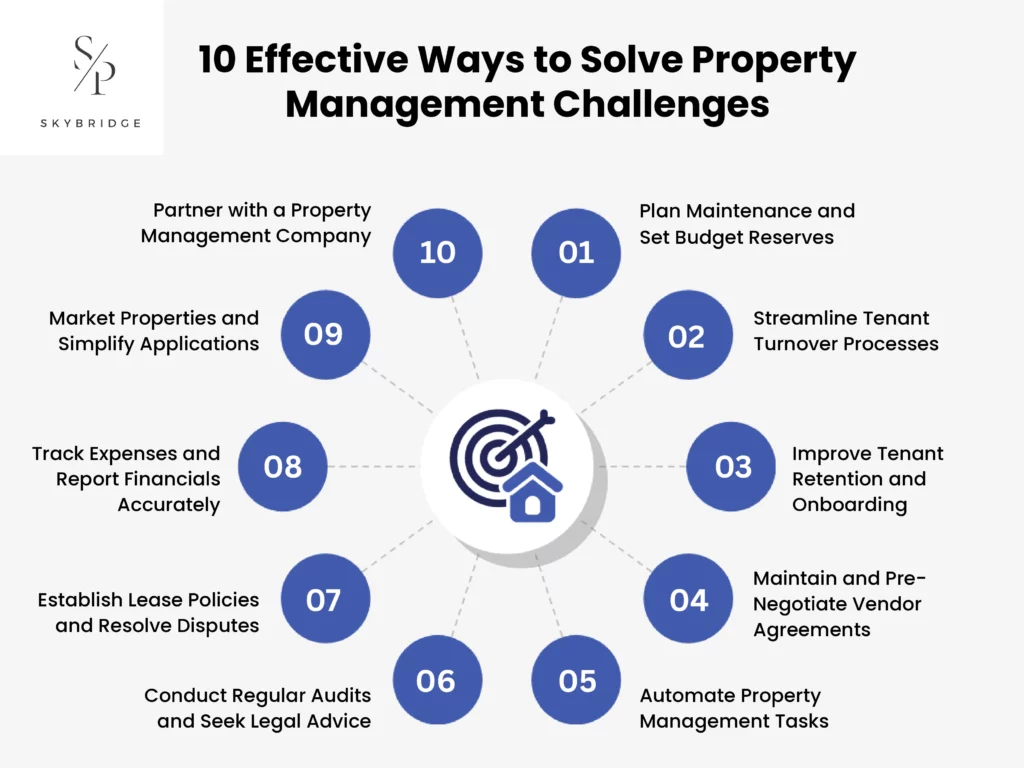
10 Effective Ways to Solve Property Management Challenges
- Plan Maintenance and Set Budget Reserves: Schedules inspections and allocates funds to prevent unexpected repairs and protect cash flow.
- Streamline Tenant Turnover Processes: Coordinates move-out, repairs, and onboarding to reduce vacancy time and maintain income.
- Improve Tenant Retention and Onboarding: Ensures smooth move-in and consistent communication to increase tenant satisfaction and renewals.
- Maintain and Pre-Negotiate Vendor Agreements: Builds vendor partnerships with fixed terms to ensure reliable service and cost control.
- Automate Property Management Tasks: Use digital tools to handle routine tasks, reduce errors, and improve efficiency.
- Conduct Regular Audits and Seek Legal Advice: Review records and consult experts to ensure compliance and mitigate legal risks.
- Establish Lease Policies and Resolve Disputes: Defines clear lease terms and follows structured processes to prevent and manage conflicts.
- Track Expenses and Report Financials Accurately: Monitors expenses and reports to control budgets and support financial decisions.
- Market Properties and Simplify Applications: Promotes listings effectively and streamlines applications, filling vacancies faster.
- Partner with a Property Management Company: Delegates operations to experts to improve performance and reduce management burden.
Plan Maintenance and Set Budget Reserves
A structured maintenance plan combined with dedicated reserves helps prevent unexpected repairs, control costs, and protect cash flow from financial strain. Scheduling regular inspections of systems such as plumbing, HVAC, roofing, and electrical components enables early issue detection, avoids costly emergency repairs, and keeps operations stable. At the same time, setting aside contingency funds based on repair trends ensures readiness for unplanned expenses. This approach improves cost predictability, maintains consistent cash flow, and supports long-term property performance.
Streamline Tenant Turnover Processes
By coordinating move-out, repairs, and onboarding within a defined timeline, tenant turnover can be streamlined, reducing vacancy time and maintaining steady income. Scheduling pre-move-out inspections, starting marketing early, and identifying repairs in advance allow tasks to run in parallel, minimizing delays. Clear checklists, faster applications, and structured scheduling ensure smooth lease closure and onboarding. When each step connects efficiently, it shortens vacancy cycles and supports consistent property performance.
Improve Tenant Retention and Onboarding
A structured onboarding process improves retention by ensuring a smooth move-in, clear lease instructions, and early resolution of initial maintenance issues, thereby reducing confusion and preventing early move-outs. As this first experience sets expectations, consistent communication, timely maintenance responses, and regular updates help maintain tenant satisfaction. Providing clear support channels and quick issue handling builds trust over time, which increases lease renewals, stabilizes occupancy, and supports consistent property performance.
Maintain and Pre-Negotiate Vendor Agreements
Building long-term vendor relationships and setting agreements in advance ensures consistent service, cost control, and faster response times. Relying on unverified vendors often leads to delays and inconsistent quality, which affects repairs and tenant satisfaction. Pre-negotiated terms such as fixed pricing, service timelines, and defined standards reduce unexpected costs and avoid last-minute negotiations. With regular communication and performance reviews, teams maintain accountability, secure better pricing, and ensure reliable, efficient property operations.
Automate Property Management Tasks
Automation reduces manual workload, prevents missed tasks, and improves accuracy across property operations. Manual tracking of rent, maintenance, and lease updates often leads to delays and errors, whereas automation tools handle these tasks through rent reminders, online payments, and maintenance tracking systems. As routine tasks become automated, teams gain time to focus on tenant experience and planning. Centralized systems also improve visibility, ensure timely execution, and reduce inefficiencies, which supports smoother and more reliable property management operations.
Conduct Regular Audits and Seek Legal Advice
Regular audits and legal consultation help identify compliance gaps, financial errors, and outdated practices before they lead to penalties or disputes. By reviewing lease agreements, financial records, and operational workflows on a set schedule, teams improve transparency and prevent reporting inaccuracies. Without these checks, small issues can escalate into costly violations. As regulations continue to change, ongoing legal guidance ensures proper documentation, supports dispute resolution, and maintains compliance, thereby strengthening accountability and maintaining stable property operations.
Establish Lease Policies and Resolve Disputes
Clear and legally sound lease policies help prevent disputes by defining expectations and protecting both tenants and property operations from legal risks. Well-drafted agreements outline rent terms, responsibilities, and usage rules, reducing confusion and preventing conflicts. When terms remain unclear, minor issues can escalate into complaints or legal action. Resolving disputes requires structured communication, proper documentation, and legal compliance, which helps address issues early, reduce risk, and maintain stable tenant relationships.
Track Expenses and Report Financials Accurately
Accurate expense tracking and financial reporting help prevent budget overruns, cash flow gaps, and compliance risks in property management. Costs such as maintenance, utilities, taxes, and vendor payments require consistent tracking, as missed entries can distort financial visibility and reduce net operating income (NOI). Building on this, detailed reports like income statements and expense summaries improve forecasting and decision-making. When financial data remains consistent and transparent, it reduces errors, ensures compliance, and supports stable property operations.
Market Properties and Simplify Applications
Strategic marketing and a simplified application process help reduce vacancy rates and attract qualified tenants quickly. High-quality images, clear pricing, and multi-platform listings improve visibility and generate better leads. When listings highlight key values and requirements, prospects respond faster and move toward leasing decisions. At the same time, streamlined digital applications with clear criteria and quick responses reduce drop-offs. This efficient process speeds up approvals, fills units faster, and maintains steady rental income.
Partner with a Property Management Company
Partnering with a property management company helps reduce workload, improve efficiency, and ensure professional handling of daily operations. Managing tenant communication, rent collection, maintenance, and compliance can become complex, especially across multiple properties. Working with a property management company provides access to experienced teams and structured systems. Property owners who are unsure whether to self-manage or hire professional help can explore the benefits of a property management company to understand how it impacts daily operations, tenant management, and long-term property performance. These tasks are handled consistently, improving service quality and reducing the operational burden. Professional support also strengthens tenant management, compliance, and maintenance coordination, allowing property owners to focus on growth while maintaining stable and efficient property operations.
What Are the Challenges in Managing Different Property Types?
Challenges in managing different property types include handling varied regulations, high maintenance demands, tenant turnover, and operational inefficiencies across residential, commercial, and multifamily properties. Each type presents unique issues, such as frequent tenant changes in residential units or complex leases and compliance requirements in commercial spaces. These differences affect budgeting, tenant management, and daily operations, which require tailored strategies to maintain efficiency and stable property performance.
What Are the Challenges in Residential Property Management?
Residential property management involves frequent tenant turnover, recurring maintenance issues, rent collection delays, and continuous communication demands that directly impact occupancy and cash flow. Short lease cycles increase vacancies, reducing income and raising turnover costs, while unresolved maintenance issues can lead to tenant dissatisfaction and early move-outs. At the same time, inconsistent rent payments affect financial stability. To address these challenges, teams can use tenant screening, automate rent reminders, and schedule preventive maintenance, which helps improve retention, reduce vacancies, and maintain stable property operations.
What Are the Challenges in Commercial Property Management?
Commercial property management involves rising maintenance costs, complex tenant relationships, high vacancy rates, and strict regulatory compliance, which directly impact revenue and operational stability. Managing long-term leases requires careful coordination to avoid disputes, while maintenance delays can disrupt business operations and push tenants to leave, increasing the risk of vacancies. As vacancies extend, income declines and financial pressure builds. At the same time, compliance failures can lead to penalties and legal issues. To manage these challenges, teams can use structured lease processes, preventive maintenance, and regular compliance audits to maintain occupancy and stable operations.
How Can Technology and Automation Help Overcome Property Management Challenges?
Technology and automation help solve property management challenges by reducing manual work, preventing delays, and improving accuracy across key operations. Property management software centralizes tenant data, communication, and financial tracking, improving coordination and reducing errors. As a result, automated rent reminders and online payments ensure timely collections and stabilize cash flow, while maintenance tracking systems speed up issue resolution. In addition, smart tools detect problems early, which helps avoid costly repairs. By connecting these systems, teams reduce operational gaps and maintain consistent, efficient property performance.