
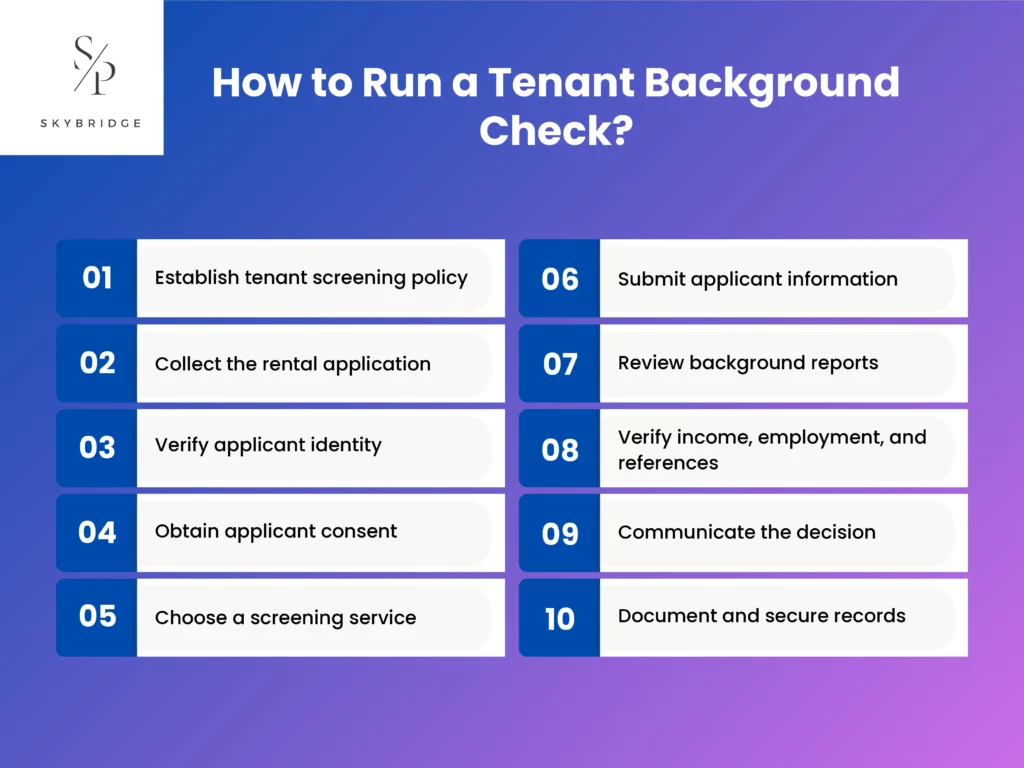
To run a tenant background check, establish a tenant screening policy, collect the rental application, verify the applicant’s identity, obtain written consent, choose a screening service, and submit the applicant’s information. Once submitted, review background reports, verify income, employment, and references, and then communicate the decision and securely document records to maintain a consistent and compliant screening process.
Beyond the process itself, a comprehensive tenant background check covers credit history, criminal history, eviction history, rental history, and income verification to help secure responsible tenants, reduce legal liability, and minimize the risk of eviction. Legal compliance requires following FCRA, FHA, consent rules, adverse action notices, and local laws, while using reliable screening services helps avoid common mistakes such as rushing the process or neglecting verification and compliance.
10 Steps to follow to run a tenant background check include:
- Establish Tenant Screening Policy
- Collect the Rental Application
- Verify Applicant Identity
- Obtain Applicant Consent
- Choose a Screening Service
- Submit Applicant Information
- Review Background Reports
- Verify Income, Employment, and References
- Communicate the Decision
- Document and Secure Records
Establish Tenant Screening Policy
A landlord must establish a clear tenant screening policy that defines how each tenant’s background check is conducted, using criteria such as credit score, rental history, criminal history, eviction history, and income verification, while ensuring a fair screening process. A property owner should also define measurable standards, such as the minimum income required to pay rent or an acceptable payment history, so that each rental applicant is assessed using the same structured criteria.
To maintain legal compliance and decision accuracy, the screening policy must comply with the Fair Housing Act and local regulations. Landlords should apply identical criteria to all prospective tenants, which helps reduce legal liability and prevent discrimination claims. This consistent approach allows property managers to objectively verify applicants, identify qualified tenants, and maintain a reliable tenant screening process.
Collect Rental Application
After establishing a tenant screening policy, a landlord should collect a rental application that captures key tenant information, such as personal identification details, rental history, employment and income records, references, and written consent to conduct a credit and background check. This document initiates the tenant screening process by enabling the landlord to run a tenant background check, verify identity, and prepare accurate tenant screening reports.
Since every screening decision depends on the data provided, the application must contain complete and accurate information. Landlords should review details such as the employer’s name, income verification documents, and previous rental addresses to prevent delays or inaccurate background checks. Accurate data allows property managers to efficiently assess potential tenants, reduce verification errors, and maintain a consistent rental background-check process.
Verify Applicant Identity
Verify key identity details such as full name, date of birth, government-issued ID, Social Security number, and current address once the rental application is collected, as this step ensures that the tenant background check is conducted on the correct individual. Match these details with official records so that credit history, criminal records, and rental history correspond to the same applicant. Use documents like a passport or driver’s license and confirm supporting records, such as utility bills or bank statements, to complete tenant verification.
Ensure that all identity data is accurate before submitting it to a screening service, as mismatched details can lead to incorrect tenant screening reports. Accurate verification prevents fraud, reduces background-check errors, and supports a compliant tenant-screening process for landlords and property managers.
Obtain Applicant Consent
Obtain a signed consent form from the tenant before initiating any tenant background check, as this document authorizes access to credit reports, criminal history, and rental records. The consent form must clearly state what the tenant screening will include, such as a credit and background check, so the applicant understands the scope of the evaluation. This step ensures that the landlord follows a compliant screening process under the Fair Credit Reporting Act (FCRA).
Clearly inform the tenant that their personal information will be used for screening and specify which reports will be generated. Maintain a record of the signed consent form, as proper documentation supports legal compliance, prevents disputes, and validates the tenant background screening process for landlords and property managers.
Choose Screening Service
Use tenant screening services from reliable online platforms or property management systems that provide access to credit reports, criminal records, and rental history, since these sources supply the verified data needed for a tenant background check. The cost of tenant screening services ranges from $15 to $70, depending on factors such as report depth, number of checks included, geographic data coverage, and turnaround time. Choose services that integrate with landlord tools to run tenant credit checks, review eviction history, and generate screening reports in one platform.
Since the screening outcome depends on the service quality, focus on factors such as reliability, cost, and turnaround time when comparing options. Check how quickly reports are delivered, how accurate the background check data remains, and whether pricing aligns with your screening needs. A reliable tenant screening service enables landlords and property managers to assess tenants efficiently, reduce risk, and maintain a consistent tenant screening process.
Submit Applicant Information
Submit the rental application details to the selected tenant screening service through its online portal or property management system, as this step ensures the service can run an accurate tenant background check. Enter required information from the application, including full name, date of birth, Social Security number, address history, employment details, and consent confirmation so that credit reports, criminal history, and rental records match the correct tenant. Review all entered data before submission to prevent errors in tenant screening reports.
Given the sensitive nature of the data, handle applicant information carefully during submission to mitigate privacy risks. Use secure platforms provided by screening services and avoid sharing details through unsecured channels. Accurate and secure submission helps landlords generate reliable tenant screening reports, reduce errors, and maintain a compliant screening process.
Review Background Reports
Focus on key report areas such as credit history, criminal records, and rental history when reviewing a tenant background report, because these elements determine whether the tenant meets your screening criteria. Examine the credit report to understand payment history and credit score, review criminal history for relevant offenses, and check rental history to confirm past lease behavior. Use this information to assess whether the tenant can consistently pay rent and follow the lease terms.
While analyzing these reports, identify red flags such as prior evictions, high outstanding debt, or repeated late payments, because these factors indicate potential risk. Compare each finding against your tenant screening policy to ensure every applicant is evaluated consistently. A careful review process helps landlords and property managers make informed decisions, reduce financial risk, and select responsible tenants.
Verify Income, Employment, and References
Verify income, employment, and references by reviewing pay stubs, bank statements, or tax returns and confirming job details with the employer to ensure the tenant’s financial stability. This step helps determine whether the tenant has a consistent income source, stable employment status, and the financial capacity to meet monthly rent obligations without risk of default.
To strengthen this assessment, include reference checks that provide insight into the tenant’s past behavior and reliability. Contact previous landlords to verify payment history and lease conduct, and review personal references for additional context. A comprehensive review of financial records and references enables landlords and property managers to reduce risk, verify tenant credibility, and maintain a structured tenant screening process.
Communicate the Decision
After verifying income, employment, and references, clearly communicate the tenant screening decision by informing the applicant whether they are approved or rejected based on the background check results. Provide a professional response that aligns with the screening criteria and ensures the tenant understands the outcome of their application. This step maintains transparency and supports a structured tenant screening process.
If the tenant is not approved, issue an adverse action notice explaining the reason for the rejection, especially if the decision is based on a credit report or background check. Include required details such as the reporting agency used and the applicant’s right to review their report. Proper communication helps landlords and property managers remain compliant, reduce disputes, and maintain a fair tenant screening process.
Document and Secure Records
In the final step, document all tenant background check records, including rental applications, consent forms, screening reports, and communication records, and store them securely to maintain compliance and future reference, as proper documentation ensures every screening decision remains verifiable. Retain these documents for the required period under local laws and regulations, which often range from 1 to several years depending on the jurisdiction.
To maintain data protection alongside documentation, store these records securely in both digital and physical formats. Use encrypted systems or property management software for digital files, and keep physical documents in locked, restricted-access locations. Proper documentation combined with secure storage helps landlords and property managers prevent data breaches, respond to legal inquiries, and maintain a compliant tenant screening process.
What Does a Tenant Background Check Include?
A tenant background check includes credit history, criminal history, eviction history, rental history, and income verification that help assess the tenant’s financial stability and rental reliability. Each item helps landlords confirm whether the tenant can meet lease obligations.
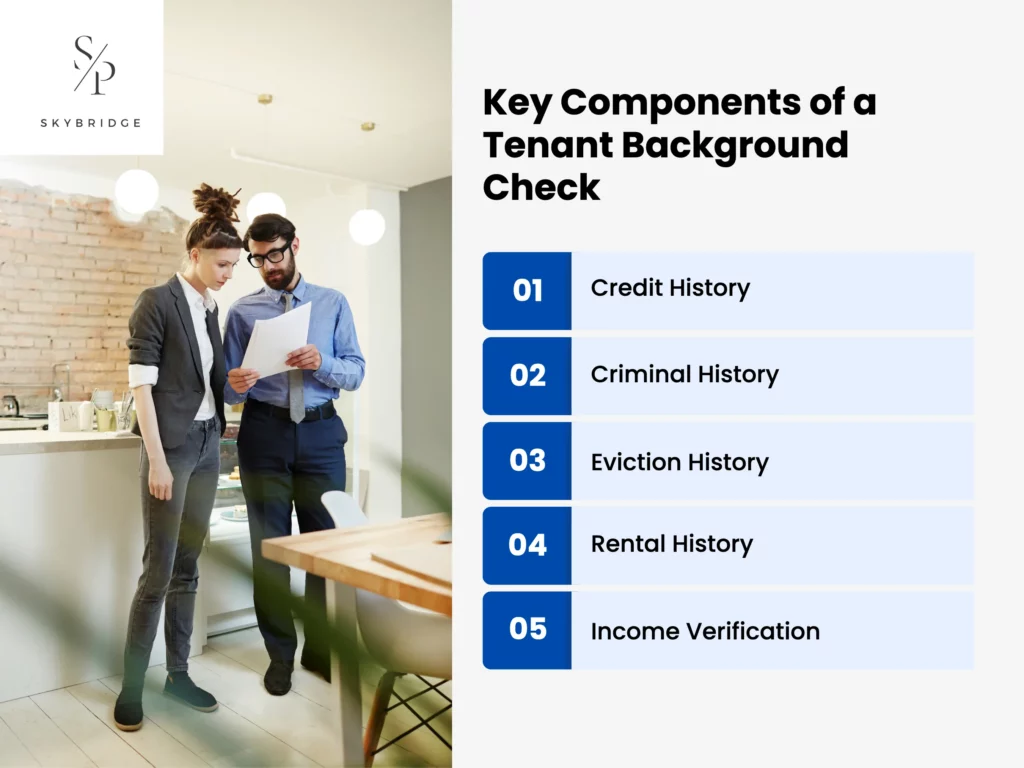
Key components of a tenant background check include:
Credit History: Evaluates a tenant’s financial behavior, such as debt management and payment consistency.
Criminal History: Identifies any past legal offenses that may pose a risk to property or community safety.
Eviction History: Checks prior eviction records to assess potential tenancy risk.
Rental History: Reviews previous landlord relationships and payment patterns.
Income Verification: Confirms the tenant’s ability to afford rent through stable earnings.
- Credit History
For a tenant background check, reviewing credit history helps assess payment behavior, outstanding debts, and overall credit score, as this information reflects financial responsibility and the ability to meet rent obligations. This review shows that consistent on-time payments and a stable credit profile support tenant reliability, while frequent late payments or high debt levels indicate potential risk in maintaining regular rent payments.
- Criminal History
When checking a tenant’s background, criminal history is included to identify past offenses, charges, or legal records associated with the applicant, which helps assess safety and behavioral risk. This component shows whether the tenant may pose a risk to property or other occupants, where serious or repeated offenses indicate greater concern, while a clean record supports a more reliable tenancy profile.
- Eviction History
In a tenant background check, eviction history highlights any past removals from rental properties due to unpaid rent or lease violations, helping assess rental stability and risk. A pattern of evictions increases the likelihood of payment issues, whereas no recorded evictions supports a stable and dependable tenancy profile.
- Rental History
Tenant rental record in a tenant background check reviews previous lease details, payment consistency, and landlord feedback to assess how the tenant managed past rentals. Consistent on-time payments and positive landlord feedback indicate a dependable tenancy record, and repeated late payments, disputes, or lease violations indicate increased risk in future rental behavior.
- Income Verification
As part of a tenant background check, income verification assesses the tenant’s financial capacity using documented earnings, such as salary slips, bank deposits, or tax filings. A stable and sufficient income level supports consistent rent payment, and gaps in income or low earnings indicate higher financial risk.
What Are the Benefits of Running a Tenant Background Check?
The benefits of running a tenant background check include securing responsible tenants, reducing legal liability, identifying red flags, preventing property damage, and reducing eviction risk through informed tenant selection. These outcomes help landlords and property managers make consistent decisions, verify tenant reliability, and maintain a stable rental process.
5 key benefits of running a tenant background check are:
Secures Responsible Tenants: Confirms reliability by verifying financial and rental behavior before approval.
Reduces Legal Liability: Minimizes legal risks by applying consistent and compliant screening practices.
Identifies Red Flags: Detects risks like evictions, debts, or criminal records early in the process.
Prevents Property Damage: Helps select tenants with responsible histories to avoid misuse and damage.
Reduces Eviction Risk: Lowers eviction chances by screening for financial stability and lease compliance.
- Secures Responsible Tenants
Running a tenant background check secures responsible tenants by verifying financial behavior, rental history, and reliability before approval. This process ensures that selected tenants are more likely to pay rent on time, follow lease terms, and maintain stable occupancy.
- Reduces Legal Liability
A tenant background check reduces legal liability by following Fair Housing Act guidelines and applying consistent screening criteria to every tenant, which prevents discriminatory practices. Proper documentation and standardized evaluation help landlords avoid legal disputes, penalties, and claims related to unfair tenant selection.
- Identifies Red Flags
Red flags such as prior evictions, unpaid debts, criminal records, or inconsistent income are identified during a thorough tenant background check, helping landlords detect potential risks before approving a tenant. Early identification of these issues supports informed decisions, reduces the chance of problematic tenancy, and strengthens the overall screening process.
- Prevents Property Damage
Following a proper tenant background check helps prevent property damage by identifying tenants with a history of lease violations, negligence, or poor rental behavior before approval. Selecting tenants with responsible rental histories reduces the likelihood of misuse, lowers maintenance costs, and preserves the property’s overall condition.
- Reduces Eviction Risk
Risks such as nonpayment of rent, repeated lease violations, or unstable rental behavior are identified through a tenant background check, which helps reduce the risk of eviction. Early screening of these factors allows landlords to select financially stable and reliable tenants, leading to fewer evictions and more consistent tenancies.
What Are the Legal Requirements for Running a Tenant Background Check?
Legal requirements for a tenant background check include FCRA compliance, FHA restrictions, written consent, adverse action notice, and applicable state and ban-the-box laws. These necessities ensure that tenant screening remains fair, transparent, and legally compliant for both landlords and applicants.
Legal Requirements for running a tenant background check are:
FCRA Compliance: Ensures fair and lawful use of tenant reports with consent and proper notices.
FHA Restrictions: Prevents discrimination by requiring equal screening criteria for all applicants.
Written Consent Requirement: Tenant approval is required before conducting any background or credit checks.
Adverse Action Notice Obligation: Requires landlords to notify tenants when screening results affect rental decisions.
State and Local Screening Laws: Enforce location-specific rules on data use, fees, and screening limits.
Ban-the-Box Laws: Delays criminal history checks until later in the rental decision process.
- Fair Credit Reporting Act (FCRA) Compliance
FCRA compliance requires landlords to follow strict procedures when using tenant credit and background reports, including obtaining written consent, providing clear disclosures, and following a pre-adverse and adverse action process.
Regulated by the FTC and the CFPB, this law ensures the accuracy, fairness, and privacy of consumer information used in tenant background checks. Landlords must obtain written consent and provide an adverse action notice if a report affects the decision. This requirement ensures fair screening and helps avoid legal risk.
- Fair Housing Act (FHA) Restrictions
The Fair Housing Act (FHA) prohibits discrimination in housing based on race, color, national origin, religion, sex, familial status, or disability, and restricts practices such as refusing to rent, making false unavailability claims, or engaging in unequal treatment during tenant background checks. This law ensures that screening decisions remain based on valid tenant qualifications rather than protected characteristics.
Landlords must apply the same screening criteria to all applicants and avoid discriminatory actions such as selective approval or denial. Following FHA guidelines supports fair tenant selection, protects applicant rights, and helps landlords avoid legal risks and compliance issues.
- Written Consent Requirement
Under the Fair Credit Reporting Act (FCRA), landlords must obtain explicit written consent from prospective tenants before conducting credit, criminal, or background checks, usually through a signed disclosure form or as part of the rental application to ensure legal compliance. This requirement ensures that tenants are informed and have approved the use of their personal information for screening.
Once consent is obtained, landlords can proceed with the tenant background check in a compliant manner. Maintaining a signed record of this consent supports transparency, protects tenant rights, and helps avoid legal issues during the screening process.
- Adverse Action Notice Obligation
An adverse action notice is required when a landlord denies a rental application, increases rent, or requests a higher deposit based on a tenant’s background or credit report. The notice must include the screening agency’s name and contact details, clarify that the agency did not make the decision, and inform the tenant of their right to dispute the report and request a free copy within 60 days.
When any screening report influences the decision, providing this notice becomes mandatory. Proper disclosure ensures transparency, protects tenant rights, and helps landlords maintain a compliant tenant screening process.
- State and Local Screening Laws
As per state and local tenant screening laws, landlords must follow rules governing the collection and use of applicant data, including compliance with the Fair Housing Act, FCRA, consent requirements, and reporting limits such as the 7-year rule. They also restrict practices such as excessive application fees, the use of certain criminal records, and discrimination based on income sources.
These laws vary by location and may include rules on caps on application fees, acceptable screening criteria, and applicant disclosure requirements. Following these regulations helps ensure fair tenant screening, protect applicants’ rights, and reduce the risk of legal penalties for landlords.
- Ban-The-Box Laws
Ban-the-box laws prevent landlords from including criminal history questions in the initial rental application and require background checks only after a conditional housing offer is made. These laws are referred to as Fair Chance Housing policies. These regulations also restrict the use of records such as arrests without conviction, sealed cases, or outdated minor offenses, ensuring that only relevant criminal history is considered.
To comply, landlords must delay criminal screening and evaluate each case individually, considering factors such as the nature of the offense, the time elapsed, and evidence of rehabilitation. This approach supports fair housing access, reduces discrimination, and maintains a legally compliant tenant screening process.
What Are the Best Tenant Background Check Services?
The best tenant background check services include TransUnion SmartMove, Experian Connect, RentPrep, TenantCloud, Avail, and Zillow Rental Manager, each offering different screening capabilities for landlords and property managers. These services help landlords access credit reports, criminal history, and eviction data to make informed decisions about tenant selection.
The best tenant background check services are:
- TransUnion SmartMove: Provides credit reports, criminal history, and eviction checks with tenant-paid options, suitable for individual landlords.
- Experian Connect: Focuses on tenant credit checks and financial data, allowing landlords to request reports directly from applicants.
- RentPrep: Offers background screening with manual review options, useful for landlords seeking verified reports.
- TenantCloud: Combines tenant screening with property management tools, suitable for managing applications and reports in one system.
- Avail: Provides full tenant screening reports, including credit, criminal, and eviction history, with online application integration.
- Zillow Rental Manager: Includes tenant screening with credit, criminal, and eviction reports, integrated with rental listings and application management.
How Much Does a Tenant Background Check Cost?
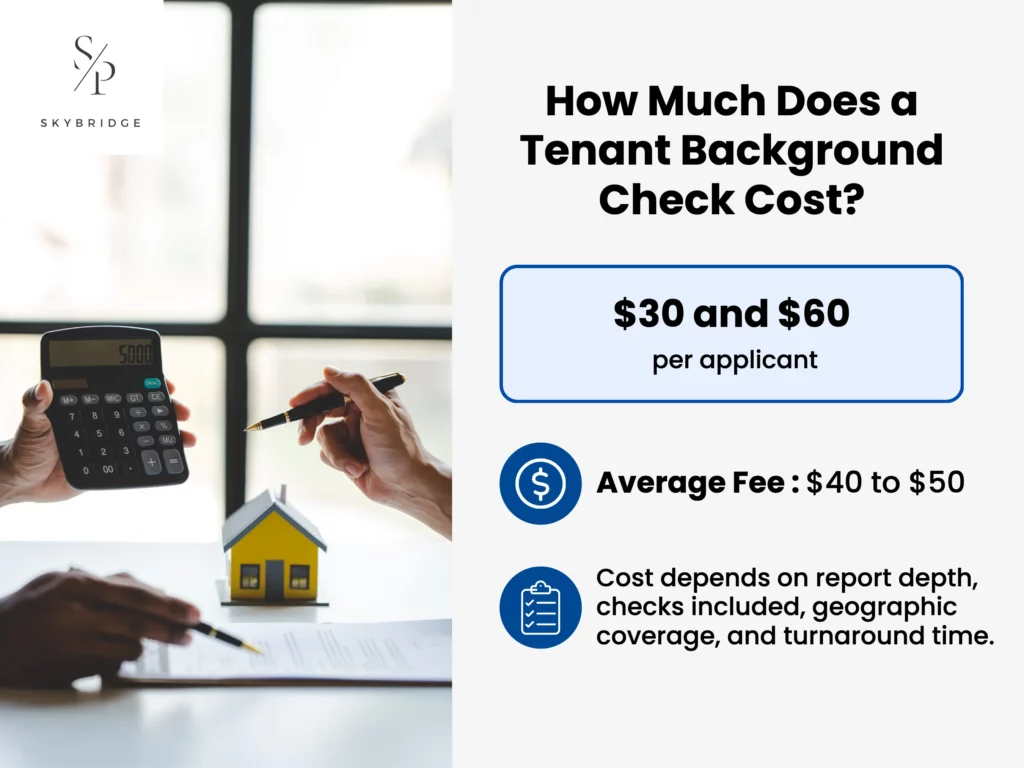
Tenant background checks cost between $30 and $60 per applicant, with an average fee of around $40 to $50, depending on the screening service and report type. Basic reports, such as credit checks, are usually less expensive, while detailed reports that include criminal history, eviction records, and income verification fall on the higher end.
The final cost depends on factors such as report depth, number of checks included, geographic coverage, and turnaround time. Services that offer faster processing or more comprehensive tenant screening reports generally charge higher fees, while basic checks remain more affordable for landlords with limited screening needs.
What Are Common Tenant Background Check Mistakes Landlords Should Avoid?
Common tenant background check mistakes landlords should avoid include rushing the screening process, ignoring income verification, neglecting reference checks, and failing to maintain legal compliance. These mistakes can lead to the selection of unreliable tenants, increased financial risk, and potential legal issues during the rental process.
Common mistakes Landlords should avoid during tenant background checks include:
- Rushing Screening Process: Avoid rushing the screening process by carefully reviewing all tenant background reports before making a decision.
- Ignoring Income Verification: Verify tenant income and employment using documents such as pay stubs or bank statements to confirm the ability to pay rent.
- Neglecting Reference Checks: Check references consistently by contacting previous landlords and personal contacts to validate rental history.
- Neglecting Legal Compliance: Follow legal compliance requirements by adhering to FCRA and Fair Housing Act rules during every tenant background check.
How Does a Property Management Company Handle Tenant Background Checks?
Property management companies handle tenant background checks through a structured process that includes verifying identity, reviewing credit reports, checking criminal records, analyzing rental history, and ensuring legal compliance, as each step supports accurate tenant evaluation. They follow standardized procedures to collect applications, validate documents, and run tenant screening reports using reliable services. To maintain consistency across all applicants, this process also includes verifying income and employment, checking references, and applying uniform screening criteria. By maintaining documentation, following FCRA and Fair Housing Act requirements, and using secure systems, a reliable tenant screening service ensures accurate evaluation, reduces risk, and supports a compliant tenant screening process.