
Luxury property marketing is the strategic process of promoting high-end real estate using premium visuals, targeted outreach, and data-driven positioning to attract and convert high-net-worth buyers. It presents the property as a lifestyle asset through cinematic videos, high-quality photography, virtual tours, and storytelling that shape buyers’ perceptions of design, exclusivity, and value, while distribution across SEO, social media, luxury platforms, and broker networks ensures it reaches the right audience at the right stage. As digital discovery becomes central to buyer behaviour, a large share of luxury property searches now begin online, reinforcing the need for strong visual presentation and precise digital targeting.
As these elements align, luxury property marketing functions as a structured system where visual presentation, buyer targeting, and market data influence perception, create demand, and guide decision-making. This approach improves visibility, attracts qualified inquiries, reduces time on market, and increases the likelihood of securing high-value offers.
What Are the Best Luxury Property Marketing Strategies?
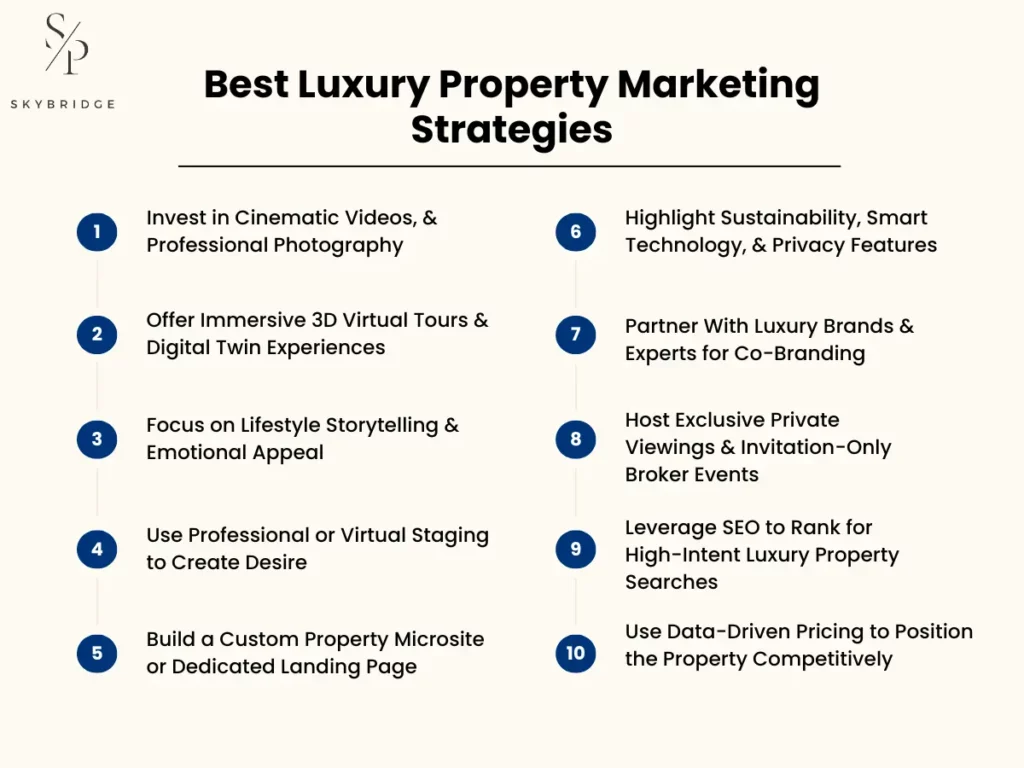
The best luxury property marketing strategies combine cinematic visuals, precise targeting of high-net-worth buyers, and data-driven pricing and positioning to attract qualified buyers in competitive markets. These elements work together as a unified system, where strong visual presentation supports positioning and targeted outreach ensures the right buyers engage at the right time. By showcasing properties with high-quality assets such as virtual tours and branded campaigns, and reaching buyers through SEO, social media, and exclusive channels, this approach builds trust, differentiates properties, and drives stronger results.
The 10 Best Luxury Property Marketing Strategies are:
Invest in Cinematic Videos, Drone Shots, and Professional Photography: Use cinematic videos, drone footage, and professional photography to showcase the property’s scale, design, and lifestyle appeal, attracting serious buyers.
Offer Immersive 3D Virtual Tours and Digital Twin Experiences: Enables buyers to explore properties remotely through 3D tours and digital twins, helping them assess fit and make faster decisions.
Focus on Lifestyle Storytelling and Emotional Appeal: Connects property features to real-life experiences, allowing buyers to visualize living in the space and increasing emotional engagement.
Use Professional or Virtual Staging to Create Desire: Use physical or virtual staging to present spaces as functional and move-in ready, improving perceived value and buyer interest.
Build a Custom Property Microsite or Dedicated Landing Page: Centralize property content on a branded page to increase engagement and convert high-intent visitors into qualified leads.
Highlight Sustainability, Wellness, Smart Technology, and Privacy Features: Showcases sustainability, wellness, smart technology, and privacy to align with buyer priorities and strengthen property value.
Partner With Luxury Brands and Experts for Co-Branding: Collaborates with premium brands and experts to enhance credibility, positioning, and buyer trust.
Host Exclusive Private Viewings and Invitation-Only Broker Events: Organizes exclusive viewings and broker events to create urgency, attract qualified buyers, and drive competitive offers.
Leverage SEO to Rank for High-Intent Luxury Property Searches: Use SEO to rank for high-intent queries, attracting buyers actively searching for luxury properties.
Use Data-Driven Pricing to Position the Property Competitively: Sets competitive pricing based on market data to increase visibility, attract serious buyers, and secure stronger offers.
-
Invest in Cinematic Videos, Drone Shots, and Professional Photography
Investing in cinematic videos, drone shots, and professional photography involves using high-quality visual assets such as professionally directed video tours, aerial footage, and high-resolution images to showcase the scale, design, and lifestyle appeal of a luxury property. This approach highlights location advantages like beachfront views or gated communities while capturing architectural details, lighting, and interiors with clarity. As visual expectations rise, listings with drone footage are shown to sell up to 68% faster, reinforcing the impact of strong visual presentation.
A refined visual strategy shapes how high-end buyers perceive value from the first interaction, helping build trust and attract serious interest. Key elements include cinematic editing, wide-angle and detail shots, twilight photography, and consistent branding across campaigns to ensure strong visibility across luxury listings and digital platforms.
-
Offer Immersive 3D Virtual Tours and Digital Twin Experiences
High-net-worth buyers often shortlist luxury properties without visiting in person, and immersive 3D virtual tours and digital twin experiences allow them to assess room dimensions, spatial flow, and design accuracy before committing to a private viewing. In luxury property marketing, these interactive models are integrated into listings and outreach, enabling remote exploration with a realistic sense of layout and functionality. This impact is reflected in Redfin’s 2024 data, which shows that listings with virtual tours receive 87% more views, highlighting their role in increasing visibility and engagement.
With clearer insight into the property, buyers can pre-qualify fit, compare options efficiently, and move forward with stronger intent, resulting in fewer but more qualified showings. The strategy relies on precise 3D scanning, seamless navigation, cross-device accessibility, and consistent integration across marketing platforms to maintain engagement.
-
Lifestyle Storytelling and Emotional Appeal
Connecting a luxury property to real-life experiences through lifestyle storytelling and emotional appeal helps buyers understand how they would live in and use the space, whether hosting guests or enjoying private outdoor areas, often boosting audience engagement by up to 300%. In luxury property marketing, agents apply this strategy through narrative-driven visuals and targeted copy, ensuring each feature aligns with a specific lifestyle outcome that matches the buyer’s identity and expectations.
By linking property features to everyday experiences, this approach shapes how buyers perceive value and relevance from the first interaction. Buyers who can clearly visualize living in the space show stronger intent and make decisions faster. The strategy relies on consistent storytelling, high-quality visuals, and alignment with affluent lifestyle preferences to support premium positioning and conversion.
-
Use Professional or Virtual Staging to Create Desire
Implementing professional or virtual staging involves presenting a luxury property with curated interiors, either in person or digitally, to highlight the layout, scale, and lifestyle use in a way that aligns with buyer expectations. This approach ensures spaces appear functional, visually complete, and ready for immediate use while reflecting current luxury standards and creating a strong first impression. Without staging, properties often appear undefined or underutilized, making it harder for buyers to understand their full potential. According to the Real Estate Staging Association (RESA), staged homes can sell up to 73% faster and achieve higher offer prices, reinforcing their effectiveness.
As a result, staging shapes how buyers interpret each space by clarifying purpose, improving flow, and reducing uncertainty during evaluation. Buyers respond with greater confidence, which supports stronger offers, smoother negotiations, and a more consistent high-end brand perception.
-
Build a Custom Property Microsite or Dedicated Landing Page
Instead of relying only on standard listing platforms, building a custom property microsite or dedicated landing page creates a centralized, branded experience that showcases a luxury property in detail while capturing and qualifying high-net-worth buyer interest. A dedicated page structures content with full-screen visuals, cinematic videos, 3D virtual tours, and location insights to guide buyers through a focused, immersive journey.
By controlling this journey, real estate agents keep buyers engaged longer, reduce drop-off with fast-loading design, and capture intent through integrated inquiry forms. Buyers who spend more time on these pages show higher purchase intent and submit more qualified inquiries. The strategy relies on key elements such as SEO-optimized content, mobile responsiveness, and analytics to track behaviour and refine targeting across luxury property marketing campaigns.
-
Highlight Sustainability, Wellness, Smart Technology, and Privacy Features
Highlighting sustainability, wellness, smart technology, and privacy features is one of the most effective luxury property marketing strategies because these elements directly influence how high-net-worth buyers evaluate long-term value, lifestyle quality, and investment potential. Properties that include solar energy systems, advanced air purification, smart home automation, and secure, gated, or soundproof designs shape buyers perceptions of comfort, efficiency, and security.
In luxury property marketing, agents present these features as practical benefits, such as lower operating costs, improved indoor health, seamless control, and enhanced privacy. They showcase these advantages through listing visuals and video tours to make them clear and tangible. Buyers favour homes that deliver efficiency and control, which strengthens perceived value and competitive positioning. Clear feature-to-benefit communication, supported by visual proof and consistent messaging, helps justify premium pricing and influences buyer preference.
-
Partner With Luxury Brands and Experts for Co-Branding
High-net-worth buyers often associate property value with brand reputation and expert design, making partnerships with luxury brands and specialists a powerful strategy to elevate perceived quality, exclusivity, and trust. When a property is associated with high-end interior designers, premium furniture brands, or renowned architects, it gains credibility that extends beyond the physical space.
Execution focuses on integrating these partnerships into the marketing experience, such as showcasing designer-curated interiors, featuring branded elements in campaigns, or hosting private events with industry experts. These collaborations position the property within a broader luxury ecosystem rather than a standalone listing. Strong brand alignment, selective partnerships, and consistent presentation ensure the association feels authentic and reinforces buyer trust and preference.
-
Host Exclusive Private Viewings and Invitation-Only Broker Events
Exclusive private viewings and invitation-only broker events allow realtors to present a luxury property in a controlled, high-trust setting by bringing together pre-qualified buyers and top broker networks through tailored showings and guided walkthroughs. This approach keeps interactions focused, allowing agents to highlight key features while addressing buyer-specific needs in real time.
A private, curated setting shapes buyer perception by creating scarcity and exclusivity, which increases urgency and competitive interest. Buyers engage more seriously, compare fewer options, and move faster toward decisions. Effective execution requires selective guest lists for proper qualification, premium presentation to reinforce value, and structured follow-up to convert interest into strong offers and maintain campaign momentum.
-
Leverage SEO to Rank for High-Intent Luxury Property Searches
Attracting high-net-worth buyers who actively search for specific luxury homes, locations, or investment opportunities requires ranking for high-intent queries such as “luxury homes in Los Angeles” or “waterfront villas for sale,” making SEO a reliable strategy for generating qualified leads. Real estate agents focus on capturing this demand by aligning content with what buyers search for at the decision stage.
In luxury property marketing, agents optimize listing and landing pages with targeted keywords, location-specific content, and structured data to match buyer intent and improve visibility. Clear page structure keeps buyers engaged and guides them toward inquiries. Consistent optimization, technical SEO, and performance tracking help maintain rankings and convert high-intent traffic into qualified leads.
-
Use Data-Driven Pricing to Position the Property Competitively
Pricing shapes first impressions in the luxury market, and using data-driven insights ensures the property enters at a level that attracts qualified buyers, reflects true value, and competes effectively with similar high-end listings. Buyers compare recent sales, active listings, and perceived value side by side, so pricing directly influences visibility, inquiry volume, and buyer seriousness.
Real estate agents apply this strategy by analyzing comparable sales, tracking market trends, and assessing buyer demand to set a price that balances attention with value. Accurate pricing increases urgency, attracts competitive interest, and reduces time on market. Ongoing data monitoring and timely adjustments keep the property aligned with market conditions, helping convert interest into stronger offers from serious buyers.
What Should a Luxury Property Marketing Plan Include?
A luxury property marketing plan must include clear positioning, well-defined target buyers, premium visual assets, multi-channel promotion, and performance tracking to effectively attract and convert high-net-worth buyers. A structured plan aligns branding, digital platforms, and broker outreach to reach buyers at the right stage, improving visibility and lead quality, supporting faster decisions, reducing time on market, and increasing the chances of securing stronger offers.
10 Key Components of a Luxury Property Marketing Plan
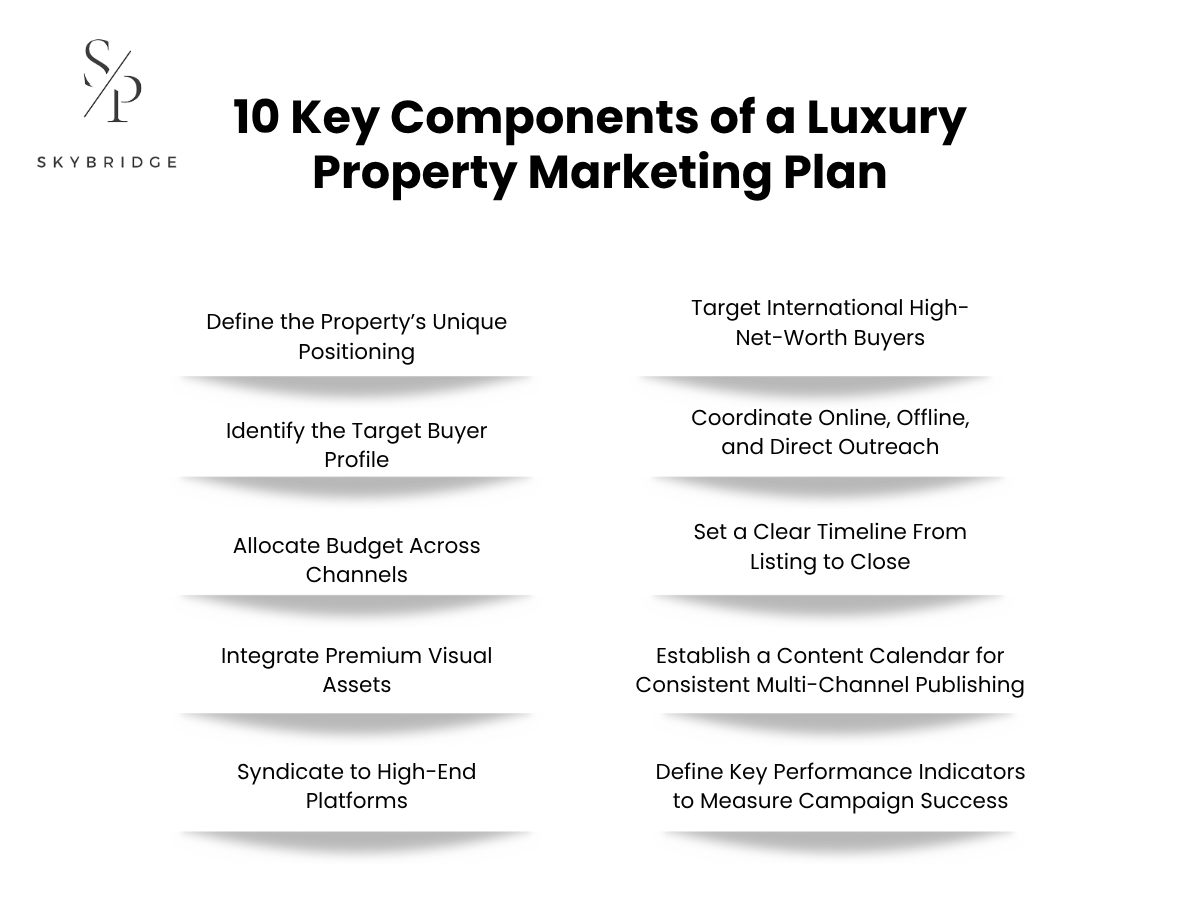
Define the Property’s Unique Positioning: Identifies key features, ideal buyers, and competitive advantage to differentiate the property in the luxury market.
Identify the Target Buyer Profile: Defines the most relevant buyer segments based on lifestyle, intent, and goals to align messaging and outreach.
Allocate Budget Across Channels: Distributes investment across high-performing platforms to maximize reach, efficiency, and qualified lead generation.
Integrate Premium Visual Assets: Uses high-quality visuals to showcase design, scale, and lifestyle appeal, increasing engagement and inquiry intent.
Syndicate to High-End Platforms: Places the property on premium listing platforms to expand visibility and reach affluent buyers.
Target International High-Net-Worth Buyers: Connects with global buyers through localized strategies to attract serious inquiries and competitive offers.
Coordinate Online, Offline, and Direct Outreach: Aligns all channels to maintain consistent messaging and convert interest into qualified leads.
Set a Clear Timeline From Listing to Close: Structure each stage of the process to maintain momentum and drive faster, stronger offers.
Establish a Content Calendar for Consistent Multi-Channel Publishing: Schedules content across platforms to maintain visibility and sustain buyer engagement.
Define Key Performance Indicators to Measure Campaign Success: Tracks performance metrics to evaluate results, optimize strategy, and increase conversions.
- Define the Property’s Unique Positioning
Defining the property’s unique positioning, such as its location, architectural design, premium amenities, and exclusivity, determines how it stands out in the luxury market. These elements shape how high-net-worth buyers perceive value and differentiate it from similar listings. Agents incorporate this into the marketing plan by aligning these factors with specific buyer segments and maintaining consistent messaging. As a result, buyers recognize value more quickly, improving engagement and increasing the chances of attracting qualified interest and stronger offers. - Identify the Target Buyer Profile
Defining the target buyer profile ensures the luxury property marketing plan focuses on the right audience by identifying who is most likely to purchase based on lifestyle, intent, and investment goals. The plan then targets segments such as international investors or second-home buyers and aligns material, channels, and messaging with their priorities. This improves engagement quality and increases the chances of attracting serious buyers who convert into strong offers. - Allocate Budget Across Channels
A luxury property marketing plan should allocate budget across channels to ensure investment focuses on the most effective platforms for reaching high-net-worth buyers and generating qualified leads. The plan distributes spend based on channel performance, buyer behaviour, and campaign goals, prioritizing social media for reach, SEO for sustained traffic, and broker networks for direct access to serious buyers, which improves efficiency, reduces wasted spend, and maintains consistent visibility across key touchpoints to attract qualified buyers and drive stronger returns. - Integrate Premium Visual Assets
A luxury property marketing plan achieves greater impact when it integrates premium visual assets that clearly present design, scale, and lifestyle appeal, influencing buyer perception from the first interaction. Real estate agents use cinematic videos, drone footage, professional photography, and 3D tours across listings and campaigns to showcase properties effectively. This approach helps buyers understand the space before visiting, reduces uncertainty, and builds confidence, which increases inquiry intent. Consistent visual quality across channels reinforces premium positioning and attracts serious buyers more likely to convert into stronger offers. - Syndicate to High-End Platforms
Reaching high-net-worth buyers at scale requires listing the property on high-end platforms where luxury property searches usually begin, ensuring it appears before the right audience and gains visibility beyond standard channels. These platforms include luxury real estate websites, international listing networks, and exclusive broker platforms that attract premium buyers. By distributing the property across these channels, the marketing plan expands global reach while maintaining consistent presentation, thereby building trust, attracting serious inquiries, and strengthening the property’s position in competitive luxury markets. - Target International High-Net-Worth Buyers
Expanding reach to international high-net-worth buyers ensures that a luxury property marketing plan captures global demand by targeting investors and lifestyle buyers across key markets such as the US, the UK, the UAE, and Asia. Reaching these buyers through global platforms and cross-border broker networks connects the property with qualified prospects beyond the local market, increasing exposure and aligning with international demand. This improves relevance through tailored narratives and location-specific material, helping attract serious inquiries and secure competitive offers. - Coordinate Online, Offline, and Direct Outreach
Reaching high-net-worth buyers effectively requires aligning digital channels, in-person experiences, and direct communication to keep the property visible and consistent throughout the buyer journey. Digital platforms drive discovery, print media and events build credibility, and direct outreach through brokers creates deeper engagement. When these efforts align, the property maintains consistent exposure without fragmented messaging. This coordination strengthens recall, builds trust, and increases the chances of converting interest into serious inquiries and strong offers. - Set a Clear Timeline From Listing to Close
Setting a clear timeline from listing to closing ensures the luxury property marketing plan progresses through each stage in a structured and timely manner. Scheduling key activities such as marketing rollout, showings, follow-ups, negotiations, and closing creates a clear sequence that keeps all efforts aligned. As each stage progresses on time, buyer interest remains consistent, and communication stays active, preventing drop-offs. This continuity allows agents to respond quickly to serious buyers and guide them efficiently toward faster decisions and stronger offers. - Establish a Content Calendar for Consistent Multi-Channel Publishing
Establishing a content calendar ensures the luxury property marketing plan maintains consistent multi-channel publishing by clearly scheduling when and where content appears across platforms. Agents plan and align content across social media, listing platforms, email campaigns, and broker outreach with key sales stages, ensuring messaging remains timely and consistent throughout the buyer journey. This coordinated approach keeps the property visible without gaps, sustains buyer interest, and generates steady inquiries that are more likely to convert into serious offers. - Define Key Performance Indicators to Measure Campaign Success
Defining key performance indicators such as website traffic, inquiry rates, time on listings, lead quality, and conversions enables a luxury property marketing plan to measure campaign success in terms of visibility, engagement, and buyer intent. These metrics reveal how buyers interact with the property at each stage of the sales process. By consistently tracking performance, agents refine their strategy, focus on high-performing channels, and respond to shifts in demand. This improves efficiency and increases the likelihood of generating qualified inquiries and stronger offers.
How to Advertise Your Luxury Property?
To effectively advertise a luxury property, use a mix of strategies, including targeted social media advertising, placements in high-end print publications, Google Ads for high-intent luxury searches, influencer collaborations, and curated email marketing to build visibility among high-value buyers. This approach extends further by combining search advertising with partnerships across luxury networks and working with elite brokers and private channels to reach qualified prospects. It also includes data-driven display advertising and targeted email outreach to maintain consistent exposure. As a result, this coordinated strategy attracts qualified inquiries and increases the chances of converting interest into strong offers.
8 Key Luxury Property Advertising Channels
Run Targeted Paid Social Media Campaigns: Delivers ads to high-net-worth audiences on platforms like Instagram, Facebook, and LinkedIn using precise targeting to increase visibility and drive qualified inquiries.
Advertise in Premium Print and Luxury Lifestyle Publications: Places the property in high-end magazines and lifestyle publications to build credibility and attract serious buyers who trust curated content.
List on Top-Tier Luxury Property Platforms: Showcases the property on premium real estate platforms to connect with active luxury buyers and increase qualified inquiries.
Use Google Ads for High-Intent Luxury Searches: Targets high-intent search queries to position the property at the top of results, capturing ready-to-buy prospects.
Leverage Influencer Partnerships in Luxury Circles: Promotes the property through trusted luxury influencers to build credibility, increase engagement, and attract high-value buyers.
Advertise Through Luxury Real Estate Brokers and Private Networks: Uses broker relationships and private networks to reach pre-qualified buyers and create exclusive, high-trust exposure.
Leverage Email Marketing to Curated High-Net-Worth Lists: Sends targeted campaigns to selected buyer lists to maintain direct engagement and generate qualified inquiries.
Run Programmatic Display Ads Targeting Affluent Demographics: Delivers data-driven ads across premium websites to maintain consistent exposure and attract high-value audiences at scale.
- Run Targeted Paid Social Media Campaigns
Promoting luxury properties through targeted social campaigns delivers ads to high-net-worth audiences on platforms like Instagram, Facebook, and LinkedIn. By leveraging precise behavioural data and cinematic video tours, these campaigns achieve an impressive 2.01% to 3.44% click-through rate, significantly outpacing the 0.99% industry average. This visual storytelling highlights key features and elite lifestyle appeal to qualified segments. By optimising for such high engagement, these campaigns attract serious inquiries and increase the likelihood of converting affluent interest into strong, market-leading offers.
- Advertise in Premium Print and Luxury Lifestyle Publications
Promoting a luxury property through premium print and luxury lifestyle publications places it directly in front of affluent, high-net-worth audiences who trust curated editorial content and actively engage with high-end magazines. Channels such as luxury real estate magazines, travel journals, and lifestyle publications showcase properties through high-quality ads and editorial features that highlight design and exclusivity. This placement builds credibility, enhances perceived value, and attracts qualified buyers who are more likely to convert into serious inquiries and offers.
- List on Top-Tier Luxury Property Platforms
Reaching serious luxury buyers requires a presence on top-tier platforms where high-net-worth individuals shortlist premium real estate. While elite networks like Sotheby’s and Christie’s provide global prestige, the massive reach of LuxuryRealEstate.com and Zillow, attracting over 230 million monthly visits, ensures unparalleled access to affluent prospects. By combining high-quality visuals with detailed storytelling, these platforms build the trust necessary to influence high-stakes decisions. This strategic positioning places your property exactly where the world’s wealthiest search, driving qualified inquiries and securing competitive, high-value offers.
- Use Google Ads for High-Intent Luxury Searches
Google Ads captures high-intent luxury property searches by targeting keywords tied to specific locations, property types, and buyer intent, placing listings at the top of search results where buyers are already evaluating options. This visibility enables immediate discovery and comparison, connecting the property with decision-ready prospects. With real estate, Google ads achieve around a 4.50% conversion rate, higher than the 2.70% industry average, and they effectively turn search intent into action. As a result, this strategy increases qualified traffic and improves the chances of converting searches into serious offers.
- Leverage Influencer Partnerships in Luxury Circles
Collaborating with influencers in luxury circles through strategic partnerships promotes the property within trusted high-end communities, where affluent buyers discover, evaluate, and shortlist premium real estate. Influencers showcase the property through curated posts, private tours, and exclusive content, each format highlighting lifestyle appeal, reinforcing exclusivity, and building aspirational value. This exposure shapes buyer perception early, builds trust through credible voices, and influences shortlisting decisions, thereby increasing engagement and driving inquiries from high-net-worth buyers more likely to convert into serious offers.
- Advertise Through Luxury Real Estate Brokers and Private Networks
Using luxury real estate brokers and private networks helps position the property directly in front of high-net-worth buyers through trusted relationships and exclusive, off-market access. Brokers use private databases, referrals, and one-to-one outreach to present the property to pre-qualified buyers through private showings, ensuring it reaches the right audience. This direct and controlled exposure builds trust, creates exclusivity, and increases the chances of attracting serious buyers who act faster and submit stronger offers.
- Run Programmatic Display Ads Targeting Affluent Demographics
Using programmatic display ads allows the property to reach affluent audiences at scale by placing targeted visual ads on premium websites they regularly visit. These ads use data such as income level, interests, and browsing behaviour to reach high-net-worth users in relevant contexts, ensuring the property appears where attention is already focused. As a result, consistent exposure reinforces brand recall and keeps the property top of mind, helping attract qualified buyers who are more likely to engage and convert into serious inquiries.
What Are the Best Luxury Property Marketing Tools?
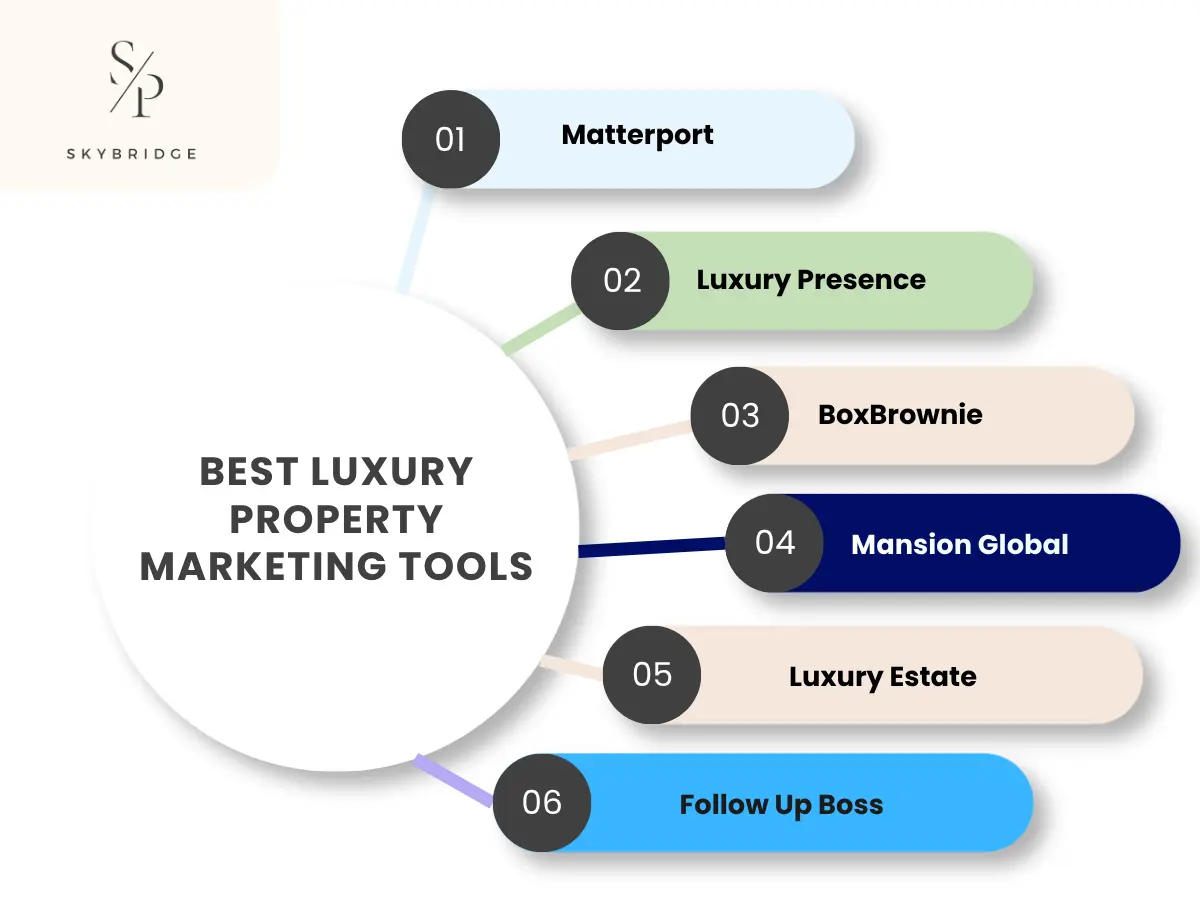
The best luxury property marketing tools include platforms such as Matterport, Luxury Presence, BoxBrownie, Mansion Global, LuxuryEstate, and Follow Up Boss, each designed to support property presentation, visibility, and lead management. Together, these tools help showcase properties effectively, manage buyer relationships, and optimize marketing performance across channels. As a result, they enable consistent execution, improve targeting accuracy, and deliver measurable outcomes, which are essential for attracting qualified buyers and converting interest into high-value offers.
6 Best luxury property marketing tools:
Matterport: Creates immersive 3D tours that let buyers explore and evaluate properties remotely, reducing unnecessary visits and improving the quality of inquiries.
Luxury Presence: Builds high-end property websites that enhance branding, improve search visibility, and capture qualified leads.
BoxBrownie: Enhances property visuals with editing and virtual staging to improve presentation and increase buyer engagement.
Mansion Global: Lists properties on a global luxury platform to reach affluent buyers and drive qualified inquiries from serious prospects.
Luxury Estate: Distributes listings across international markets to expand reach and attract high-intent global buyers.
Follow Up Boss: Manages and nurtures leads through structured follow-ups to improve response speed and convert inquiries into deals.
- Matterport
Matterport is a 3D virtual tour platform used in luxury property marketing to create immersive experiences that let buyers explore homes remotely with accurate spatial detail. It uses 3D scanning to build digital models that clearly show layout and flow. Reuse these tours in listings and campaigns so buyers can explore, evaluate, and shortlist properties before visiting, thereby reducing unnecessary showings, improving their confidence in decisions, and attracting more qualified inquiries.
- Luxury Presence
By powering high-end real estate websites and digital experiences, Luxury Presence helps luxury properties stand out through strong branding, fast performance, and search visibility. Instead of standard listing pages, it enables agents to present properties through custom-designed websites, integrated SEO, and lead capture systems that keep buyers engaged. This setup creates a seamless browsing experience, which strengthens online presence, builds credibility, and drives more qualified inquiries.
- BoxBrownie
Enhancing property visuals is critical in luxury marketing, and BoxBrownie is a visual-editing and virtual-staging tool that improves how listings appear by making spaces look more complete, polished, and realistic. It enhances images, digitally stages empty rooms, and adjusts lighting to highlight key features. Agents use these visuals across listings and ads to help buyers better visualise the space, which improves first impressions, increases engagement, and leads to more qualified inquiries from serious buyers.
- Mansion Global
Mansion Global is an international luxury real estate platform that showcases high-end properties to affluent buyers who are actively searching for and shortlisting homes across global markets. Properties are listed with premium placements, editorial features, and global syndication, ensuring visibility in trusted, high-credibility environments where buyers compare options. This positioning builds trust early in the buyer journey, influences shortlisting decisions, and drives qualified inquiries from buyers more likely to move forward with competitive offers.
- Luxury Estate
Using LuxuryEstate in luxury property marketing lists high-end homes on a global platform that connects with affluent buyers actively searching and shortlisting properties across international markets. Listings are presented with detailed descriptions, high-quality visuals, and multilingual support, and are distributed across its network to target buyers in specific regions. This placement helps buyers discover, compare, and evaluate properties in a trusted environment, strengthening shortlisting decisions and driving qualified inquiries more likely to convert into competitive offers.
- Follow Up Boss
Managing high-value buyer relationships requires Follow Up Boss, a CRM platform that tracks, organises, and nurtures luxury property leads through structured follow-up workflows. It captures leads from listings, ads, and websites, then automates follow-ups and tracks conversations through pipeline stages. This ensures a fast response, consistent engagement, and better lead qualification, which builds trust, shortens decision timelines, and increases the chances of converting serious inquiries into closed deals.
What Is Luxury Property Market Analysis?
Luxury property market analysis is the process of evaluating high-end real estate data, buyer behaviour, and market trends to make informed decisions on pricing, positioning, and marketing. It involves analysing comparable sales, tracking active listings, and studying demand patterns in prime locations, unique amenities, and lifestyle preferences tailored for high-net-worth individuals. As the global luxury residential real estate market is projected to grow from USD 606.84 billion in 2026 to USD 735.48 billion by 2031 at a CAGR of 3.92%, understanding these dynamics becomes essential to stay competitive.
By assessing buyer preferences for properties such as waterfront villas, penthouses, or gated estates, agents can compare listings, identify pricing gaps, and determine market position. In practice, this analysis helps refine pricing, adjust positioning, and more precisely target the right buyers. This approach increases visibility, reduces time on market, and improves the chances of securing high-value offers.
What Are the Latest Luxury Property Market Trends?
The latest luxury property market trends reflect a shift toward wellness-driven living, smart technology, and experience-focused design as high-net-worth buyers prioritize lifestyle, comfort, and long-term value. Buyers now evaluate properties based on indoor air quality, private wellness spaces, automation systems, and multigenerational layouts, while remote work and wealth mobility reshape demand across emerging markets. This demand is reflected in market growth, with luxury single-family home sales rising 3.6% and attached properties rising 1.8% in Q1 2026, reinforcing sustained interest. These shifts make both property features and location strategy critical for positioning.
6 Key luxury property market trends include:
- Wellness infrastructure
Buyers now expect built-in wellness features such as spa-style bathrooms, saunas, yoga rooms, and advanced air and water filtration systems as standard in luxury homes. These features support health-focused living and align with the rising demand for indoor environmental quality. In luxury property marketing, agents highlight these elements through video tours and lifestyle visuals to position the property as a complete wellness-focused living environment.
- Privacy and security
Privacy and security are top priorities for wealthy buyers, fueling a strong demand for gated estates and biometric locks. This focus on high-tech protection has turned into a major market driver, pushing global spending on smart-home security toward an expected $39 billion by 2029. By highlighting these advanced features alongside private layouts, marketing strategies reinforce a sense of safety and exclusivity, making properties much more attractive to serious buyers seeking a secure sanctuary.
- Multigenerational living
Demand for multigenerational homes has increased from 11% to nearly 30%, driven by buyers seeking flexible living arrangements for extended families. Properties with guest houses, dual units, or private suites allow independent yet connected living. In luxury property marketing, agents highlight these layouts to appeal to both lifestyle buyers and investors, positioning the property as adaptable, future-proof, and aligned with evolving family structures.
- High-tech smart homes
High-end buyers expect fully integrated smart-home systems that control lighting, security, climate, and entertainment via centralised platforms. These systems improve convenience, energy efficiency, and security while enhancing the overall living experience. In luxury property marketing, agents use interactive demos and video walkthroughs to showcase automation features, helping buyers understand functionality and reinforcing the property’s modern, future-ready positioning.
- Silent architecture
Silent architecture focuses on creating low-noise, acoustically balanced environments that support relaxation, privacy, and mental well-being. Features such as soundproof walls, insulated materials, and spatial design reduce external noise and internal disturbances. Marketing highlights these elements as part of a calm, high-comfort lifestyle, appealing to buyers who prioritise peace, focus, and long-term livability in premium residential environments.
- Migration to emerging markets
Luxury demand is shifting toward emerging markets such as Miami and Austin, driven by tax advantages, climate preferences, and lifestyle opportunities. High-net-worth buyers are relocating or investing in these regions, increasing competition and demand. In luxury property marketing, agents use geo-targeted campaigns and location-focused messaging to capture this demand and position properties effectively in high-growth markets.
How to Find the Right Property Management Company for Your Luxury Property?
Finding the right partner to manage your luxury property requires evaluating experience, service quality, and the ability to handle high-value assets with precision. To ensure effective management, a reliable property management company should demonstrate expertise in luxury markets, strong tenant screening processes, and access to high-net-worth renter networks. In addition, reviewing their maintenance standards, marketing capabilities, and communication approach helps confirm that they align with your expectations. This combined evaluation ensures consistent tenant quality, protects property value, reduces vacancies, and supports stable, long-term returns.