
To dispute an eviction on your tenant screening report, request a copy of your report, identify the screening company that reported the eviction, review the record for errors, collect supporting documents, and submit a formal dispute requesting correction or removal of inaccurate information. Disputing an eviction involves identifying outdated, incorrect, incomplete, or misreported records and using your rights under the Fair Credit Reporting Act to ensure only verified information appears on your tenant screening report, which can directly affect rental approvals and housing opportunities.
To continue the process, compare the eviction details with court records, lease agreements, and payment history to identify issues such as dismissed cases, mistaken identity, duplicate entries, or outdated records. Once the errors are confirmed, submit a dispute with supporting evidence to trigger a reinvestigation. If the issue remains unresolved, strengthen your documentation, request court corrections, or file complaints with the CFPB or FTC to improve reporting accuracy and protect future rental opportunities.
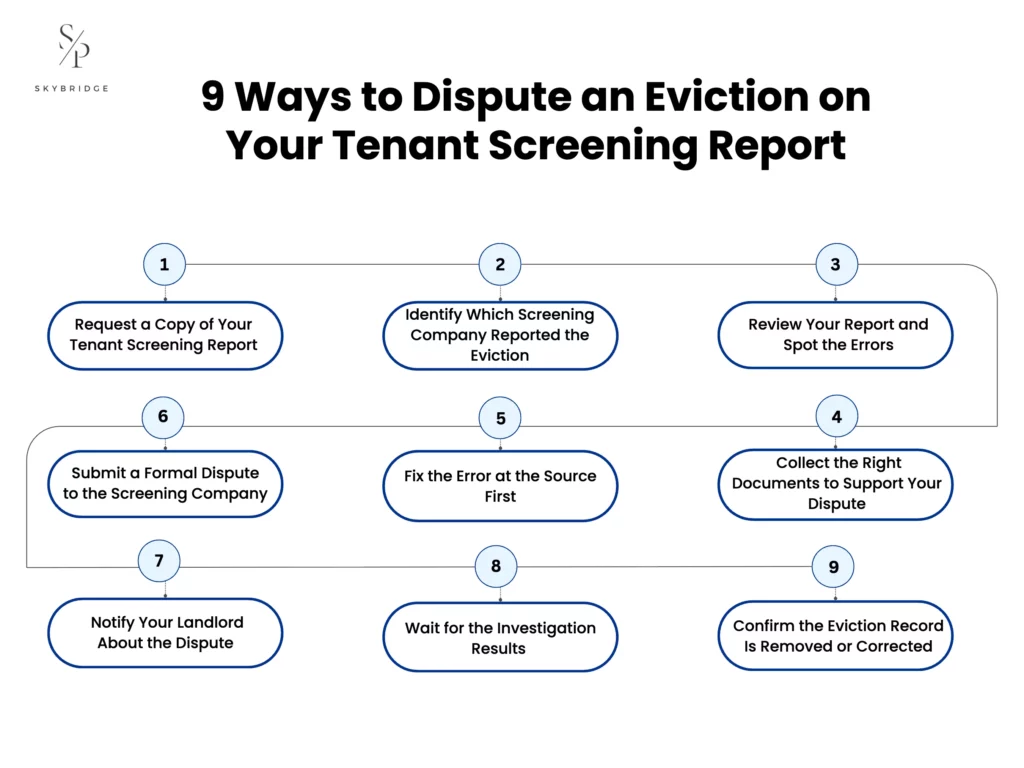
9 Ways to Dispute an Eviction on Your Tenant Screening Report :
Step 1: Request a Copy of Your Tenant Screening Report: Request your tenant screening report to review the eviction details, identify any inaccuracies, and prepare supporting documentation before filing a formal dispute.
Step 2: Identify Which Screening Company Reported the Eviction: Locate the tenant screening company responsible for reporting the eviction record so you can direct your dispute to the correct reporting agency.
Step 3: Review Your Report and Spot the Errors: Carefully examine the tenant screening report to identify inaccurate, outdated, duplicate, or mismatched eviction records that support your dispute.
Step 4: Collect the Right Documents to Support Your Dispute: Gather court records, payment receipts, lease agreements, and identification documents that prove the eviction information is incorrect or incomplete.
Step 5: Fix the Error at the Source First: Correct the eviction information directly with the landlord, court, or reporting source before asking screening companies to update their records.
Step 6: Submit a Formal Dispute to the Screening Company: Send a written dispute with supporting evidence to trigger an official investigation and correction process under the Fair Credit Reporting Act.
Step 7: Notify Your Landlord About the Dispute: Inform the landlord or property manager that the eviction record is currently under dispute and provide relevant supporting information.
Step 8: Wait for the Investigation Results: Monitor the investigation timeline and respond promptly if the tenant-screening company requests additional documents or clarification.
Step 9: Confirm the Eviction Record Is Removed or Corrected: Review the updated tenant screening report and verify that the eviction record has been accurately corrected or removed.
Step 1: Request a Copy of Your Tenant Screening Report
First, request a copy of your tenant screening report directly from the tenant screening company or ask the landlord to provide the report information used during your rental application review. Accessing the report lets you confirm the exact eviction record associated with your application and identify the information that needs correction.
- Identify the Screening Company: Ask the landlord which tenant-screening company provided the report, such as TransUnion SmartMove, Experian RentBureau, or another consumer reporting agency.
- Submit Your Request: Provide your legal name, current address, previous addresses when necessary, and date of birth so the screening company can locate your file accurately.
- Use Your Free Report Rights: If your rental application was denied or negatively affected, request a free copy of the report within 60 days under the Fair Credit Reporting Act.
- Review the Eviction Information: Check the eviction case number, filing date, rental history, court status, and related public records for any inaccuracies or omissions.
- Compare the Report With Legal Documents: Match the report details with court records, lease agreements, payment receipts, settlement agreements, or proof of rent payment to prepare for a formal dispute.
Obtaining the tenant screening report lays the foundation for the dispute process because it identifies the exact information landlords used in making rental screening decisions.
Step 2: Identify Which Screening Company Reported the Eviction
Review your tenant screening report or adverse action notice to identify the company that reported the eviction. Sending the dispute to the correct reporting agency prevents delays and ensures the investigation reaches the organization responsible for the inaccurate record.
- Review the Tenant Screening Report: Locate the section containing the screening company name, report reference number, eviction details, and reporting information.
- Check the Adverse Action Notice: If a landlord denied your application based on your tenant screening report, the adverse action notice should include the screening company’s name, mailing address, phone number, and contact information.
- Match the Eviction Entry to the Reporting Agency: Verify which company reported the eviction by comparing the case number, filing information, and court record details to the information listed in the report.
- Record the Contact Information: Save the screening company’s dispute address, online dispute portal, customer service number, and any report reference details required for your dispute.
Identifying the correct screening company helps streamline the dispute process and improves the likelihood of efficiently correcting inaccurate eviction information.
Step 3: Review Your Report and Spot the Errors
Carefully review the tenant screening report to identify any inaccurate, outdated, incomplete, or mismatched eviction information before submitting a formal dispute. A detailed review helps isolate reporting problems and strengthens the accuracy of your claim.
- Review the Eviction Entry: Locate the eviction section and review the case number, filing date, judgment details, rental history, and reported court outcome.
- Verify Personal Information: Check your name, date of birth, Social Security number, and address history to confirm the report belongs to you and does not contain another person’s eviction record.
- Look for Common Reporting Errors: Identify inaccurate entries such as dismissed cases listed as active evictions, duplicate filings, sealed records, incorrect case outcomes, or records connected to the wrong person.
- Review Record Age and Financial Status: Confirm that eviction records older than seven years do not appear on the report, and check whether settled rental debts still appear as unpaid.
- Compare the Information With Court Documents: Use court records, lease agreements, settlement documents, and proof of payment to verify whether the report reflects the actual legal outcome.
- Create a Clear Error List: Document each inaccurate or incomplete entry separately so the dispute clearly identifies every issue requiring correction.
A careful review improves the accuracy of your dispute and increases the chances of having inaccurate eviction records removed or corrected from your rental history.
Step 4: Collect the Right Documents to Support Your Dispute
Gather reliable supporting documents that prove the eviction information is inaccurate before filing a dispute with the tenant screening company. Strong documentation provides verifiable evidence that supports the correction or removal of inaccurate eviction records during the investigation process. The quality and accuracy of supporting documents can significantly influence the outcome of the dispute and the likelihood of a successful correction.
- Gather Court Records and Legal Documents: Collect court orders, dismissal notices, motions to vacate judgment, settlement agreements, or other official court records that confirm the actual outcome of the eviction case.
- Include Proof of Payment: Provide bank statements, payment receipts, money order records, canceled checks, or proof showing rent balances were paid or resolved.
- Gather Identity Verification Documents: Use documents such as a government-issued ID, utility bill, lease agreement, or Social Security verification to confirm your identity and prevent mistaken identity errors.
- Add Communication Records: Attach emails, written notices, text messages, or landlord correspondence that support your claim or explain rental disputes connected to the eviction filing.
- Organize the Evidence Clearly: Arrange the documents by category, label each document clearly, and match each piece of evidence directly to the eviction entry being disputed.
Step 5: Fix the Error at the Source First
Contact the landlord, court, or reporting source responsible for the eviction record and correct the issue before filing a dispute with the tenant screening company. Correcting errors at the source helps prevent the same inaccurate information from reappearing in multiple reports and improves long-term reporting accuracy, reducing the likelihood of future reporting errors in other tenant screening databases.
- Identify the Original Source: Review the tenant screening report and confirm whether the eviction record originated from court records, landlord reporting, or another reporting agency.
- Submit a Written Correction Request: Send a formal written request describing the inaccurate information, including incorrect filing dates, wrong tenant details, duplicate entries, or inaccurate judgments.
- Provide Supporting Evidence: Include court orders, settlement agreements, payment proof, or legal records that confirm the correct information.
- Request Deletion or Correction: Ask the reporting source to remove dismissed, sealed, expunged, outdated, or incorrectly reported eviction records.
- Use Your Rights Under Federal Law: Under the Fair Credit Reporting Act, reporting agencies must investigate disputed information and correct or remove unverifiable records within the required timeframe.
- Escalate the Matter When Necessary: If corrections are not made, file complaints with the Consumer Financial Protection Bureau or seek legal remedies to enforce accurate reporting.
Step 6: Submit a Formal Dispute to the Screening Company
File a formal dispute with the tenant screening company that reported the eviction to create an official record of the issue and trigger the investigation process required under the Fair Credit Reporting Act. Include detailed information and supporting evidence alongside the dispute to increase the likelihood that inaccurate eviction information will be corrected or removed.
- Draft a Written Dispute Letter: Clearly identify the eviction record being disputed and explain why the information is inaccurate, incomplete, outdated, or unverifiable.
- Attach Supporting Documents: Include copies of court records, dismissal notices, payment proof, identity verification documents, lease agreements, and any other evidence supporting your claim.
- Submit the Dispute Through Official Channels: Send the dispute through the screening company’s online dispute system, certified mail, email, or dispute portal, and keep copies of all submissions.
- Request a Reinvestigation: Ask the tenant screening company to verify the disputed information directly with the reporting source and remove information that cannot be confirmed.
- Monitor the Investigation Timeline: Most investigations must be completed within 30 days, although some investigations may extend if additional verification is required.
- Follow Up When Necessary: Contact the screening company if the investigation status remains unclear or additional information is requested.
Step 7: Notify Your Landlord About the Dispute
Provide written notice to your landlord or property manager explaining that the eviction record on your tenant screening report is currently under dispute. Include the name of the tenant screening company, identify the disputed eviction entry, and explain why the information may be inaccurate, outdated, or incomplete. Also, provide supporting documents, such as dispute confirmations, payment records, court orders, or lease documents, that substantiate your claim and help verify the issue under review.
After notifying the landlord, request that they pause a final rental decision or reconsider your application once the investigation is complete. Keeping the landlord informed demonstrates that you are actively working to correct the issue and supports transparency throughout the rental application process. In competitive California rental markets, timely communication and documented evidence may increase the likelihood of reconsideration once the tenant screening report is updated.
Step 8: Wait for the Investigation Results
Once the dispute has been submitted and the landlord has been notified, monitor the investigation process closely by tracking updates via the company’s portal, email notices, or written communication. Respond promptly if additional documents or clarification are requested, as prompt responses help prevent delays and support a smoother investigation.
Most investigations are completed within 30 days, although some cases may take longer if the screening company needs to verify court records or contact landlords and reporting agencies. During the investigation, the company must review the disputed eviction information and correct or remove records that are inaccurate, incomplete, or unverifiable. Once the process is complete, review the updated tenant screening report carefully. If the incorrect information still appears, submit additional evidence, request another review, or escalate the dispute through legal or regulatory channels.
Step 9: Confirm the Eviction Record Is Removed or Corrected
After the investigation is complete, review the updated tenant screening report and confirm that the eviction record was corrected or removed accurately. Compare the revised report with court records, payment receipts, lease agreements, and other legal documents to verify that the information now reflects the correct case outcome. Carefully check the eviction case number, filing status, and rental history to ensure outdated, duplicate, or inaccurate records no longer appear.
Once the review is complete, confirm that the screening company updated the corrected information consistently across all reporting systems. If the inaccurate eviction record still appears, contact the reporting agency immediately and request additional correction or escalation. Accurate reporting protects your rental history, improves future rental opportunities, and reduces the risk of unnecessary rental denials.
What Legal Rights Should You Know as a Tenant Disputing an Eviction Record?
Tenants disputing an eviction record have rights under the Fair Credit Reporting Act to identify the screening company, receive an adverse action notice, request a free copy of the report, dispute inaccurate information, and request a reinvestigation. Tenant screening companies must remove records older than 7 years, and landlords must comply with legal notice and due process requirements. California tenants may also receive additional protections involving sealed unlawful detainer records and tenant screening laws.
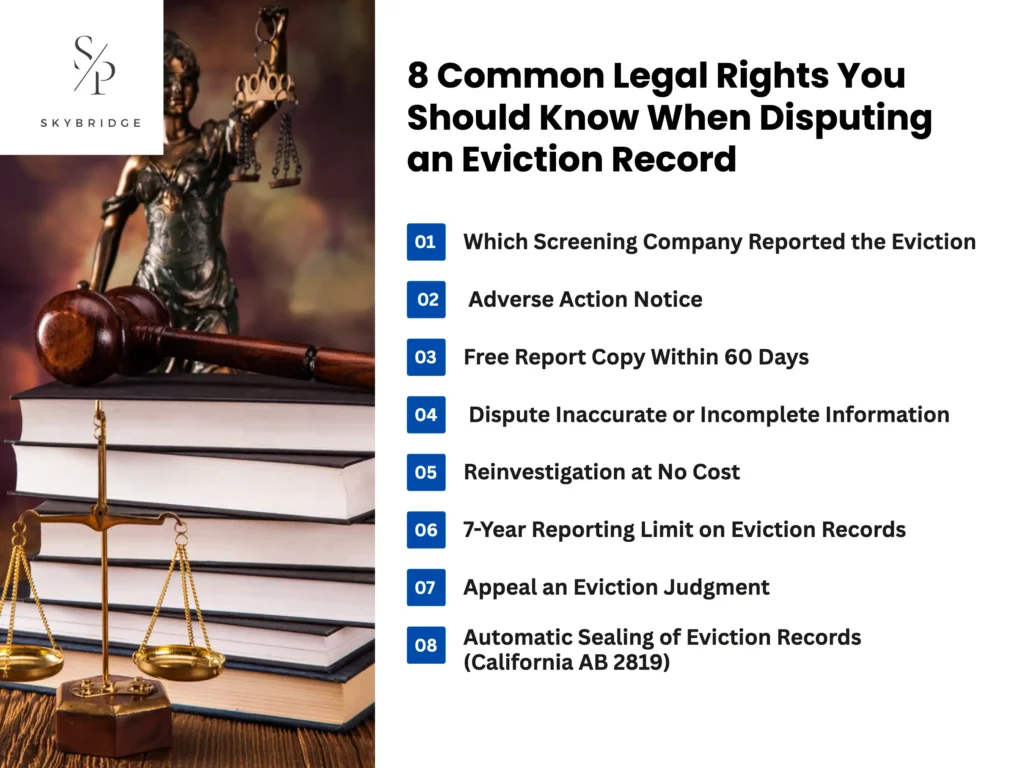
8 Common Legal Rights You Should Know When Disputing an Eviction Record
- Your Right to Know Which Screening Company Reported the Eviction
- Your Right to an Adverse Action Notice
- Your Right to a Free Report Copy Within 60 Days
- Your Right to Dispute Inaccurate or Incomplete Information
- Your Right to a Reinvestigation at No Cost
- Seven-Year Reporting Limit on Eviction Records
- Your Right to Appeal an Eviction Judgment
- Your Right to Automatic Sealing of Eviction Records (California AB 2819)
- Your Right to Know Which Screening Company Reported the Eviction
Under the Fair Credit Reporting Act, tenants have the right to know which tenant screening company reported the eviction listed on their tenant screening report. If a landlord denies a rental application because of information in a screening report, the landlord must provide the reporting agency’s name and contact information. This right allows tenants to identify the source of the eviction record, request a copy of the consumer report, review the reporting details, and submit disputes directly to the screening company if inaccuracies are found.
- Your Right to an Adverse Action Notice
If a landlord denies your rental application or imposes unfavorable rental terms because of information in a tenant screening report, you have the right to receive an adverse action notice. The notice should explain the reason for the denial and provide the tenant screening company’s contact information. This information helps tenants understand the reason for the decision, review the report used in the screening, and dispute any inaccurate or incomplete eviction information.
- Your Right to a Free Report Copy Within 60 Days
Following an adverse action notice, tenants are entitled to request a free copy of their tenant screening report within 60 days under the Fair Credit Reporting Act. The tenant screening company must provide access to the report at no cost, allowing tenants to examine eviction records, rental history, and public records connected to the rental denial. Reviewing the report thoroughly supports accurate dispute preparation and strengthens the submission of correction requests.
- Your Right to Dispute Inaccurate or Incomplete Information
Tenants have the right to dispute inaccurate, incomplete, outdated, or unverifiable information appearing on a tenant screening report. Once a dispute is submitted, the tenant screening company must investigate the claim and verify the information with the original reporting source. If the screening company cannot verify the information, it must correct or remove the disputed entry. This process helps ensure that consumer reports contain only accurate and legally reportable information.
- Your Right to a Reinvestigation at No Cost
Tenants may request a reinvestigation without paying any fees when they dispute inaccurate information on a tenant screening report. During the reinvestigation process, the screening company reviews the dispute, examines the supporting evidence, and contacts the original source to verify the information. Any eviction record that cannot be verified must be corrected or deleted. This right protects tenants from inaccurate or unsupported reporting.
- Seven-Year Reporting Limit on Eviction Records
As a tenant disputing an eviction record, the Fair Credit Reporting Act limits how long eviction records can remain on a tenant screening report to 7 years from the filing date. Public records and eviction filings that fall outside this reporting period are no longer eligible and must be removed by the tenant screening company. This limitation helps ensure that rental decisions rely on current, legally reportable information rather than on outdated eviction history.
- Your Right to Appeal an Eviction Judgment
As a tenant, you have the right to appeal an eviction judgment or file a motion to vacate when legal or procedural problems affected the original decision. Appeals may challenge issues such as improper notice, inaccurate filings, or violations of tenant rights. If the court reverses, updates, or dismisses the eviction judgment, the tenant screening report must reflect the corrected legal outcome. Accurate court reporting helps protect tenants from wrongful screening decisions.
- Your Right to Automatic Sealing of Eviction Records (California AB 2819)
Under California AB 2819, certain eviction records may be automatically sealed, limiting public access to information from unlawful detainer cases in specific situations. Courts may seal records when the landlord does not prevail, the case is dismissed, or legal conditions for sealing are met. Once sealed, these records should not appear on tenant screening reports or affect rental decisions. These protections help prevent dismissed or legally restricted eviction records from negatively impacting future housing opportunities in California.
What Are the Common Eviction Errors You Can Dispute on Your Tenant Screening Report?
Tenants can dispute cases that were dismissed but still appear on reports, mistaken identity, duplicate entries, inaccurate outcomes, outdated records, and sealed records that should no longer appear. These issues often result from outdated public records, data-matching problems, or reporting failures by tenant screening companies. Identifying these problems allows tenants to compare the tenant screening report with official court records and supporting documents before requesting correction or removal.
7 Common Eviction Errors You Can Fix on Your Tenant Screening Report
- Dismissed Cases Still Showing on Your Report
- Mistaken Identity Due to Similar Names or Addresses
- Eviction Filed by Mistake by Your Landlord
- Incorrect Outcome Reported for Your Case
- Duplicate Eviction Entries for the Same Case
- Outdated or Expired Eviction Records
- Sealed or Expunged Records Still Appearing
- Dismissed Cases Still Showing on Your Report
Dismissed eviction cases should not continue appearing as negative eviction entries on a tenant screening report. A dismissal means the court did not issue a final eviction judgment against the tenant. Reporting problems sometimes occur when screening systems fail to update court outcomes correctly. Review court records and dismissal documents carefully and request the removal of the inaccurate entry.
- Mistaken Identity Due to Similar Names or Addresses
Eviction records associated with another person may appear on a tenant screening report due to similar names, incorrect addresses, or data-matching errors. These issues can cause another tenant’s eviction history to appear incorrectly on your report. Verify your identifying information using government identification, lease agreements, utility records, and court documents to prove the mismatch and request correction.
- Eviction Filed by Mistake by Your Landlord
Landlord filing errors may create inaccurate eviction records even when rent issues were resolved, or the filing involved the wrong tenant. These mistakes may continue to appear in tenant screening reports despite subsequent corrections. Review lease agreements, payment records, and communication history to verify the filing error and request deletion of the inaccurate eviction information.
- Incorrect Outcome Reported for Your Case
Tenant screening reports sometimes display inaccurate eviction outcomes, such as showing a judgment instead of a dismissal or listing unpaid balances after a settlement agreement resolved the matter. These reporting issues may misrepresent your rental history and affect future rental opportunities. Compare the screening report with official court outcomes and request corrections for any inconsistencies.
- Duplicate Eviction Entries for the Same Case
Duplicate reporting occurs when the same eviction case appears multiple times across tenant screening systems. Multiple entries may make the rental history appear more severe than it actually is. You should review the case numbers, filing dates, and court information carefully to identify duplicate listings and request deletion of extra entries.
- Outdated or Expired Eviction Records
Eviction records that remain on a tenant screening report beyond the seven-year reporting period are outdated and should be removed. The Fair Credit Reporting Act limits how long public record information may remain on consumer reports. When tenant screening companies fail to update their reporting timelines, expired records may persist, negatively affecting rental applications. Verify the filing date and request the removal of outdated records.
- Sealed or Expunged Records Still Appearing
Sealed or expunged eviction records should no longer appear on tenant screening reports because the records are legally restricted from public reporting. Reporting these records may violate consumer reporting standards. California tenants may encounter this issue when unlawful detainer records that should remain sealed continue appearing in tenant screening systems. Use court orders and official documentation to request immediate removal.
Why You Should Dispute an Eviction on Your Tenant Screening Report?
You should dispute an eviction on your tenant screening report to remove inaccurate information, improve your chances of rental approval, reduce additional rental costs, and strengthen your overall rental history. Correcting inaccurate records may also help tenants avoid higher deposits, unnecessary co-signers, landlord blacklisting, and housing restrictions. Disputing eviction reporting errors helps present a more accurate rental background and increases access to housing opportunities.
- Strengthens your chances of getting approved for a rental application faster
- Removes inaccurate or wrongful eviction records that should not appear on your report
- Lowers the risk of landlords imposing higher security deposits based on false reporting information
- Eliminates unnecessary co-signer requirements caused by inaccurate eviction reporting
- Prevents landlord blacklisting from affecting rental opportunities across multiple properties
- Shield your credit score from eviction judgment damage tied to reporting errors
- Expands access to higher-quality housing options in competitive rental markets
- Improves eligibility for government-assisted and subsidized housing programs
What to Do If Your Eviction Dispute on the Tenant Screening Report Gets Denied?
If your eviction dispute is denied, strengthen the dispute with additional evidence, request court corrections, submit a second dispute, or escalate the issue through government agencies and legal support. A denial does not end the process, as reporting agencies are still required to correct inaccurate or unverifiable information under the Fair Credit Reporting Act. Taking these additional steps may help remove inaccurate records and improve the overall accuracy of your tenant screening report.
- Strengthen Your Dispute With Stronger Supporting Documentation
Provide stronger evidence, such as certified court orders, official dismissal records, payment history, settlement agreements, or identity verification documents to support your claim.
- Submit a Second Dispute With Updated Evidence
File another dispute with additional supporting documentation so the screening company can conduct a new investigation based on the updated information.
- Add a Statement of Dispute Directly to Your File
Ask the screening company to include a formal dispute statement in your file so landlords reviewing the report can see your explanation alongside the eviction entry.
- Request the Court to Correct or Update the Official Record
When the reporting issue originates from court data, request updated court records, corrected case information, or a motion to vacate judgment so the legal record reflects accurate information.
- File a Formal Complaint With the Consumer Financial Protection Bureau (CFPB)
Submit a complaint to the CFPB if the screening company fails to investigate the dispute properly or continues to report inaccurate information.
- Report FCRA Violations to the Federal Trade Commission (FTC)
Report the issue to the FTC if reporting practices violate the Fair Credit Reporting Act or consumer reporting requirements.
- Contact a Legal Aid Office or Housing Attorney for Support
Contact a housing attorney or local legal aid office for assistance reviewing the dispute, organizing evidence, and enforcing tenant rights.
- Partner With a Professional Property Management Company
If the dispute becomes complex, work with a reliable property management company offering property management and eviction support services that can help review your case, organize documentation, strengthen your position, and support an accurate presentation of your rental history to landlords.
- Pursue Legal Action for Ongoing FCRA Violations
If the tenant screening company continues to report inaccurate information despite verified evidence, tenants may pursue legal action under the Fair Credit Reporting Act to enforce correction requirements and, when applicable, seek damages.