

To get an eviction off your record, search your California Superior Court eviction case, check whether the record is already sealed, confirm the final case outcome, request tenant screening reports, dispute inaccurate eviction entries, and file a Motion to Seal if the eviction remains public. Completing these steps can help reduce public access to eviction records, correct inaccurate tenant-screening information, and improve future rental opportunities by limiting the visibility of negative background checks.
Successful eviction removal also depends on factors such as landlord judgments, unpaid rent balances, reporting limits, court procedures, and California’s 60-day sealing protections, all of which affect whether the record qualifies for sealing or correction. Since eviction removal laws, notice requirements, and court-access rules differ by state, reviewing local legal procedures before filing disputes or sealing requests is important. Most eviction records also remain visible on tenant screening reports for up to 7 years, although sealed, dismissed, corrected, or older records may be less accessible in future rental applications.
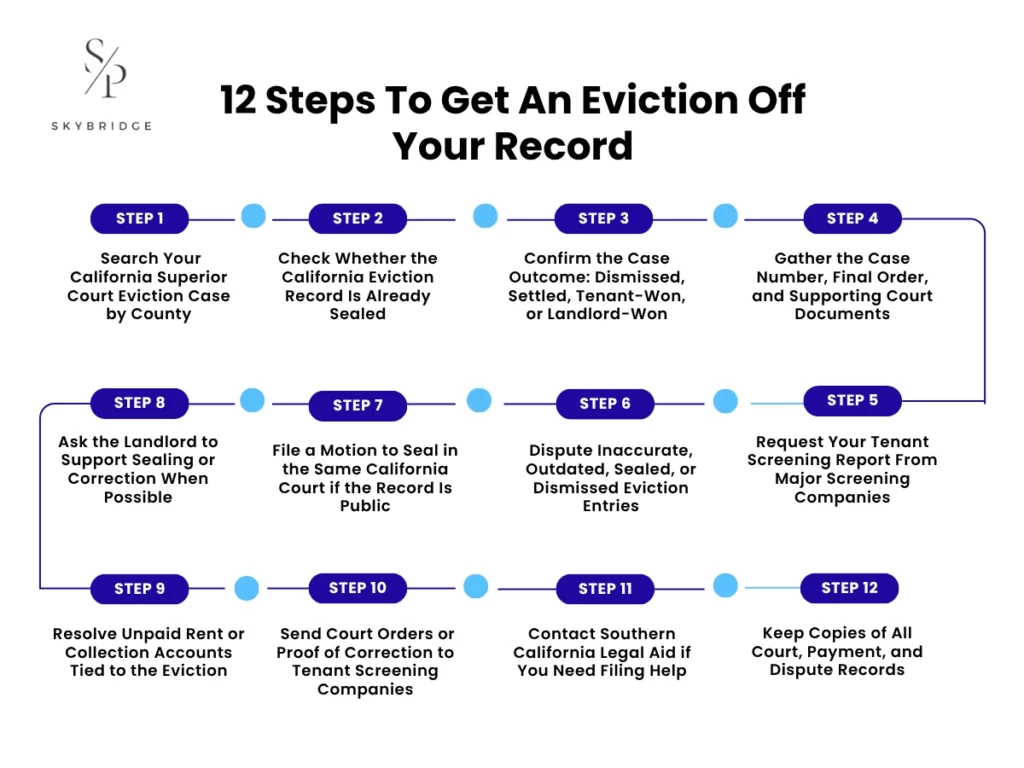
12 Steps To Get An Eviction Off Your Record are:
- Step 1: Search Your California Superior Court Eviction Case by County: Reviews the official court record to confirm whether the eviction remains public, sealed, dismissed, or eligible for further legal action.
- Step 2: Check Whether the California Eviction Record Is Already Sealed: Verifies whether California law already restricts public access to the eviction record through automatic sealing protections.
- Step 3: Confirm the Case Outcome: Dismissed, Settled, Tenant-Won, or Landlord-Won: Determines whether the eviction qualifies for sealing, correction, expungement, or additional court procedures.
- Step 4: Gather the Case Number, Final Order, and Supporting Court Documents: Collect the legal and financial records needed to support sealing requests, dispute cases, or corrections to eviction records.
- Step 5: Request Your Tenant Screening Report From Major Screening Companies: Identifies whether eviction records appear on rental background reports used during housing applications.
- Step 6: Dispute Inaccurate, Outdated, Sealed, or Dismissed Eviction Entries: Corrects inaccurate tenant-screening information that may reduce future rental approval chances.
- Step 7: File a Motion to Seal in the Same California Court if the Record Is Public: Requests restricted public access to the eviction record when sealing eligibility requirements are met.
- Step 8: Ask the Landlord to Support Sealing or Correction When Possible: Use landlord cooperation, payment confirmation, or settlement terms to strengthen record-correction or sealing requests.
- Step 9: Resolve Unpaid Rent or Collection Accounts Tied to the Eviction: Improves sealing eligibility by resolving any outstanding rent balances or collection-related debt associated with the eviction.
- Step 10: Send Court Orders or Proof of Correction to Tenant Screening Companies: Updates tenant-screening reports with sealed, corrected, dismissed, or satisfied eviction information.
- Step 11: Contact Southern California Legal Aid if You Need Filing Help: Provides legal guidance with court forms, sealing motions, eviction procedures, and filing requirements.
- Step 12: Keep Copies of All Court, Payment, and Dispute Records: Maintains organized documentation to support sealing requests, disputes, court filings, and future rental applications.
Step 1: Search Your California Superior Court Eviction Case by County
Search your California eviction case by county before filing a request to seal or remove the record because Superior Court records determine whether the eviction remains public, confidential, dismissed, or sealed. Reviewing the court file also helps you identify what legal or administrative action you need to take next.
- Visit the Correct Superior Court Website: Open the Superior Court website for the county where the landlord filed the unlawful detainer case and access the public records search portal.
- Search Using Your Name or Case Number: Enter your full legal name or eviction case number to locate the court case and review the filing details.
- Review the Current Case Status: Check whether the court lists the case as active, dismissed, judgment entered, confidential, or sealed.
- Apply the 60-Day Confidentiality Rule: Review whether the case remained confidential under California Code of Civil Procedure Section 1161.2 during the first 60 days after filing.
- Confirm Whether the Court Sealed the Record Automatically: Verify whether the landlord failed to win the case within 60 days or whether the court dismissed the eviction.
- Prepare for Additional Court Action: File a Motion to Seal Court Record if the eviction case remains public after the confidentiality period ends.
Step 2: Check Whether the California Eviction Record Is Already Sealed
After reviewing your eviction case through the county Superior Court system, confirm whether the court already sealed the record under California law. A sealed unlawful detainer record usually does not appear in tenant screening reports or public background checks, which can improve future rental opportunities.
- Review the Court File Status: Check the online court record or contact the county court clerk to confirm whether the eviction case appears as sealed, confidential, dismissed, or public.
- Apply the 60-Day Sealing Rule: Verify whether the landlord obtained a judgment within 60 days after filing the unlawful detainer complaint under CCP § 1161.2. Expect the court to seal the record automatically if the landlord did not prevail or if the court dismissed the action.
- File a Motion to Seal if the Record Remains Public: Prepare a Motion to Seal Court Record if the eviction file still appears in public court records after the confidentiality period ends.
- Serve the Landlord and Keep Written Records: Provide a copy of the sealing request to the landlord and keep dismissal orders, settlement agreements, payment receipts, and court notices to support the sealing process.
Step 3: Confirm the Case Outcome: Dismissed, Settled, Tenant-Won, or Landlord-Won
Before you file a request to remove or seal an eviction record, confirm the final outcome of the eviction case because the court result determines which legal or administrative options may apply. Review the official county civil court record using your full name or case number through the online court portal or by visiting the courthouse in person. According to selfhelp.courts.ca.gov, reviewing the official court record is the most reliable way to confirm whether the case was dismissed, settled, or resulted in a judgment for either party.
Check whether the court dismissed the unlawful detainer case because of procedural errors or insufficient evidence, approved a settlement agreement between the landlord and tenant, ruled in favor of the tenant, or entered judgment for the landlord. A dismissal, settlement, or tenant victory may support a record-sealing or correction request, while a landlord judgment may require additional court action before removal becomes possible. Use the verified case outcome to determine the correct next step in the eviction removal process.
Step 4: Gather the Case Number, Final Order, and Supporting Court Documents
Once you confirm the outcome of the eviction case, gather the court documents required for sealing, expungement, or eviction record disputes. These records help prove the case outcome, payment status, and legal history before you continue with the eviction removal process.
- Collect the Case Number and Court File: Locate the eviction case number and related court file, as the court requires this information for motions, sealing requests, and tenant-screening disputes.
- Request the Final Order or Judgment: Obtain the final court order to confirm whether the case ended through dismissal, settlement, tenant victory, or landlord judgment, since the outcome affects removal eligibility.
- Retrieve the Initial Eviction Filing: Request a copy of the unlawful detainer complaint to review the landlord’s original claims, filing date, and case details.
- Obtain a Satisfaction of Judgment if Applicable: Request this document if you paid unpaid rent or resolved the court judgment, because it proves the balance was satisfied.
- Use the Court Portal or Clerk’s Office: Search the county court portal or visit the clerk’s office to request certified or official copies of the eviction records before reviewing your tenant screening report.
Step 5: Request Your Tenant Screening Report From Major Screening Companies
To verify whether the eviction appears on your rental history, request your tenant screening report from the company used for the rental application. Landlords and property managers use these reports to review eviction filings, court judgments, rental history, and public records before approving housing applications.
- Use Your Fair Credit Reporting Act Rights: Request a free copy of your tenant screening report within 60 days if a landlord denied your application based on screening information.
- Ask for the Screening Company Name: Request the screening company’s details from the landlord, as they must provide this information after an adverse housing decision.
- Contact Major Screening Companies: Request your report from Experian RentBureau, TransUnion SmartMove, CoreLogic SafeRent, AppFolio, or RentPrep through their consumer disclosure portals or support services.
- Verify Your Identity: Provide your name, address, date of birth, and details from your recent rental application so the company can locate your file.
- Review the Report Carefully: Check for incorrect eviction filings, outdated judgments, duplicate entries, or sealed records that should no longer appear.
Step 6: Dispute Inaccurate, Outdated, Sealed, or Dismissed Eviction Entries
Review your tenant screening and credit reports carefully and dispute any eviction entry that appears inaccurate, outdated, sealed, dismissed, or satisfied. Correcting reporting errors early can help prevent future issues with rental applications and background checks.
- Identify Incorrect Eviction Entries: Check the reports for inaccurate filings, outdated judgments, duplicate records, or sealed cases that should no longer appear.
- Gather Supporting Documents: Collect lease agreements, payment receipts, dismissal orders, sealing orders, or court records that prove the eviction information is incorrect or resolved.
- Submit a Written Dispute: Send the dispute through the reporting company’s online portal or mail the request through certified mail to create a formal dispute record.
- Track the Investigation Timeline: Monitor the dispute status because federal law requires credit bureaus and tenant screening companies to investigate reported errors within 30 days.
- File a Motion to Seal or Expunge if Necessary: Submit a Motion to Seal or expungement request with the original court if a dismissed or satisfied eviction still appears on public records or screening reports.
- Keep Copies of All Records: Save dispute letters, court filings, and supporting documents for future correction requests or legal follow-up.
Step 7: File a Motion to Seal in the Same California Court if the Record Is Public
File a Motion to Seal in the same California court if the eviction record still appears public after reviewing the case status and tenant screening reports. California law under CCP § 1161.2 allows tenants to request sealing when the landlord did not prevail, the court dismissed the eviction, the tenant prevailed at trial, or both parties reached a settlement supporting sealing. Before filing the motion, check the local court portal or contact the court clerk to confirm whether the court has automatically sealed the record under AB 2819.
Gather the case number, dismissal order, favorable judgment, or settlement agreement before submitting the motion because these documents help prove eligibility for record relief. File the request in the same court where the unlawful detainer case was heard so the judge can review the supporting records and determine whether to restrict public access to the eviction file. Contact the court’s self-help center or a legal aid organization if you need guidance with forms or filing procedures.
Step 8: Ask the Landlord to Support Sealing or Correction When Possible
Contact the landlord and request written support if the eviction record still appears in public records or tenant screening reports, because landlord cooperation can improve the chances of sealing or correcting the record. Ask the landlord to withdraw the eviction filing, confirm that the dispute was resolved through payment or settlement, or support a Motion to Seal filed with the court. Use written landlord confirmation, settlement agreements, or payment acknowledgments to help correct inaccurate, outdated, or resolved eviction reporting tied to your rental history.
Review your state’s eviction sealing rules before relying on landlord support because sealing requirements and court procedures vary by jurisdiction. Confirm whether your state requires landlord consent before the court can seal an eviction record, since some states allow tenants to request sealing independently, while others require landlord approval as part of the legal process. Check local court rules carefully before continuing with the eviction record removal process.
Step 9: Resolve Unpaid Rent or Collection Accounts Tied to the Eviction
Before you request eviction record sealing or expungement, resolve any unpaid rent or collection accounts connected to the eviction because unresolved balances can affect court relief and future rental applications. Contact the landlord, property manager, or collection agency handling the debt and request the current balance, payment terms, or settlement options before negotiating repayment.
Once you reach a payment or settlement agreement, request a written pay-for-delete agreement stating that the collection account will be removed from your credit report after payment. According to the State Law Library of Texas, use the written settlement agreement as part of your request to seal or expunge the eviction record because payment alone does not automatically remove the public court record. Keep copies of payment receipts, settlement agreements, and written confirmations to support future court filings or record correction requests.
Step 10: Send Court Orders or Proof of Correction to Tenant Screening Companies
Use the court records from your sealing, expungement, dismissal, or judgment satisfaction process to correct the eviction information reported by tenant screening companies. Request certified copies of dismissal orders, sealing orders, or Satisfaction of Judgment documents because these records prove that the eviction case was resolved, corrected, or legally restricted from public access. Keep the documents organized before starting the dispute process so you can respond quickly to additional verification requests.
After collecting the required court records, contact the tenant screening company listed in the adverse action notice provided after a denied rental application. Submit a formal dispute with the court order or proof of correction and request removal of the eviction entry from your tenant screening report. According to the Federal Trade Commission, screening companies must investigate valid disputes and correct inaccurate reporting when supporting documents confirm the change. Follow up with the screening company to confirm the eviction was removed and keep copies of all disputes, court records, and responses for future rental applications.
Step 11: Contact Southern California Legal Aid if You Need Filing Help
Contact a Southern California legal aid organization if you need help preparing court forms, filing a Motion to Seal, or understanding eviction record procedures. Use legal aid services to receive guidance with court documents, filing requirements, eviction clinics, and housing-related legal questions before continuing with the eviction record removal process.
Once you identify the type of filing support you need, contact the Legal Aid Foundation of Los Angeles at (800) 399-4529 for assistance in the Greater Los Angeles area, Community Legal Aid SoCal at (714) 571-5200 for Orange County and parts of Los Angeles County, or the Legal Aid Society of San Diego at (866) 244-0101 for housing and eviction defense services in San Diego County. Visit Stay Housed LA at www.stayhousedla.org or call (888) 694-0040 to access eviction clinics and legal information in Los Angeles County. Use the California Courts Legal Help Directory to locate additional legal aid programs across California if you need local filing assistance.
Step 12: Keep Copies of All Court, Payment, and Dispute Records
Maintain organized records throughout the eviction removal process because courts, landlords, and tenant screening companies may request proof that the debt was resolved or that an error affected the eviction record. According to the State Law Library of Texas, documented proof of payment resolution or legal error may be required during the eviction record removal process. Store both digital and physical copies securely so you can access the records quickly during sealing requests, screening disputes, or future rental applications.
Save payment receipts, money order confirmations, cleared checks, electronic transfer records, landlord emails, settlement agreements, and written dispute communications connected to the eviction case. Keep copies of dismissals, stipulations, sealing orders, Satisfaction of Judgment documents, and official court judgments because these records help support motions to seal or expunge the eviction record. Use organized documentation to respond efficiently to court requests, tenant screening disputes, or landlord verification questions related to your rental history.
What Factors Affect the Removal of an Eviction from Your Record?
The factors that affect the removal of an eviction from your record include the outcome of the eviction case, California’s 60-day sealing protections, whether the landlord won the judgment, unresolved rent or collection balances, and proof showing dismissal, payment, or settlement. These factors determine whether the eviction record qualifies for sealing, correction, restricted public access, or additional legal review. Understanding how these conditions affect eligibility can help you determine the appropriate legal or administrative steps before requesting the removal or correction of an eviction record.
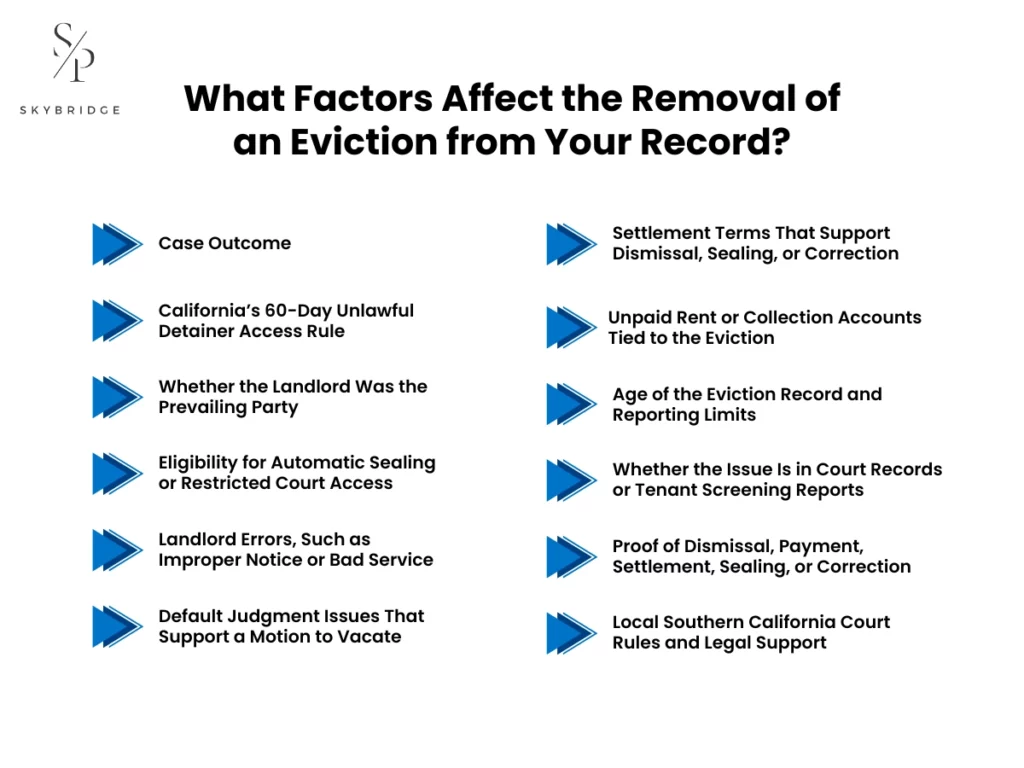
12 common factors affecting the removal of an eviction from your record are:
Case Outcome: Dismissed, Settled, Tenant-Won, or Landlord-Won determines whether the eviction record qualifies for sealing, correction, or continued public visibility based on the final court judgment.
California’s 60-Day Unlawful Detainer Access Rule: Allows automatic sealing when the landlord fails to obtain judgment within 60 days after filing the eviction case.
Whether the Landlord Was the Prevailing Party: Affects whether the eviction record remains publicly accessible or is subject to restricted court access.
Eligibility for Automatic Sealing or Restricted Court Access: Improves record-removal chances when the case meets court requirements for restricted public visibility.
Landlord Errors, Such as Improper Notice or Bad Service: Support dismissal or record sealing when procedural or legal filing defects affect the eviction case.
Default Judgment Issues That Support a Motion to Vacate: Help challenge eviction judgments when notice, service, or court procedures were legally defective.
Settlement Terms That Support Dismissal, Sealing, or Correction: Strengthen record-relief requests through payment agreements, mutual dismissals, or landlord cooperation terms.
Unpaid Rent or Collection Accounts Tied to the Eviction: Influence sealing eligibility because unresolved balances may keep eviction records publicly visible.
Age of the Eviction Record and Reporting Limits: Reduce tenant-screening visibility as reporting limits approach expiration.
Whether the Issue Is in Court Records or Tenant Screening Reports: Determines whether tenants must file court motions or dispute inaccurate screening information directly.
Proof of Dismissal, Payment, Settlement, Sealing, or Correction: Strengthens eviction-removal requests through official legal and financial documentation.
Local Southern California Court Rules and Legal Support: Control whether eviction records qualify for automatic sealing or require formal court motions for removal.
- Case Outcome: Dismissed, Settled, Tenant-Won, or Landlord-Won
Understand the outcome of the eviction case before requesting record removal because the final court decision affects sealing eligibility, tenant screening visibility, and future housing opportunities. Carefully reviewing the case outcome can help you choose the appropriate legal or administrative step to improve your rental record.
Dismissed Case: Resolve removal requests more easily when the court dismisses the eviction without entering judgment against the tenant.
Settlement Outcome: Improve the chances of sealing or correcting the record when the landlord and tenant agree to settlement terms that support record relief.
Tenant-Won Result: Reduce negative rental history issues when the court rules in favor of the tenant and no eviction judgment is entered.
Landlord-Won Judgment: Prepare for additional legal action when the court enters judgment against the tenant, as public eviction records often remain accessible after a landlord’s victory.
- California’s 60-Day Unlawful Detainer Access Rule:
Review the eviction filing timeline to determine whether California’s 60-Day Unlawful Detainer Access Rule already protects the record from public access. If the landlord does not obtain a judgment within 60 days after filing, the court automatically seals the eviction record. Automatic sealing restricts public access to the court file and helps prevent tenant screening companies, background check providers, and future landlords from viewing the eviction record.
- Whether the Landlord Was the Prevailing Party:
Review whether the landlord was the prevailing party because this factor directly affects whether the eviction record remains public or qualifies for sealing. If the landlord wins the case, the eviction record usually stays accessible to tenant screening companies and future landlords, which can reduce the chances of record removal and future rental approval. If the tenant wins or the case is dismissed, the court may restrict public access to the record, which can improve eligibility for sealing, correction, or removal.
- Eligibility for Automatic Sealing or Restricted Court Access:
Automatic sealing eligibility and restricted court access directly affect whether an eviction record remains visible in public records and tenant screening reports. Courts may limit public access when the eviction case is dismissed, the tenant wins, or the landlord fails to obtain a judgment by a required deadline, such as California’s 60-day rule. Meeting these legal conditions can improve eligibility for eviction record sealing, correction, or restricted public visibility during future rental screenings.
- Eligibility for Automatic Sealing or Restricted Court Access
Procedural and legal errors by landlords can affect whether an eviction record qualifies for sealing or removal from public records and tenant screening reports. Improper notice, such as failing to provide the correct notice type or required notice period, may weaken the validity of the eviction case before it reaches court. Service of court documents by mail, incorrect filing procedures, or violations of local court rules may also create legal defects that support dismissal of the eviction case or strengthen requests for record correction, sealing, or restricted public access.
- Landlord Errors, Such as Improper Notice or Bad Service
Procedural and legal errors by landlords can affect whether an eviction record qualifies for sealing or removal from public records. Improper notice occurs when the landlord fails to provide the correct type of notice or response period before filing the eviction case, while bad service occurs when court papers are delivered incorrectly or through unauthorized methods. These errors matter because tenants may not receive proper legal notice or enough time to respond, which can lead courts to dismiss the case, vacate the judgment, or support eviction record sealing.
- Default Judgment Issues That Support a Motion to Vacate
Default judgment issues, such as lack of proper notice, improper service of court papers, mistaken identity, or unlawful entry of judgment, can support a motion to vacate an eviction judgment and help remove the eviction from public records. These procedural and legal errors may show that the tenant did not receive proper notice or that the court process was not legally valid. Review the eviction court file carefully and contact legal aid or a tenant-defense attorney if any of these issues affected the case.
- Settlement Terms That Support Dismissal, Sealing, or Correction
Settlement agreements can improve the chances of having an eviction record dismissed, sealed, or corrected in public records and tenant screening reports. Payment arrangements may resolve unpaid rent or collection balances in exchange for landlord cooperation, while mutual dismissal terms allow both parties to close the eviction case without a final judgment against the tenant. Some agreements also require the landlord to support record sealing or correction requests, which can help limit the eviction’s public visibility and reduce future rental screening concerns.
- Unpaid Rent or Collection Accounts Tied to the Eviction
Resolving unpaid rent or collection accounts connected to the eviction can improve the chances of sealing or removing the eviction record. Courts often review whether outstanding balances were paid or settled before approving motions to seal or expunge public eviction records. Payment agreements, satisfied balances, or resolved collection accounts may strengthen requests for record relief, while unresolved debt can keep the eviction visible in public records and tenant screening reports.
- Age of the Eviction Record and Reporting Limits
Reporting limits and the age of the eviction record affect how long tenant screening companies and landlords can view the eviction during background checks. Most eviction records remain visible on tenant screening reports for up to 7 years, so recent filings are more likely to affect rental approval decisions. As the eviction approaches the reporting limit, screening companies may be required to remove it from future reports, which can reduce its impact on future housing opportunities.
- Whether the Issue Is in Court Records or Tenant Screening Reports
Eviction records appearing in court files or tenant screening reports can affect how tenants correct, seal, or remove the information from public visibility. Public court records often require legal action, such as filing a motion to seal or expunge the eviction case, while inaccurate tenant screening reports may be disputed directly with the screening company. When courts restrict public access to eviction records, tenants should also request updated reports from screening companies to reduce the visibility of background checks and improve future rental-application outcomes.
- Proof of Dismissal, Payment, Settlement, Sealing, or Correction
Providing official proof of dismissal, payment, settlement, sealing, or correction can improve the chances of removing or restricting an eviction record from public visibility. Court dismissal orders, payment receipts, signed settlement agreements, sealing orders, and corrected court documents help verify that the eviction was resolved, legally restricted, or inaccurately reported. Complete and accurate documentation can strengthen motions to seal or expunge the eviction record and support correction requests with tenant screening companies.
- Local Southern California Court Rules and Legal Support
Understanding Southern California court rules can help tenants determine whether an eviction record qualifies for automatic sealing or requires a formal court motion to have it removed. California courts may automatically restrict public access if the landlord fails to obtain judgment within 60 days of filing the Unlawful Detainer case, while other cases may require filing a Motion to Seal Court Record with the local Superior Court. Proper documentation, supporting declarations, and legal guidance can strengthen requests for eviction record relief and reduce the visibility of tenant screening.
How Does the Eviction Removal Process Differ by State?
Eviction removal processes differ by state because no federal law controls eviction record sealing or expungement. State laws determine how tenants remove eviction records, restrict public access, challenge court filings, and respond to judgment enforcement timelines, which directly affect eligibility for record sealing and future housing opportunities.
Notice periods, public record access rules, and enforcement procedures vary across jurisdictions. Some states require landlords to provide a three-day notice for unpaid rent before filing an eviction case, while others require 14 days or longer. States such as California and Colorado may allow automatic sealing or restricted public access under certain conditions, while Texas generally keeps eviction records public, according to the Texas State Law Library. Judgment enforcement timelines also differ: some states require tenants to vacate within 24 hours of judgment, while others allow several weeks before enforcement begins.
How Much Does It Cost to Remove an Eviction from Your Record?
To remove an eviction from your record, court filing fees for sealing or expunging the record range from $0 to $300, while credit repair services may charge between $50 and $500 or more, according to the State Law Library of Texas. Costs depend on local court rules, filing requirements, and whether you complete the process yourself or hire professional assistance. Some tenants resolve eviction-related issues by negotiating directly with landlords to settle unpaid rent or collection balances, while disputes filed with credit bureaus or tenant screening companies usually do not require a filing fee.
How Long Does an Eviction Stay on Your Record?
An eviction record stays on most tenant screening reports for seven years, allowing landlords and property managers to view the filing during rental background checks throughout that period. Although eviction filings do not appear directly on standard credit reports, unpaid rent, collection accounts, or civil judgments connected to the eviction can affect credit history for the same seven-year timeframe. Court eviction records may also remain publicly accessible unless the court seals or expunges the case. Tenants can dispute inaccurate reporting or petition the court to reduce public visibility of the eviction record during future housing applications.
How Do You Dispute or Correct an Eviction on Your Record?
To dispute or correct an eviction on your record, obtain tenant screening and credit reports, review the reports for inaccurate eviction details, dispute incorrect information with the reporting bureau, and file a Motion to Expunge or Seal if the eviction appears in public court records. These steps help correct inaccurate rental history information, reduce the visibility of eviction records during background checks, and improve future housing opportunities by ensuring that tenant screening reports and court records reflect accurate legal information.
- Obtain Tenant Screening and Credit Reports
Request tenant screening reports from companies such as CoreLogic and Experian RentBureau, along with credit reports from AnnualCreditReport.com, because landlords commonly use these records to review rental history during housing applications. Eviction-related information may remain visible on tenant screening reports for up to 7 years, potentially affecting future rental approval decisions.
- Review Reports for Inaccurate Eviction Information
Check each report carefully for incorrect balances, wrong case numbers, misspelled names, outdated filings, or dismissed eviction cases that still appear as active records. Identifying inaccurate information early can help prevent negative rental screening decisions based on reporting errors.
- Dispute Incorrect Information With the Reporting Bureau
Submit disputes directly to the tenant screening company or credit bureau through written requests or online dispute systems and include supporting documents that verify the reporting error. The Fair Credit Reporting Act gives tenants the right to challenge inaccurate information on credit and tenant screening reports.
- File a Motion to Expunge or Seal Court Records
File a Motion to Expunge or Seal in the original court if the eviction remains visible in public court records after correction efforts. This legal process requests restricted public access to the eviction record and may reduce visibility during future tenant screening and background checks.
Can Bankruptcy or Legal Help Remove an Eviction?
No, bankruptcy does not remove an eviction from public court records or tenant screening reports, although it may help resolve unpaid rent or related debt. Legal help can support sealing or expungement of an eviction record through court filings and legal guidance. Sealing restricts public access to the eviction record, while expungement permanently removes the record from court files. Courts may allow these remedies if the case was dismissed, resolved in the tenant’s favor, or if the landlord failed to obtain judgment within a required timeframe, including California’s 60-day automatic sealing rule. Contact legal aid or tenant-defense attorneys for help filing a Motion to Seal Record.
How Does an Eviction Affect Your Credit and Background Checks?
An eviction does not appear directly on standard credit reports, but unpaid rent or collection accounts connected to the eviction can lower credit scores for up to seven years. Even when credit reports do not show the eviction filing itself, tenant screening companies and landlords may still access public eviction court records during background checks and rental applications. Negative eviction history, unpaid balances, or court judgments can reduce future housing opportunities. Resolving outstanding debts or petitioning the court to seal or expunge the eviction record may help limit public visibility during future tenant screenings.
How Can You Get Rent with an Eviction on Your Record?
To rent with an eviction on your record, target independent landlords, offer a higher security deposit or prepaid rent, secure a co-signer with good credit, provide documentation that explains the eviction, and gather strong rental or employment references. These strategies can reduce landlords’ concerns, strengthen rental applications, and improve approval chances by demonstrating financial stability, transparency, and a reliable rental history despite prior eviction.
- Target Independent Landlords: Independent landlords often review applications more flexibly than large property management companies, which can help tenants explain eviction circumstances directly and improve their chances of approval.
- Offer a Higher Deposit or Prepaid Rent: A larger security deposit or prepaid rent reduces the landlord’s financial risk and demonstrates commitment to meeting future rental obligations.
- Use a Co-Signer With Strong Credit: A co-signer guarantees rent payments if issues arise, providing landlords with additional financial security during the approval process.
- Provide Honest Explanations and Supporting Documents: Clear explanations, proof of income, resolved debts, or legal records help landlords understand the eviction situation and evaluate the application more fairly.
- Gather Strong References: Positive references from landlords, employers, or community members demonstrate reliable behavior, financial responsibility, and stable rental history beyond the eviction record.
How to Choose Legal Help for Eviction Removal?
To choose legal help for eviction removal, contact attorneys or legal aid organizations experienced in tenant defense and eviction record sealing, as specialized legal support can improve the chances of successful record relief. Use Southern California resources such as the LA Law Library for legal information and workshops, the LawHelpCA directory for legal aid referrals, and Stay Housed LA at (888) 694-0040 for tenant clinics and eviction assistance. Compare legal service costs carefully and review eligibility requirements for free or low-cost legal aid before selecting legal representation.