To reduce vacancy rates in your rental properties, you must apply a coordinated strategy that addresses pricing, marketing, operations, and tenant experience across the entire rental lifecycle. Properties lease faster and remain occupied longer when rent aligns with market demand, listings stand out with professional visuals, and barriers to move-in are lowered through incentives, flexible lease terms, and pet-friendly policies. Investments in smart technology, energy efficiency, and curb appeal further increase perceived value while helping control operating costs.
Long-term vacancy reduction depends as much on tenant retention as it does on attraction. Clear communication, proactive maintenance, early lease renewal discussions, and efficient turnover planning help prevent avoidable move-outs and minimize gaps between tenants. When these efforts are supported by professional property management, owners benefit from smoother operations, higher tenant satisfaction, and more predictable rental income. Together, these strategies reduce time-to-market, stabilize cash flow, and strengthen the long-term performance of a rental portfolio.
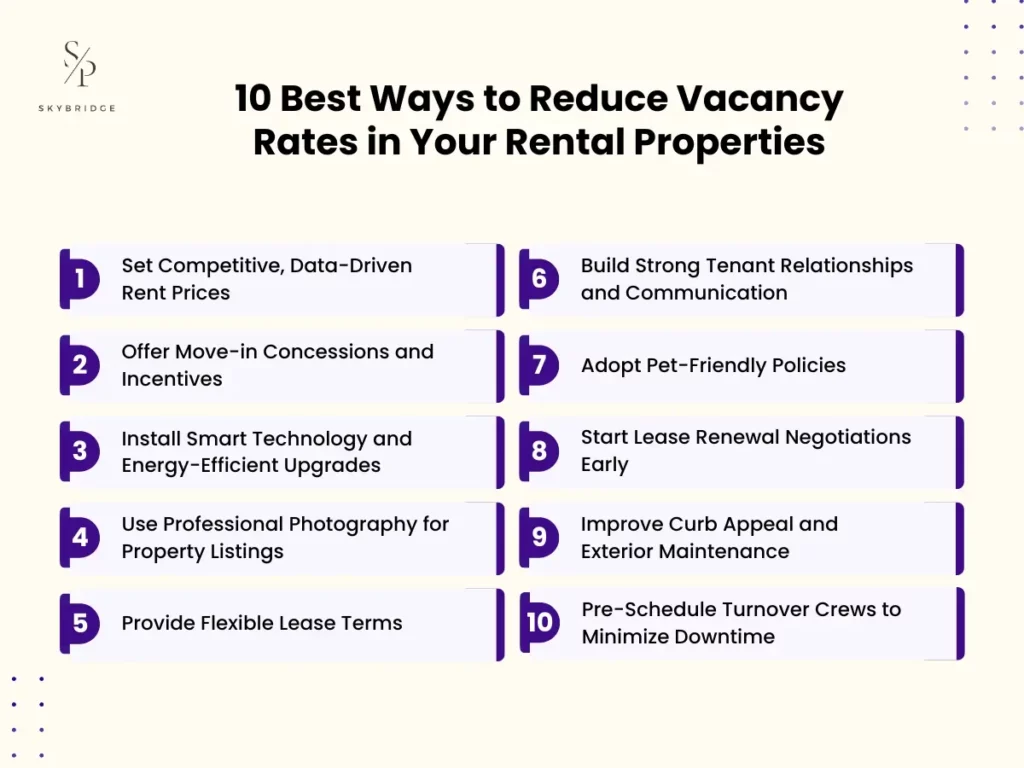
1. Set Competitive, Data-Driven Rent Prices
Setting competitive, data-driven rent prices reduces vacancy rates by aligning a rental property’s price with real market demand, making it more attractive to potential tenants and shortening lease-up time. When rent reflects current local conditions, properties generate more inquiries, face less price resistance, and avoid extended vacancy caused by overpricing.
To set competitive rent and minimize vacancies, use comparative market analysis (CMAs) using local data on similar units (comps), track demand indicators, and adjust pricing as conditions change. Pricing decisions should account for comparable properties, unique unit features, and overall presentation, while remaining focused on tenant retention through good service.
Adjusting rent based on this data ensures your property remains attractive without sacrificing long-term returns. By prioritizing facts over intuition, you appeal to a larger pool of prospective tenants, minimize vacancies, and secure a steady, reliable stream of income.
2. Offer Move-in Concessions and Incentives
In a crowded market, move-in concessions and incentives like a free month’s rent, gift cards, or smart home tech help to attract tenants quickly, creating urgency and differentiating your property. By lowering upfront move-in costs and increasing perceived value, these incentives reduce leasing friction and help minimize vacancy time.
Commonly effective marketing incentives to reduce rental vacancies:
- Reduced rent for the first one or two months.
- Waived or reduced security deposits for tenants with a high credit score.
- Flexible lease terms, including shorter or longer lease options.
- Pet-friendly options, sometimes paired with discounts at local pet-related facilities.
- Free amenities, such as high-speed internet or a designated parking spot.
Strategically applying these move-in concessions and incentives can significantly shorten the time a property remains vacant and create a positive first impression that encourages long-term retention.
3. Install Smart Technology and Energy-Efficient Upgrades
Installing smart technology and energy-efficient upgrades lowers monthly utility costs and increases the perceived value of a rental property at the point of comparison, directly reducing vacancy rates. When prospective tenants evaluate similar units, features such as smart thermostats, efficient lighting, and smart locks signal lower ongoing expenses, better comfort, and modern management, all of which influence leasing decisions. According to the Rently Smart Apartment Trends Report, 65% of renters find apartments more appealing when smart home technology is included, and 31% actively prioritize these features over comparable units without them.
To modernize your rental property, consider implementing these high-impact upgrades:
- Smart thermostats and LED lighting.
- Better Windows & Insulation
- Energy-efficient appliances (Energy Star rated).
- Smart locks for keyless entry and enhanced security.
By offering a rental home that is both technologically advanced and affordable to run for many prospective tenants, landlords who adapt these upgrades early will see higher tenant loyalty and faster placements.
4. Use Professional Photography and 3D Virtual Tours for Property Listings
Using professional photography and 3D virtual tours improves listing visibility and allows renters to evaluate a property remotely with confidence, thereby minimizing rental vacancy rates by generating more qualified, faster leasing inquiries. When listings feature crisp, well-lit images and immersive tours, prospective tenants can accurately assess layout, scale, and finishes remotely, which builds trust and emotional buy-in before a physical showing even takes place.
The performance impact of professional visuals is supported by market data. According to Zillow industry reporting, rental listings with 3D virtual tours receive 87% more views and can reduce a property’s time on the market by up to 31%. By allowing renters to explore a property anytime, anywhere, these tools shorten decision cycles, reduce unnecessary showings, and help properties lease faster, ultimately lowering time on market and vacancy rates.
5. Provide Flexible Lease Terms
Flexible lease options, such as month-to-month, six-month, or seasonal leases, attract a wider range of tenants, including students and traveling professionals, which helps minimize vacancy rates by increasing demand and speeding up lease commitments. By accommodating job changes, relocations, and evolving personal needs, flexible lease terms reduce friction during the leasing decision and can significantly lower rental vacancies.
Additionally, offering shorter lease durations, flexible renewal options, or customized lease agreements increases tenant satisfaction and loyalty. When tenants feel their circumstances are respected, they are more likely to renew rather than move, which reduces vacancy rates and lowers long-term leasing and turnover costs.
Flexible lease terms to attract tenants:
- Short-Term Leases: Appeal to students, traveling professionals, or renters in transition.
- Month-to-Month: Provides flexibility, often priced slightly higher.
- Customizable Lengths: Allow 6-month or 9-month terms to fit different needs.
- Seasonal Leases: Work well for properties near campuses or in vacation spots.
- Lease Break Clauses: Offer clear early-exit options with fair and predefined penalties.
6. Build Strong Tenant Relationships and Communication
Clear and consistent communication sets expectations, resolves concerns early, and establishes trust between property owners and tenants, forming the foundation for long-term tenancy. When tenants feel heard, informed, and respected, trust increases and satisfaction improves, making them more likely to stay longer and renew their lease rather than seek alternatives.
Practical communication strategies include regular check-ins, prompt responses to maintenance requests, and setting clear expectations from the start of the tenancy. Creating a welcoming atmosphere through courteous interactions and transparent updates helps tenants feel valued.
Proactive communication also prevents small concerns from turning into larger frustrations that can lead to early move-outs. By maintaining open communication and prioritizing tenant well-being, property owners can foster loyalty, reduce turnover, and sustain consistent occupancy.
7. Adopt Pet-Friendly Policies
Adopting pet-friendly policies expands tenant demand by appealing to renters who prioritize pet-friendly housing, helping reduce vacancy rates in competitive rental markets. Data from the Michelson Found Animals Foundation shows that nearly 72% of renters now own pets, yet only about 8% of rental properties are truly pet-inclusive, meaning they impose no breed or weight restrictions. This imbalance creates a large, underserved renter segment, giving pet-friendly properties a clear competitive advantage.
Therefore, allowing pets increases tenant demand and often leads to longer stays, since renters are less likely to move once they find housing that meets their household needs. When implemented thoughtfully, pet-friendly policies expand the tenant pool, strengthen tenant loyalty, and contribute to lower turnover and more consistent occupancy.
8. Start Lease Renewal Negotiations Early
Starting lease renewal negotiations early gives tenants time to plan, evaluate their housing needs, and commit without pressure, which helps minimize vacancy rates by preventing last-minute move-outs and lease gaps. Initiating renewal discussions 60 to 90 days before expiration reduces uncertainty and keeps tenants from exploring alternative listings out of urgency.
Proactive outreach also reduces decision fatigue, a common trigger that pushes tenants to browse competing properties even when they are otherwise satisfied. Offering early renewal incentives, such as modest rent adjustments or renewal bonuses, encourages quicker commitments and improves income predictability. This approach stabilizes occupancy by retaining long-term tenants and avoiding unnecessary lease gaps, helping maintain consistent cash flow and lower turnover costs.
9. Improve Curb Appeal and Exterior Maintenance
A clean, well-maintained exterior signals that a property is cared for and professionally managed, which builds confidence among prospective tenants and directly reduces house vacancy rates. This first impression directly affects tenant interest and can influence whether a renter schedules a showing or moves on to another listing, making curb appeal a key factor in reducing vacancy rates.
6 key strategies for curb appeal & maintenance:
- Clean & declutter: Remove debris, trim overgrowth, and keep common areas clear to present a well-managed appearance.
- Landscaping: Maintain lawns, shrubs, and seasonal plants to create a polished and welcoming exterior.
- Entryway refresh: Clean doors, replace worn hardware, update welcome mats, and ensure signage is visible and intact.
- Lighting: Install and maintain exterior lighting to improve safety, visibility, and nighttime curb appeal.
- Paint & repairs: Touch up peeling paint, repair siding, fences, and railings to prevent visible signs of neglect.
- Walkways & driveways: Keep paths clean, crack-free, and well-marked to ensure safe and easy access to the property.
10. Pre-Schedule Turnover Crews to Minimize Downtime
Pre-scheduling turnover crews is one of the most effective ways to reduce downtime, generally allowing for a 24-48 hour turnaround between tenants and preventing avoidable vacancies. When maintenance, cleaning, and inspection work is planned before a tenant moves out, the property can be turned over quickly instead of sitting vacant while vendors are arranged.
A key step in this process is performing a pre-move-out inspection 14 to 30 days before the tenant leaves to identify necessary repairs and maintenance. This early assessment allows crews to be scheduled in advance and work to be completed quickly and in the correct sequence once the unit is vacated.
Well-coordinated turnover protects rental income, delivers a clean and move-in-ready home on time, and minimizes gaps between leases. By reducing vacancy time and improving operational efficiency, pre-scheduling turnover crews also enhances overall tenant satisfaction.
Enhance Tenant Retention With a Professional Property Management Company
Professional property management companies enhance tenant retention by taking responsibility for day-to-day operations, tenant communication, and maintenance coordination, relieving owners of tasks that often become inconsistent or delayed when self-managed. By acting as a reliable point of contact and using modern tenant portals, property managers improve response times, keep issues organized, and maintain clear communication, which leads to higher tenant satisfaction and fewer issues that escalate into reasons to move out.
Beyond the financial benefits, professional management companies also provide 24/7 emergency response and coordinate property repairs through vetted contractors, resolving issues quickly and professionally. This level of oversight from a local property management expert encourages long-term renewals, reduces turnover-related costs, and minimizes vacancy periods by keeping tenants in place longer and units occupied more consistently, while also giving owners confidence that their property and tenant relationships are being properly managed.