
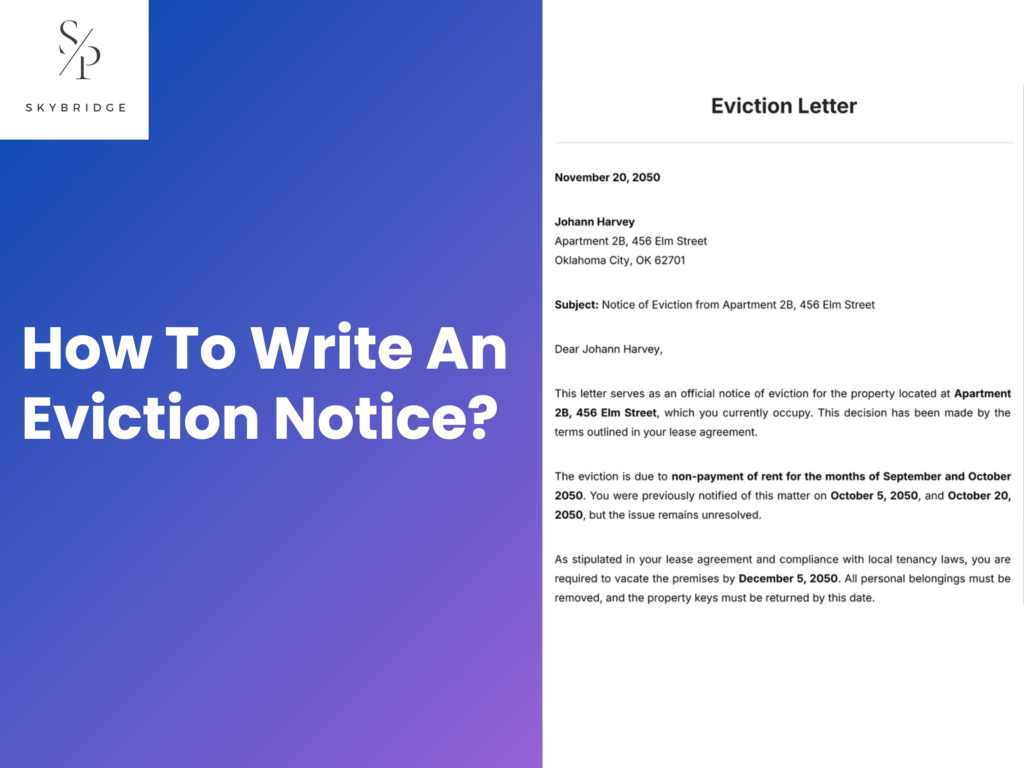
To write an eviction notice, select the correct notice type, include the tenant and property details, state the reason for eviction, specify the compliance deadline and notice period, explain the consequences of noncompliance, sign and date the notice, serve it using a legally approved method, and keep proof of delivery. Common eviction notice types include a Pay Rent or Quit Notice, Cure or Quit Notice, Unconditional Quit Notice, Notice to Terminate Month-to-Month Tenancy, and Notice of Belief of Abandonment.
Regardless of the eviction reason or notice type, every eviction notice must contain certain essential information to remain clear and legally valid. It should include the names of both parties, the property address, the service date, the reason for eviction, the required notice period, the move-out deadline, the landlord’s signature, the applicable lease clause, and the delivery method. Avoid common mistakes such as using the wrong notice type, giving an incorrect notice period, stating an unclear reason, serving the notice improperly, filing too early, or failing to keep proof of delivery.
9 steps to write an eviction notice include:
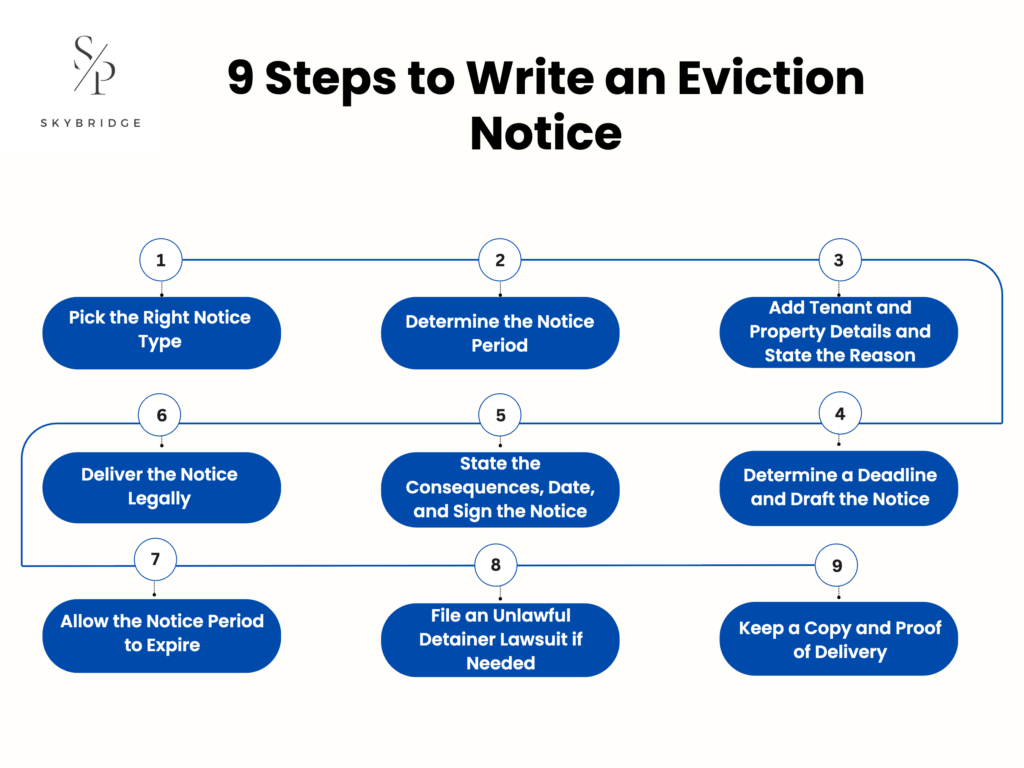
- Pick the Right Notice Type
- Determine the Notice Period
- Add Tenant and Property Details and State the Reason
- Determine a Deadline and Draft the Notice
- State the Consequences, Date, and Sign the Notice
- Deliver the Notice Legally
- Allow the Notice Period to Expire
- File an Unlawful Detainer Lawsuit if Needed
- Keep a Copy and Proof of Delivery
Pick the Right Notice Type
Select the appropriate eviction notice before writing the eviction process, as different notice types apply to different lease violations or tenancy situations. Choosing the correct eviction notice type helps ensure compliance with California’s unlawful detainer laws, including California Code of Civil Procedure §§ 1161–1162, and reduces the risk of delays or legal disputes.
- Pay Rent or Quit Notice
A Pay Rent or Quit Notice is served when a tenant fails to pay rent on time. It requires the tenant to pay the full overdue amount within the legally required notice period or vacate the property. The notice includes the rent owed, payment deadline, payment instructions, and consequences of failing to comply.
- Cure or Quit Notice
A Cure or Quit Notice notifies a tenant of a lease violation that can be corrected within a specified period. It explains the nature of the violation, outlines the corrective action required, and states the compliance deadline. If the issue remains unresolved, the landlord may proceed with the legal eviction process.
- Unconditional Quit Notice
Reserved for the most egregious lease violations, unconditional quit notice demands immediate vacancy without offering the tenant any chance to fix the situation. Grounds often include illegal activity on the premises, severe property damage, or persistent, repeated lease violations. Tenants must move out by the specified date, or the landlord will initiate legal eviction proceedings immediately.
- Notice to Terminate Month-to-Month Tenancy
Either party can use this formal document to end a periodic rental agreement without needing to provide a specific reason. Local statutes mandate the required duration, frequently 30 or 60 days, that the initiator must provide before the end of the tenancy. This ensures both parties have adequate time to make necessary housing or management arrangements.
- Notice of Belief of Abandonment:
Landlords utilize this procedure when they reasonably suspect a tenant has vacated the property permanently without notice, often indicated by rent delinquency and removed belongings. This legal step notifies the tenant that the landlord intends to reclaim the unit. It provides the resident a final window to contest the claim and retain possession.
Determine the Notice Period
Identify the correct notice period before writing an eviction notice, as California law requires different timeframes based on the reason for the eviction. Providing the required notice period helps ensure the eviction process complies with legal requirements and reduces the risk of delays or court challenges.
- Identify the reason for the eviction before selecting the required notice period.
- Serve a 3-Day Notice to Pay Rent or Quit for nonpayment of rent.
- Issue a 14/30-Day Notice to Perform or Vacate for curable lease violations, allowing 14 days to correct the violation or 30 days to vacate if it remains unresolved.
- Provide a 3-Day Unconditional Quit Notice for incurable lease violations or illegal activity where state law permits.
- Serve a 30-Day Notice to Vacate to terminate a month-to-month tenancy.
- Verify your state and local notice period requirements before serving the notice to ensure legal compliance.
Add Tenant and Property Details, State the Reason
Include complete and accurate tenant, property, and eviction information when writing an eviction notice. Providing the required details helps identify the correct parties, explains the reason for the notice, and supports compliance with California eviction requirements.
- Enter the tenant’s full legal name.
- Include the complete rental property address.
- State the specific reason for the eviction.
- Describe the lease violation or unpaid rent clearly.
- Include the reason for eviction notice.
- Verify that all tenant and property information is accurate.
- Review the notice before serving it to the tenant.
Set a Deadline and Draft the Notice
Draft a clear deadline and prepare the eviction notice using accurate and legally required information. A properly drafted notice informs the tenant of the required action, the compliance deadline, and the consequences of failing to respond.
- Determine the deadline based on the applicable notice period.
- State the exact date by which the tenant must comply or vacate.
- Explain the reason for the eviction clearly.
- Use formal and easy-to-understand language throughout the notice.
- Include all required tenant and property information.
- Verify that the notice complies with California and local eviction requirements.
State Consequences, Then Date and Sign It
Clearly explain the consequences of noncompliance and complete the eviction notice with the required date, signature, and legal information. Properly finalizing and serving the notice helps ensure it meets California eviction requirements.
- State the consequences if the tenant fails to comply.
- Date the notice to establish the notice period.
- Sign the notice as the landlord or authorized agent.
- Include all required tenant and property information.
- Serve the notice using a legally approved delivery method.
- Follow California and local eviction laws before taking further action.
Serve It Legally
Deliver the eviction notice using a legally approved delivery method to ensure it is enforceable under California law. Proper service helps establish that the tenant received the notice and allows the eviction process to proceed if necessary.
- Choose a legally accepted method to serve the notice.
- Deliver the notice personally to the tenant whenever possible.
- Post and mail the notice if personal service is not possible.
- Use certified mail when permitted by California law.
- Follow special service requirements for tenants without a lease, roommates, or family members.
- Keep proof of service for future legal proceedings.
Wait for the Period to Expire, Then File a Lawsuit if Needed
Allow the required notice period to expire before taking legal action. If the tenant does not comply with the eviction notice, the landlord may file an unlawful detainer lawsuit to regain possession of the rental property.
- Wait for the required notice period to expire.
- File an unlawful detainer lawsuit if the tenant does not comply.
- Serve the tenant with the summons and complaint.
- Attend the court hearing and present supporting evidence.
- Follow the court order to regain possession of the property.
- Keep proof that the eviction notice was properly served.
Keep a Copy and Proof of Delivery
Put a copy of the eviction notice and maintain proof of delivery to document that the notice was served correctly. Proper records help support the landlord’s case if the eviction proceeds to court.
- Keep a copy of the completed eviction notice.
- Retain proof that the notice was delivered.
- Use certified mail or obtain a signed delivery receipt when applicable.
- Prepare an affidavit of service for personal delivery when required.
- Organize all delivery records for future reference.
- Present the documentation if the eviction is challenged in court.
What Should You Include When Writing an Eviction Notice?
When writing an eviction notice, include the names of both parties, the property address, the service date, the reason for eviction, the required notice period, the move-out deadline, a legal action warning, the landlord’s signature, the applicable lease clause, and the delivery method. Including these details helps ensure the eviction notice is clear, legally compliant, and enforceable if the eviction proceeds to court.
Here are the key details to include when writing an eviction notice:
- Names of All Parties and Property Address: List the full legal names of every tenant and the complete address of the rental property. This ensures the eviction notice applies to the correct individuals and location.
- Date the Notice Is Served: State the exact date the eviction notice is delivered to the tenant. The notice period and legal deadlines are calculated from this date.
- Valid Reason for Eviction: Clearly explain the reason for eviction, such as nonpayment of rent, lease violations, or termination of tenancy. Use specific language that matches the situation, for example, “unpaid rent for March” or “repeated noise complaints.”
- Notice Period Required by State Law: Specify the number of days the tenant has to comply or vacate, based on California law and the type of notice (such as a 3-day notice to pay rent or quit, or a 30-day notice to terminate month-to-month tenancy).
- Move-Out Deadline: Provide the final date by which the tenant must leave the property or correct the issue. This date should match the notice period and be clearly stated.
- Warning of Legal Action: Inform the tenant that failure to comply with the eviction notice may result in legal action, such as filing for eviction in court.
- Landlord’s Signature and Contact Information: Sign the eviction notice and include the landlord’s or property manager’s contact details. This confirms the notice is official and provides a way for the tenant to respond.
- Reference to Lease Clause (if applicable): If the eviction is for lease violations, cite the specific lease terms or clauses that were violated. This supports the legal basis for the notice of termination.
- Delivery Method: State how the eviction notice was delivered, such as personal service, posting at the property, or certified mail. Proper delivery is required for the notice to be valid.
What Are Common Mistakes to Avoid When Writing an Eviction Notice?
Common mistakes to avoid when writing an eviction notice include choosing the wrong notice type, using the wrong notice period, demanding an incorrect rent amount, stating an unclear reason, serving the notice improperly, filing too early, accepting partial rent, and failing to keep proof of delivery. Avoiding these eviction notice errors helps ensure the eviction notice complies with California law and supports a valid eviction process.
8 common mistakes to avoid when writing an eviction notice are:
- Using the Wrong Notice Type: Applying the wrong eviction notice prevents the notice from matching the reason for eviction and can delay the legal process. Select the notice that corresponds to the specific issue, such as unpaid rent, a lease violation, termination of a month-to-month tenancy, or property abandonment.
- Ignoring the Correct Notice Period: Providing an incorrect notice period violates California eviction requirements and may result in the notice being rejected. Confirm the required timeframe for the notice type, and wait until the notice period expires before taking further legal action.
- Demanding an Incorrect Rent Amount: Listing an inaccurate amount of unpaid rent creates errors in a Pay Rent or Quit Notice and can invalidate the eviction notice. Verify the rent balance carefully, exclude late fees and other non-recoverable charges, and include only the amount of rent owed under the rental agreement.
- Giving a Vague or Inconsistent Reason: An unclear eviction reason creates confusion and weakens the notice’s legal basis. State the specific reason, such as unpaid rent, unauthorized pets, property damage, or repeated lease violations, using clear and consistent language.
- Using an Improper Delivery Method: Using a delivery method that does not comply with California Code of Civil Procedure § 1162 can invalidate the eviction notice. Deliver the notice using a legally approved method and keep proof of service to support the eviction process.
- Filing the Lawsuit Before the Notice Period Expires: Starting legal action before the notice period ends can result in the eviction case being dismissed. Wait until the tenant’s compliance deadline has expired before filing an unlawful detainer lawsuit.
- Accepting Partial Rent After Serving the Notice: Taking partial rent after serving an eviction notice can impact the landlord’s right to continue the eviction. Check whether California law requires the current notice to be replaced before moving forward.
- Not Keeping Proof of Delivery: Failing to keep proof that the eviction notice was served makes it difficult to demonstrate compliance in court. Retain a copy of the notice, proof of service, certified mail receipts, or an affidavit of service for your records.
How to Write Different Types of Eviction Notices in California?
You can write different types of eviction notices in California, including a 3-Day Pay Rent or Quit Notice, 3-Day Cure or Quit Notice, 3-Day Unconditional Quit Notice, 30-Day or 60-Day Notice to Terminate Tenancy, and a Notice of Belief of Abandonment, by using the appropriate notice for the situation and including all legally required information. Using the correct notice and following California’s legal requirements helps ensure the eviction process begins with a valid and enforceable notice.
How to Write a 3-Day Pay Rent or Quit Notice?
3-Day Pay Rent or Quit Notice (California Template)
Date: ___________________
To (Tenant Name): ___________________
Rental Property Address:
NOTICE TO PAY RENT OR QUIT
You are hereby notified that you owe $__________ in unpaid rent for the rental property listed above.
Rent Due For:
Month(s): ___________________
Total Past-Due Rent: $__________
Payment Instructions:
Please pay the total amount due within three (3) business days after this notice is served. Payment must be made at:
Person/Company Receiving Payment: ___________________
Address: ___________________
Business Hours: ___________________
Accepted Payment Methods: ___________________
If you fail to pay the full amount of rent within the required time, you must vacate the premises. If you neither pay the rent nor move out, legal eviction proceedings may be initiated against you.
Landlord/Property Manager Name: ___________________
Signature: ___________________
Date: ___________________
Certificate of Service
I certify that this notice was served on the tenant by:
☐ Personal delivery
☐ Leaving a copy with a person of suitable age at the residence or workplace and mailing another copy
☐ Posting the notice on the property and mailing another copy (only when other service methods are unavailable)
Date Served: ___________________
Signature of Person Serving Notice: ___________________
How to Write a 3-Day Cure or Quit Notice?
Date: ___________________
To (Tenant Name): ___________________
Rental Property Address:
NOTICE TO CURE LEASE VIOLATION OR QUIT
You are hereby notified that you have violated the terms of your rental agreement by:
(Describe the lease violation, such as keeping an unauthorized pet, exceeding occupancy limits, or failing to maintain the property.)
Under your rental agreement and California law, you are required to correct (cure) the violation within three (3) days after this notice is served.
To cure the violation, you must:
(Describe the specific actions the tenant must take to correct the violation.)
If you fail to correct the violation within the required time, you must vacate the premises. If you neither cure the violation nor move out, legal eviction proceedings may be initiated against you.
Landlord/Property Manager Name: ___________________
Signature: ___________________
Date: ___________________
Certificate of Service
I certify that this notice was served on the tenant by:
☐ Personal delivery
☐ Leaving a copy with a person of suitable age at the residence or workplace and mailing another copy
☐ Posting the notice on the property and mailing another copy (only when other service methods are unavailable)
Date Served: ___________________
Signature of Person Serving Notice: ___________________
How to Write a 3-Day Unconditional Quit Notice?
(3) DAY NOTICE TO QUIT
(California Code of Civil Procedure § 1161)
Date: ___________________
To (Tenant Name): ___________________
Rental Property Address:
NOTICE TO QUIT
You are hereby notified that your tenancy is terminated due to the following violation(s):
(Provide a detailed description of the serious lease violation or unlawful conduct.)
Because of the nature of this violation, you are required to vacate and surrender possession of the premises within three (3) days after this notice is served. You are not entitled to cure or correct the violation.
If you fail to vacate the property within the required time, legal proceedings may be initiated to recover possession of the premises, along with any other remedies available under California law.
Landlord/Property Manager Name: ___________________
Signature: ___________________
Date: ___________________
Certificate of Service
I certify that this notice was served on the tenant by:
☐ Personal delivery
☐ Leaving a copy with a person of suitable age at the residence or workplace and mailing another copy
☐ Posting the notice on the property and mailing another copy (only if other methods are unavailable)
Date Served: ___________________
Signature of Person Serving Notice: ___________________
How to Write a 30-Day or 60-Day Notice to Terminate Tenancy?
(30) DAY / SIXTY (60) DAY NOTICE TO TERMINATE TENANCY
(California Civil Code §§ 1946 and 1946.1, where applicable)
Date: ___________________
To (Tenant Name): ___________________
Rental Property Address:
NOTICE OF TERMINATION OF TENANCY
You are hereby notified that your tenancy for the property listed above is terminated.
☐ 30-Day Notice (For eligible month-to-month tenancies under California law)
☐ 60-Day Notice (For eligible month-to-month tenancies under California law)
You are required to vacate and deliver possession of the premises on or before: ___________________.
Please remove all personal belongings and return all keys, access devices, and garage remotes to the landlord or property manager on or before the termination date. After you vacate, the property should be left in substantially the same condition as when possession was received, excluding normal wear and tear.
If you remain in possession of the property after the notice period expires, legal proceedings may be initiated to recover possession of the premises as permitted under California law.
Landlord/Property Manager Name: ___________________
Signature: ___________________
Date: ___________________
Certificate of Service
I certify that this notice was served on the tenant by:
☐ Personal delivery
☐ Leaving a copy with a person of suitable age at the residence or workplace and mailing another copy
☐ Posting the notice on the property and mailing another copy (only if other methods are unavailable)
Date Served: ___________________
Signature of Person Serving Notice: ___________________
How to Write a Notice of Belief of Abandonment?
NOTICE OF BELIEF OF ABANDONMENT
(California Civil Code §§ 1951.3 and 1951.4, where applicable)
Date: ___________________
To (Tenant Name): ___________________
Rental Property Address:
NOTICE OF BELIEF OF ABANDONMENT
The landlord believes that you have abandoned the rental property located at the address above based on the following circumstances:
(Examples: unpaid rent, removal of personal belongings, extended absence, utility disconnection, or other facts indicating abandonment.)
Unless you notify the landlord in writing on or before ___________________ (at least 15 days after personal service or 18 days after mailing) that you have not abandoned the property and intend to continue your tenancy, the rental agreement will terminate on that date.
If you wish to retain possession of the property, you must deliver written notice to:
Landlord/Property Manager: ___________________
Mailing Address: ___________________
Email (if applicable): ___________________
Phone Number: ___________________
If no written response is received by the deadline, the tenancy will terminate, and the landlord may retake possession of the premises in accordance with California law.
Landlord/Property Manager Name: ___________________
Signature: ___________________
Date: ___________________
Certificate of Service
I certify that this Notice of Belief of Abandonment was served by:
☐ Personal delivery
☐ First-class mail
Date Served: ___________________
Signature of Person Serving Notice: ___________________