
The strategies for marketing a single-family rental property include preparing the home, setting a competitive rent, creating an accurate listing, selecting effective marketing channels, and managing prospective tenant inquiries. Property owners can use quality photos, floor plans, virtual tours, and clear descriptions while highlighting single-family rental features and neighborhood benefits.
Complete listing details, major rental sites, local marketing channels, transparent rental requirements, accurate fees, timely lead responses, and support from a local property manager can further strengthen the rental property marketing process. These strategies solve real-world rental marketing problems such as limited property visibility, inaccurate pricing, unclear listing information, low-quality inquiries, inconsistent communication, and delays in finding qualified applicants.
Social media extends these strategies by reaching local renters through Facebook Marketplace, community groups, Instagram carousels and Reels, TikTok videos, virtual tours, and location-based content. As these channels generate leads, property owners can identify suitable tenants by matching the property’s size, price, features, location, and living benefits with renter needs, budgets, housing preferences, and qualification criteria.
The 15 strategies for marketing a single-family rental property are:

- Prepare the Rental Property Before Marketing
- Price the Rental Competitively
- Use High-Quality Property Photos
- Add Floor Plans and Virtual Tours
- Write a Clear and Compelling Rental Description
- Highlight Single-Family Rental Features
- Highlight Location and Neighborhood Benefits
- Optimize Rental Listing Details and Filters
- List the Property on Major Rental Listing Sites
- Market the Rental Property on Social Media
- Use Local and Offline Marketing Channels
- State Rental Requirements Upfront
- Show Accurate Rent, Deposits, and Fees
- Respond to Rental Leads and Schedule Showings Quickly
- Partner With a Local Property Manager
- Prepare the Rental Property Before Marketing
Prepare the rental property for marketing by confirming that the home is functional, well-maintained, and ready for occupancy. Inspect plumbing, lighting, appliances, heating and cooling equipment, utilities, locks, doors, windows, and visible signs of pests or water damage. Complete necessary repairs and verify that smoke alarms, carbon monoxide alarms, and other safety devices meet applicable state and local requirements.
After completing the maintenance inspection, prepare the property for photos and showings. Clean floors, kitchens, bathrooms, windows, and other living spaces, remove belongings left by previous occupants, maintain landscaping, and address visible curb-appeal issues. This preparation helps photos, rental ads, virtual tours, and in-person showings accurately represent the property’s current condition, layout, and features.
- Price the Rental Competitively
Set the monthly rent by comparing the property with similar single-family rentals in the local market. Review active comparable listings and recently leased properties with reliable information, focusing on bedroom and bathroom count, square footage, condition, parking, amenities, and location. For example, when pricing a three-bedroom single-family rental in Sacramento, compare it primarily with similar three-bedroom homes in nearby Sacramento neighborhoods rather than apartments with different property characteristics.
Use asking rents, recently achieved rents where available, rent per square foot, days on market, concessions, and seasonal demand as pricing signals. Treat the broader vacancy rate as a separate market metric rather than assuming individual rental comparables establish it. After publishing the listing, monitor views, qualified inquiries, showing requests, and applications to determine whether the asking rent remains aligned with current market response.
- Use High-Quality Property Photos
Use clear, current, and well-lit property photos to show prospective tenants the home’s present condition. Photograph the exterior, main living areas, kitchen, bedrooms, bathrooms, garage, yard, laundry area, storage, and other included spaces. Clean and declutter rooms before photography, use natural light where practical, and select angles that accurately represent room size and layout.
Sequence the images in a logical property-tour order and choose a representative hero image for the listing. Avoid outdated photographs, misleading wide-angle effects, or edits that materially misrepresent the property. If images are digitally altered or virtually staged, use them transparently and disclose the alteration where required.
- Add Floor Plans and Virtual Tours
Add floor plans, video walkthroughs, or 3D virtual tours to help prospective tenants understand the property’s layout before scheduling a visit. While photos show individual rooms, a floor plan shows how bedrooms, bathrooms, entrances, storage areas, and living spaces connect. A video or 3D tour can then give renters a closer view of how they would move through the home.
These visual formats are especially useful for renters relocating from another city or comparing several single-family rentals online. Keep floor plans consistent with the current layout and make sure virtual tours reflect the property’s present condition. Clearly label rooms and important spaces so prospective tenants can accurately evaluate the home’s size, layout, and suitability.
- Write a Clear and Compelling Rental Description
Write the rental description around verified property facts and the home’s current layout. Start with the property type, bedroom and bathroom count, square footage, availability date, location, and included appliances or utilities when relevant. For example, state, “3-bedroom, 2-bath single-family home with 1,650 square feet, available October 1,” before describing the layout and property-specific features.
Use specific language for verified features and upgrades, such as a two-car garage, fenced backyard with patio, remodeled kitchen, central air, or included washer and dryer. Keep applicant qualification criteria in the rental-requirements section and detailed monetary charges in the rent, deposits, and fees section so the narrative description remains focused on the property itself.
- Highlight Single-Family Rental Features
Emphasize property characteristics that can distinguish a single-family rental from other housing formats when those characteristics are present. Examples include a detached or semi-detached structure, private entrance, private yard, garage, driveway, storage area, patio, home office, or EV charging equipment.
Connect each feature with its practical function. A garage can provide enclosed parking and storage, while a fenced yard can provide defined private outdoor space. Property-specific upgrades, such as updated appliances, built-in storage, or energy-efficient equipment, can also help prospective tenants compare the home with other single-family rental listings.
- Highlight Location and Neighborhood Benefits
Explain how the property’s location relates to transportation, shopping, parks, employment centers, healthcare facilities, major roads, and other verifiable destinations that prospective tenants may use. Include specific names, approximate distances, or travel information when reliable data is available rather than relying on vague statements such as “close to everything.”
Keep neighborhood marketing factual and compliant with the Fair Housing Act and applicable state and local housing laws. Avoid language indicating preferences based on race, color, religion, sex, national origin, familial status, disability, or other characteristics protected by applicable state or local law. Avoid subjective demographic, safety, or “ideal for” descriptions that could imply a preferred type of resident. Describe the property, transportation options, nearby amenities, and other objective location facts instead.
- Optimize Rental Listing Details and Filters
Improve the listing details and search filters to make a single-family rental property easier for prospective tenants to find on rental platforms. Complete all relevant fields, including property type, monthly rent, bedrooms, bathrooms, square footage, availability date, parking, pet policy, lease terms, laundry, air conditioning, utilities, outdoor areas, and available amenities.
Keep structured fields, written descriptions, photos, and policies consistent. For example, do not select “pet-friendly” while stating that pets are prohibited in the description. Include accurate terminology renters may search for, such as “fenced yard,” “garage,” “in-unit laundry,” or “central air,” only when those features exist. Current rental platforms increasingly use both structured filters and natural-language searches to match renter requirements with listings.
- List the Property on Major Rental Listing Sites
List the single-family rental property on major rental listing sites to reach people actively searching for single-family rental properties in the local market. As per the U.S. Census Bureau’s 2021 American Housing Survey, 46% of renters who moved between 2019 and 2021 found their rental through internet sites, highlighting the importance of online listing channels in the rental search process.
Keep the rent, deposits, availability date, bedrooms, bathrooms, lease terms, pet policy, amenities, photos, and contact information consistent across every listing. Monitor views, inquiries, tours, and applications to determine which rental sites generate relevant leads. Update each single-family rental property listing when availability or rental terms change and remove it once the home is rented.
- Market the Rental Property on Social Media
Use social media as a digital distribution channel for accurate property photos, walkthrough videos, availability information, location facts, and links to the complete rental listing. Channels such as Facebook, Instagram, and TikTok can extend the property’s visibility beyond rental marketplaces, while campaign tracking can show which posts or channels generate inquiries.
Apply fair-housing requirements to organic posts and paid housing advertising. For paid housing ads, review audience targeting and ad-delivery settings as well as the ad copy because discriminatory targeting, exclusion, steering, or delivery practices can create fair-housing risk. Keep the social post, landing page, and rental listing consistent with one another.
- Use Local and Offline Marketing Channels
Market the property through local and offline channels such as yard signs where permitted, flyers, QR codes, community notice boards, local publications, relocation channels, and referral sources. These offline channels can reach prospective tenants who already live, work, or search for rental homes in the surrounding area. Include clear information about the property location, monthly rent, availability, and contact method so interested renters know how to respond.
This local exposure can work alongside online listings to create a more complete rental marketing strategy. Keep the property details consistent across printed materials, rental websites, and other advertisements to prevent conflicting information. Update each marketing channel when availability or rental terms change, and remove advertisements once the single-family rental property is rented.
- State Rental Requirements Upfront
State rental requirements upfront by clearly listing applicable income criteria, credit requirements, rental history requirements, lawful occupancy standards, ordinary pet policies, lease length, and the application process for the single-family rental property. Include these requirements in the rental listing or provide them before the application process so prospective tenants can understand the qualification criteria. Screening criteria should comply with applicable federal, state, and local laws and reasonable-accommodation obligations.
Apply screening procedures consistently while accounting for legal obligations that can require different treatment in specific circumstances, such as reasonable accommodations for a person with a disability. Treat qualifying assistance animals separately from ordinary pets, and follow applicable occupancy, individualized screening, and adverse-action requirements.
- Show Accurate Rent, Deposits, and Fees
Clearly present the monthly rent, security deposit, application fees, pet charges, utility responsibilities, and other applicable costs for the single-family rental property. State these amounts in the rental listing so prospective tenants can understand the expected financial commitment before scheduling a showing or submitting an application.
Transparent pricing helps renters determine whether the single-family rental property fits their budget and prevents confusion about payments later in the rental process. Keep rent, deposits, and applicable fees consistent across rental websites, social media posts, and offline advertisements. Review state and local rules because permitted fees, deposit limits, refundability, and disclosure requirements can vary by jurisdiction. Assistance animals are not pets for Fair Housing Act purposes and generally cannot be subjected to ordinary pet deposits or pet fees when a qualifying reasonable accommodation applies.
- Respond to Rental Leads and Schedule Showings Quickly
Handle rental leads promptly by monitoring calls, emails, and listing-platform messages, then offering available showing times for the single-family rental property. Provide clear information about monthly rent, availability, lease terms, rental requirements, and the application process so prospective tenants can determine whether to schedule a property tour.
Timely communication helps interested renters move from an initial inquiry to viewing the single-family rental property without unnecessary delays. Organize inquiries, confirm appointments, and provide clear showing instructions to keep the process consistent. After each tour, follow up with interested renters and explain the application steps so qualified prospects can continue through the rental process efficiently.
- Partner With a Local Property Manager
Work with a local property manager to save time and maintain a consistent marketing and tenant-placement process for a single-family rental property. A property manager can coordinate property preparation, determine market rent, publish listings, manage rental inquiries, schedule showings, screen applicants, and prepare lease documents. Local market knowledge can also help identify suitable marketing channels and rental pricing for the area.
Professional management can keep the single-family rental property organized from initial listing through tenant placement. Before selecting a manager, review their experience, fees, marketing methods, communication process, and screening procedures. A manager with relevant local experience can support an organized rental property marketing process and consistent communication with prospective tenants.
How Can You Market a Single-Family Rental Property on Social Media?
You can market a single-family rental property on social media by using Facebook, Instagram, and TikTok to showcase the home, reach prospective renters, and direct interested users toward the next step. Use current photos, walkthrough videos, verified property features, availability information, and objective location content. For paid housing campaigns, review the ad copy, audience settings, exclusions, targeting, and delivery practices for compliance with applicable fair-housing requirements. Each post should provide a clear path to the full rental listing, showing request, or application. Housing content and paid campaigns should also follow Fair Housing Act requirements, including restrictions related to discriminatory advertising and audience targeting.
How Can You Market a Single-Family Rental Property on Facebook?
Market a single-family rental property on Facebook through Marketplace, local housing groups, feature-focused posts, virtual tours, neighborhood content, and targeted Facebook Ads to reach local renters. These channels help property owners highlight the home’s key features and location while connecting the listing with prospective tenants searching the local market.
6 key ways to market a single-family rental property on Facebook are:
- Use Facebook Marketplace to reach local renters
- Share listings in local housing and community groups
- Highlight key features like yards, garages, and bedrooms
- Promote virtual tours and walkthrough videos
- Showcase neighborhood benefits for renters
- Run targeted Facebook Ads to attract local renters
How Can You Market a Single-Family Rental Property on Instagram?
Market a single-family rental property on Instagram through photo carousels, Reels, property-feature posts, neighborhood content, and location-based hashtags to reach local renters and visually present the home. Instagram’s broad reach and visual formats can expose the rental property to more prospective tenants, helping property owners build awareness, attract renter interest, and direct interested users to the full rental listing.
6 key ways to market a single-family rental property on Instagram are:
- Create photo carousels showcasing each area of the home
- Use Reels for property tours and layouts
- Highlight privacy, outdoor space, and lifestyle benefits
- Feature key details like kitchens, bedrooms, and upgrades
- Share neighborhood content and nearby amenities
- Use location-based hashtags to reach local renters
How Can You Market a Single-Family Rental Property on TikTok?
Market a single-family rental property on TikTok through short virtual tours, feature-focused videos, lifestyle content, renter Q&A videos, and local location tags to reach nearby prospective tenants. Promoting a rental property through TikTok can increase local visibility, create stronger visual engagement, and help prospective tenants evaluate the home before scheduling a showing.
6 key ways to market a single-family rental property on TikTok are:
- Create short virtual tours showing the home layout
- Showcase features like yards, garages, and living spaces
- Create “day in the life” videos using the home space
- Highlight family-friendly and lifestyle benefits
- Answer common renter questions through videos
- Use local location tags to reach nearby renters
How Can Property Owners Identify the Right Tenants for a Single-Family Rental Property?
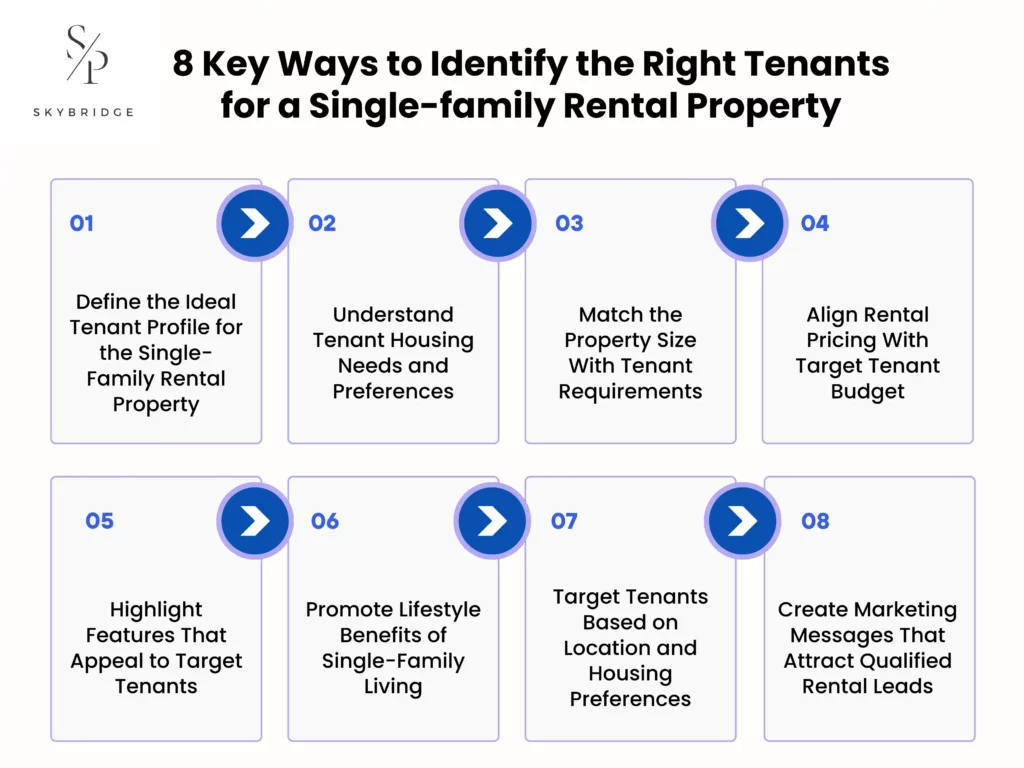
Property owners can identify the right tenants for a single-family rental property by matching the home’s size, price, features, location, and lifestyle benefits with prospective tenants’ housing needs, preferences, budgets, and qualification criteria. This process helps owners determine which renters are a suitable match for the property and focus their marketing on prospects whose housing requirements and rental qualifications align with what the home offers.
8 key ways to identify the right tenants for a single-family rental property are:
- Define the Ideal Tenant Profile for the Single-Family Rental Property
- Understand Tenant Housing Needs and Preferences
- Match the Property Size With Tenant Requirements
- Align Rental Pricing With Target Tenant Budget
- Highlight Features That Appeal to Target Tenants
- Promote Lifestyle Benefits of Single-Family Living
- Target Tenants Based on Location and Housing Preferences
- Create Marketing Messages That Attract Qualified Rental Leads