Rental property maintenance is the ongoing process of keeping a property in safe, functional, and habitable condition for tenants. It involves tasks like appliance servicing, plumbing repairs, electrical and HVAC maintenance, cleaning, landscaping, and regular inspections
Key maintenance types include routine maintenance for regular property upkeep and preventive maintenance to avoid future problems. Emergency maintenance addresses urgent repairs, turnover maintenance prepares the property for new tenants, and corrective maintenance fixes existing issues to ensure proper functionality.
Landlords, tenants, and property managers each play a vital role in handling maintenance responsibilities, ensuring tasks are completed on time, and fostering a positive working relationship among all parties. Effective property maintenance preserves value, enhances tenant comfort, prevents costly repairs through early intervention, and helps landlords attract higher-quality tenants while improving retention.
What Does Rental Property Maintenance Cover?
Rental property maintenance covers tasks such as appliance servicing, plumbing and electrical repairs, HVAC maintenance, flooring and interior surface care, painting, landscaping, cleaning, turnover preparation, and regular inspections. These tasks keep the property safe, functional, and habitable while ensuring tenant comfort, preserving property value, and addressing issues before they become major problems.
The 8 main components of rental property management are:
- Appliance Maintenance and Servicing
Appliance maintenance ensures that essential appliances such as refrigerators, stoves, dishwashers, and washing machines operate efficiently and reliably. Regular servicing prevents unexpected breakdowns, reduces tenant downtime, and extends the lifespan of these appliances, ultimately lowering costly repairs and boosting tenant satisfaction.
Well-maintained appliances run more efficiently, lowering energy bills for both landlords and tenants. Tasks like cleaning refrigerator coils, servicing stoves, and inspecting washers help reduce repair costs while supporting tenant well-being.
- Plumbing and Water Systems
Maintenance of a property’s plumbing and water systems involves ensuring that pipes, faucets, toilets, water heaters, and drainage systems function properly and remain free from leaks or blockages. Regular checks help identify and fix issues early, preventing water damage, mold, and costly repairs.
Fixing leaks, flushing water heaters, and clearing clogged drains improve system performance, ensure reliable access to water, and protect both tenant comfort and the property’s integrity.
- Electrical and HVAC Systems
Proper upkeep of a property’s electrical and HVAC systems ensures that wiring, outlets, circuit breakers, and heating and cooling systems remain safe and efficient. Routine maintenance helps prevent costly repairs, enhances safety, reduces energy costs, and extends system lifespan.
Testing circuit breakers, cleaning HVAC filters, and inspecting heating and cooling systems help prevent failures, reduce fire risks, and improve efficiency while ensuring tenant comfort and optimal energy performance.
- Flooring and Interior Surfaces
Maintaining flooring and interior surfaces involves cleaning, repairing, and replacing floors, walls, and ceilings to keep them safe and visually appealing. Well-maintained surfaces help preserve the property’s appearance, prevent accidents, enhance tenant comfort, and reduce the risk of costly repairs.
Tasks such as cleaning and sealing floors, repainting or patching walls, and replacing damaged flooring help maintain safety, aesthetics, and the overall value of the property, while creating a welcoming and comfortable environment for tenants.
- Painting and Wall Maintenance
Keeping walls in top condition through painting includes repainting walls, ceilings, trim, baseboards, and window frames to protect surfaces and maintain the property’s appearance. Regular painting prevents wear, moisture damage, and minor blemishes from becoming major issues, enhances tenant comfort, and preserves the overall aesthetic appeal of the interior.
Wall maintenance involves repairing cracks, patching holes, and addressing structural or cosmetic damage to ensure long-term durability. Proper upkeep sustains property value, creates a safe and welcoming environment, and typically includes tasks such as filling cracks, sanding, repairing drywall, and repainting patched areas.
- Landscaping and Curb Appeal
Keeping a property’s exterior neat and attractive through landscaping and curb appeal maintenance includes tasks such as maintaining lawns, gardens, walkways, and outdoor spaces, creating a positive first impression for potential tenants. A well-kept exterior enhances property value and creates a welcoming atmosphere.
For instance, a landlord might mow the lawns, trim hedges, plant flowers, clean gutters, and tend to gardens each week. By keeping the exterior well-maintained, the property looks inviting, attracts tenants, and encourages them to stay longer, enhancing both curb appeal and overall tenant satisfaction.
- Cleaning and Turnover Preparation
Deep-cleaning all areas and ensuring that appliances and systems function properly are key components of cleaning and turnover preparation, which are essential for preserving the property’s condition, creating a fresh and comfortable living space, and attracting and retaining tenants.
To prepare a property for new tenants, a landlord or property manager might deep-clean floors and carpets, sanitize kitchens and bathrooms, and check that all appliances and fixtures work properly. These tasks keep the property in excellent condition, create a welcoming space, and help attract and retain tenants.
- Inspections and Walkthroughs
Regularly checking a property for issues or potential maintenance needs falls under inspections and walkthroughs. These checks help identify problems early, prevent costly repairs, and ensure tenant safety. By conducting inspections, landlords can address minor issues before they escalate, keeping the property in good condition and tenants satisfied.
Property managers may bring a maintenance specialist, such as a plumber, electrician, or pest control professional, to inspect for damage or pests, test appliances and systems, and assess the overall condition, helping keep the property safe, functional, and well-maintained.
What Are the Types of Rental Property Maintenance?
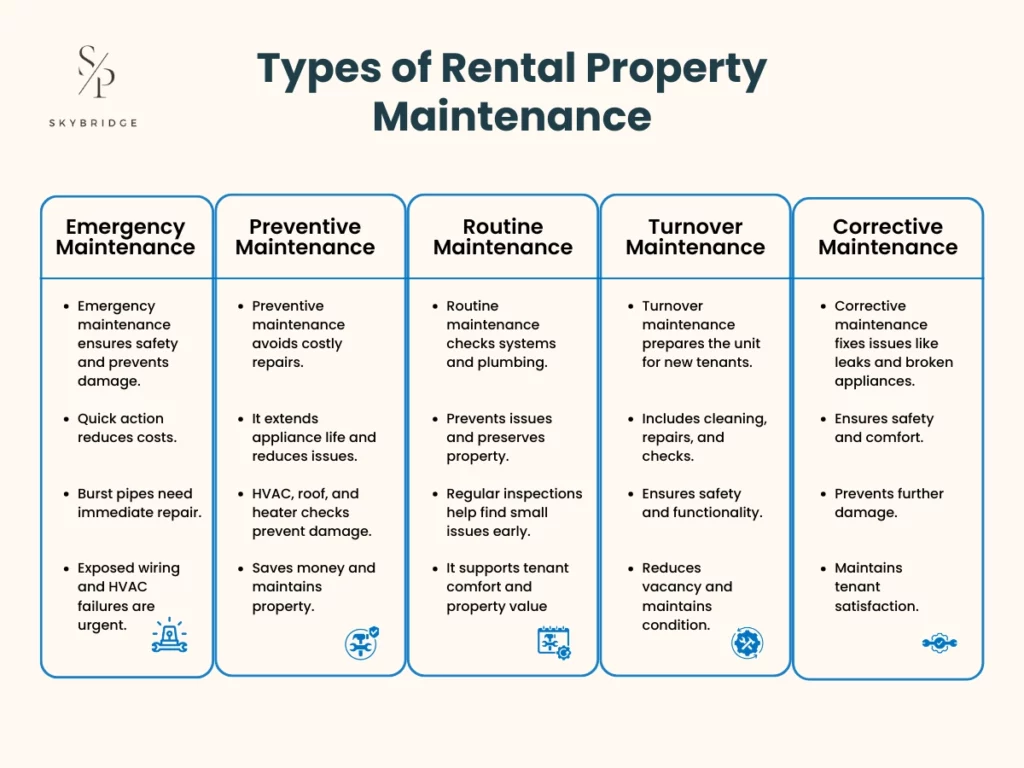
Rental property maintenance can be categorized into emergency, preventive, routine, turnover, and corrective types, each addressing specific needs. Emergency maintenance deals with urgent issues, preventive maintenance involves regular checkups to avoid future problems, routine maintenance ensures ongoing upkeep, turnover maintenance prepares the property for new tenants, and corrective maintenance focuses on fixing existing issues.
The 5 main types of rental property maintenance are:
Emergency Maintenance
Urgent repairs that must be addressed immediately to ensure tenant safety and prevent property damage fall under emergency maintenance. Quick action prevents issues from escalating, reduces repair costs, and minimizes disruptions.
A burst pipe flooding the property is a critical emergency that requires immediate attention. Other urgent issues include exposed wiring or power outages that pose fire risks, and HVAC failures during extreme temperatures that threaten tenant comfort and safety. Prompt emergency maintenance addresses these situations, ensuring a safe living environment while protecting the property from long-term damage.
Preventive Maintenance
Preventive maintenance focuses on routine tasks designed to identify and address potential issues before they result in costly repairs. By taking proactive measures, landlords can extend the life of systems and appliances, reduce the risk of emergencies, and maintain the property’s overall condition.
Regular HVAC filter cleaning prevents airflow problems, roof inspections catch damaged shingles before leaks occur, and servicing water heaters avoids sediment buildup that can shorten their lifespan. These actions help prevent expensive repairs, minimize downtime, and keep the property in excellent condition.
Routine Maintenance
To maintain a rental property through routine maintenance, property managers should regularly test smoke detectors, inspect plumbing for leaks, clean HVAC filters, check electrical systems, and perform general upkeep of floors, walls, and appliances. By addressing small issues early, they can reduce unexpected breakdowns and protect the overall property value.
During a routine property inspection, a maintenance worker tests smoke detectors in each unit to confirm they function properly, checks plumbing under sinks to identify leaks, and cleans HVAC filters to maintain proper airflow. These tasks help keep the property in good condition and support tenant comfort and satisfaction.
Turnover Maintenance
Turnover maintenance involves preparing the property for new tenants after the previous tenants vacate, ensuring it is clean, safe, and functional, and ready for occupancy while minimizing vacancy time. It is crucial for maintaining the property’s appeal and ensuring a smooth transition for both landlords and new tenants.
When a tenant moves out, the property management team deep-cleans carpets and floors, repaints walls, and checks appliances and plumbing systems to ensure they function properly. These steps help prepare the unit for the next tenant and maintain the property’s overall condition.
Corrective Maintenance
Corrective maintenance involves fixing issues that have already occurred, such as broken appliances, plumbing leaks, or electrical problems. It is usually required when a system in the property stops working and needs immediate repair to maintain tenant safety and comfort.
Common situations include repairing appliances, fixing leaking pipes, or replacing faulty electrical wiring to restore proper functionality. Addressing these problems quickly helps prevent further damage to the property and maintains tenant satisfaction.
What Are the Best Practices for Effective Rental Property Maintenance?
Effective rental property maintenance requires regular inspections, quick responses to maintenance requests, detailed recordkeeping, and clear tenant responsibilities. Property owners should also follow safety and legal standards, use property management software to track tasks, and collaborate with experienced property management companies. These practices keep the property in good condition, reduce repair costs, and improve overall tenant satisfaction and retention.
7 best practices for effective rental property maintenance include:
Conduct Regular Property Inspections
Regular property inspections help detect maintenance issues early and reduce the risk of expensive repairs. Landlords should conduct property inspections at least once or twice a year and inspect key areas such as plumbing pipes and faucets for leaks, electrical outlets and switches for faults, HVAC systems for proper operation, and walls, ceilings, floors, doors, and windows for damage or wear.
Routine Inspections maintain a safe and functional living environment, allow timely maintenance planning, extend the lifespan of property systems and fixtures, and give landlords a chance to identify potential improvements or address tenant concerns.
Respond Quickly to Rental Property Maintenance Requests
To maintain a rental property effectively, property managers or landlords should promptly respond to maintenance requests, repair leaky faucets, fix broken appliances, clean and service HVAC systems, inspect plumbing and electrical systems, and perform regular upkeep of floors, walls, and fixtures.
Taking these actions ensures the property remains safe, functional, and comfortable, prevents minor issues from escalating into costly emergencies, enhances tenant satisfaction, reduces vacancies, and preserves the property’s overall value.
Keep Detailed Maintenance Records
Keeping detailed maintenance records means documenting every repair, inspection, and routine upkeep task, including dates, costs, and work performed. This enables property managers to identify recurring issues, track warranties, and confirm that contractors completed their tasks correctly.
Well-organized records simplify budgeting, insurance claims, and legal compliance, offering clear evidence of responsible property management. Over time, consistent documentation helps landlords anticipate problems, prioritize maintenance needs, and protect the property’s value and functionality.
Know What Tenants Are Allowed to Fix
Lease agreements should clearly define tenant responsibilities to prevent misunderstandings. Tenants are generally responsible for basic upkeep, such as yard work, changing light bulbs, and proper use of fixtures. They may handle minor repairs at their own expense, but landlords remain liable for defects affecting habitability.
If a landlord fails to address habitability issues within a reasonable timeframe, typically 30 days, tenants can use “repair and deduct” (Civil Code § 1942) to fix the issue and subtract the cost from rent. Under Civil Code § 1941.2, landlords are not required to fix damage caused by tenants’ neglect or misuse, so the renters must handle those repairs themselves.
Prioritize Safety and Legal Compliance
Ensuring the property meets safety codes and legal requirements protects tenants and helps landlords avoid penalties. Under California Health and Safety Code § 13113.7, landlords must install and maintain approved smoke alarms in rental units and ensure they are operable at the start of a tenancy.
Carbon monoxide detectors are required in applicable units under Health and Safety Code § 17926. Tenants must promptly notify the landlord if an alarm becomes inoperable and allow reasonable access for inspection, repair, or replacement. Meeting these obligations supports habitability standards and reduces legal risk.
Use Property Management Software
Property management software helps streamline maintenance tasks, track repairs, and improve communication with tenants. These platforms organize maintenance records, manage work orders, and automate reminders for routine upkeep, helping landlords handle repairs efficiently and keep documentation organized.
Common tools used by property managers include AppFolio, Buildium, and Yardi Breeze, which offer features such as rent collection, maintenance tracking, tenant communication, and financial reporting. These systems help property managers oversee operations more effectively while improving response times and tenant satisfaction.
Partner With an Experienced Local Property Management Company
An experienced local property management company helps streamline rental upkeep by coordinating inspections, managing repair requests, and working with trusted local vendors who understand service expectations and response times. Their familiarity with local regulations and community standards, including HOA requirements where applicable, helps maintain consistency across all aspects of property care.
As part of their operational support, many of these companies offer structured property maintenance services to handle routine upkeep, emergency repairs, service tracking, and early issue detection. This approach allows property owners to maintain consistent property conditions while reducing the time and effort required for day-to-day maintenance coordination.
Who Handles Rental Property Maintenance Responsibilities?
Landlords, tenants, and property managers each have specific responsibilities regarding rental property maintenance. Understanding these responsibilities helps ensure maintenance tasks are handled on time, prevents confusion, and supports a positive working relationship among all parties.
Landlord
Maintaining the structural integrity of a rental property and meeting health and safety standards are key responsibilities of landlords. This includes overseeing major systems such as plumbing, electrical, and HVAC while ensuring the property complies with applicable local laws and regulations.
Key landlord maintenance responsibilities include:
- Maintaining structural elements such as roofs, walls, windows, and foundations
- Repairing plumbing, electrical, and HVAC systems
- Installing and maintaining smoke alarms and other safety devices
- Addressing habitability issues affecting tenant health or safety
- Responding to maintenance requests within a reasonable timeframe
- Keeping common areas clean and safe
- Following local housing, building, and safety regulations
Tenant
Routine upkeep within a rental unit falls under the tenant’s responsibility. This involves keeping the unit in good condition, using household systems and appliances correctly, and notifying the landlord when repairs or maintenance are needed.
Tenants are generally responsible for the following maintenance tasks:
- Keeping the unit clean and sanitary
- Reporting maintenance issues promptly
- Proper use of plumbing, electrical systems, and appliances
- Handling minor upkeep, such as replacing light bulbs or clearing simple clogs
- Preventing damage caused by misuse or neglect
Property Manager
Property managers handle the day-to-day upkeep of rental properties, ensuring maintenance tasks are organized and addressed promptly. They process maintenance requests, conduct inspections, and coordinate repairs while serving as the main contact for tenants.
Property managers are generally responsible for:
- Receiving and tracking maintenance requests
- Scheduling routine inspections and maintenance
- Coordinating repairs with vendors and contractors
- Communicating with tenants about maintenance issues
- Monitoring that the lease maintenance obligations are followed
- Keeping maintenance records and service documentation organized
How Much Does Rental Property Maintenance Cost?
On average, property maintenance costs are 1% to 4% of the property’s value annually, though this can vary with market conditions, property age, size, and local labor costs. Setting aside a maintenance budget helps property owners manage routine upkeep and unexpected repairs.
Some commonly used guidelines help estimate annual maintenance expenses:
- 1% Rule: Budget about 1% of the property’s value annually for maintenance costs. For example, a $400,000 property may require roughly $4,000 per year to cover routine repairs and upkeep.
- 2% Rule: Older properties or homes with more wear may require about 2% of the property’s value annually. An $800,000 property may require about $16,000 per year in maintenance expenses.
- 5× Rule (1.5x Monthly Rent): The “5× Rule” (or 5% Rule) means budgeting roughly 1.5 times the monthly rent annually, equivalent to about 5% of the property’s gross rental income, to cover repairs, routine maintenance, and unexpected expenses.
- Per-Square-Foot Rule: Estimate maintenance costs at about $1 per square foot annually. For example, a 2,000 sq. ft. property may require about $2,000 per year for general upkeep and repairs.
Estimated Rental Property Maintenance Costs (2026)
| Maintenance Category | Estimated Cost Range |
| Plumbing Repairs | $100 – $300 for minor repairs to $1,500+ for major issues |
| Roof Repairs | $300 – $1500 for minor repairs to $15,000+ for full roof replacement |
| Landscaping | $100 – $500 per visit to $1,500 – $4,000 annually |
| HVAC Maintenance & Repairs | $75 – $150 for routine maintenance to $500 – $2,000+ for repairs |
| Interior Painting | $2 to $6 per square foot to $2,000 – $7,000+, depending on size and materials used |
| Gutter Cleaning | $100 – $300+, depending on size and accessibility |
What Are the Benefits of Rental Property Maintenance?
Rental property maintenance helps preserve property value, prevent costly repairs, and improve tenant satisfaction. Regular upkeep keeps the property in good condition, reduces emergency repair costs, attracts reliable tenants, and supports longer tenancies. Proper maintenance also ensures compliance with housing regulations, helping landlords avoid fines, legal issues, and unnecessary vacancies while supporting long-term profitability.
The 5 main benefits of regular rental property maintenance include:
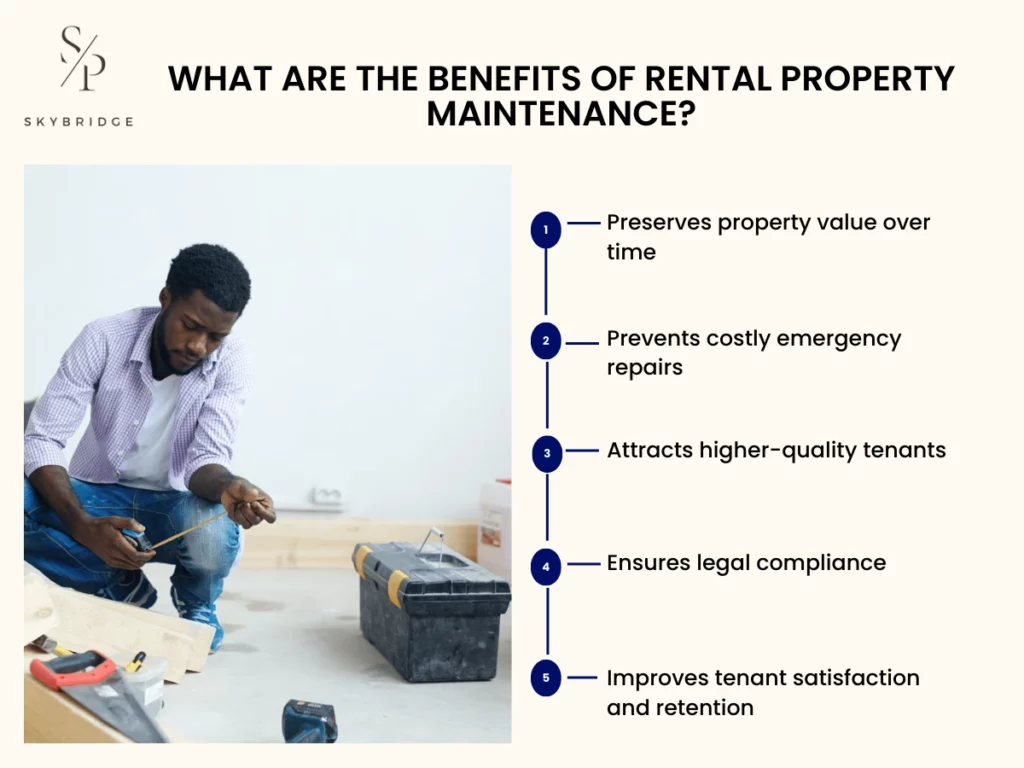
- Preserves property value over time
Property maintenance helps protect and increase property value by lowering the risk of major repair costs through regular preventive care. Routine tasks such as HVAC servicing, roof inspections, and gutter cleaning keep essential systems functioning properly and help prevent long-term damage.
Maintaining roofing, plumbing, HVAC systems, and exterior surfaces helps avoid structural deterioration that can lower a property’s value. Consistent upkeep keeps the property in strong condition and visually appealing, supporting higher market value and long-term investment stability.
- Prevents costly emergency repairs
Routine maintenance helps identify small issues before they develop into larger problems that can damage the property. Tasks such as fixing minor leaks, replacing HVAC filters, and addressing plumbing issues early help prevent structural damage, mold growth, or system failures.
Timely repairs also reduce safety risks for tenants by ensuring essential systems function properly. Addressing maintenance problems promptly helps prevent hazards such as water damage, poor air quality, or electrical issues while reducing costly emergency repairs.
- Attracts higher-quality tenants
Well-maintained properties attract responsible tenants by creating a positive first impression and showing that the property is professionally managed. Regular cleaning, functional updates, and attentive care signal that the landlord values both the home and the tenant’s living environment, which increases renter interest and long-term occupancy.
These tenants are also more likely to pay rent on time, adhere to lease terms, and maintain the property responsibly, reducing turnover and preserving its condition. Moreover, properties that reflect consistent upkeep foster a sense of pride and comfort among tenants, encouraging them to treat the space with greater respect and care.
- Ensures legal compliance
Regular property maintenance ensures compliance with local safety regulations, health codes, and building standards. Proper upkeep, including fire safety systems and carbon monoxide detectors, along with maintaining plumbing and electrical systems, safeguards tenants and landlords from legal liabilities while preventing potential hazards.
Routine inspections and timely repairs create a secure living environment, preserve the property’s condition, and encourage responsible tenant behavior. This proactive approach not only protects occupants but also supports long-term occupancy and fosters a well-maintained, safe home.
- Improves tenant satisfaction and retention
Proper property upkeep enhances tenant satisfaction and retention by fostering trust, promoting safety, and improving the living experience. Timely repairs, well-maintained plumbing and electrical systems, and safety features like fire alarms and carbon monoxide detectors provide tenants with peace of mind.
Attentive upkeep demonstrates that landlords are responsible and responsive, encouraging long-term occupancy and lease renewals. This proactive approach reduces turnover, fosters tenants’ respectful care of the property, and ultimately increases overall property value.
What Are the Common Rental Property Maintenance Challenges?
Common maintenance challenges such as plumbing issues, tenant-caused damage, pest infestations, and electrical or HVAC system failures can pose significant risks to both the property and tenant safety. Addressing these challenges promptly is essential for maintaining the property’s value, ensuring tenant comfort, and avoiding costly repairs.
- Plumbing and Water Damage Problems
Plumbing issues like leaks, burst pipes, or clogged drains can cause water damage, compromise the structure, foster mold growth, endanger tenant safety, and lead to costly repairs. Prompt action is essential to maintain a safe, habitable property and protect its long-term value.
- Tenant-Caused Damage
Damage caused by tenants, whether accidental or intentional, can lead to structural issues, broken fixtures, or neglected systems, posing safety risks and reducing the property’s value. Immediate repair is necessary to maintain safety, habitability, and protect long-term property value.
- Pest Infestations
Infestations of rodents, insects, or other pests can cause significant property damage and health risks for tenants. Pest control and preventive measures are necessary to maintain a safe and hygienic living environment, protecting both tenants and the property.
- Electrical and HVAC System Failures
Malfunctions in electrical systems or HVAC units can disrupt daily living, posing fire risks or compromising tenant comfort. Constant Care is necessary to prevent these systems from failing, as they are crucial for tenant safety and the property’s functionality.