
To rent an apartment, start by setting your budget, estimating move-in costs, choosing the right location, preparing the required documents, and reviewing your credit and rental history. Next, search trusted rental listings, check for rental scams, tour the apartment, confirm costs and lease terms, submit the application, review and sign the lease, and document the move-in condition. Following these steps can help you make informed decisions and move through the rental process with greater confidence.
Securing an apartment also requires understanding what landlords look for during the approval process, including income, credit history, rental track record, and overall application strength. At the same time, avoiding common mistakes such as exceeding your budget, overlooking hidden costs, or ignoring lease details can help prevent unnecessary setbacks. Once you move in, knowing a landlord’s responsibilities for maintenance, legal compliance, and property management can help create a smoother, more successful rental experience.
12 Steps to Rent an Apartment
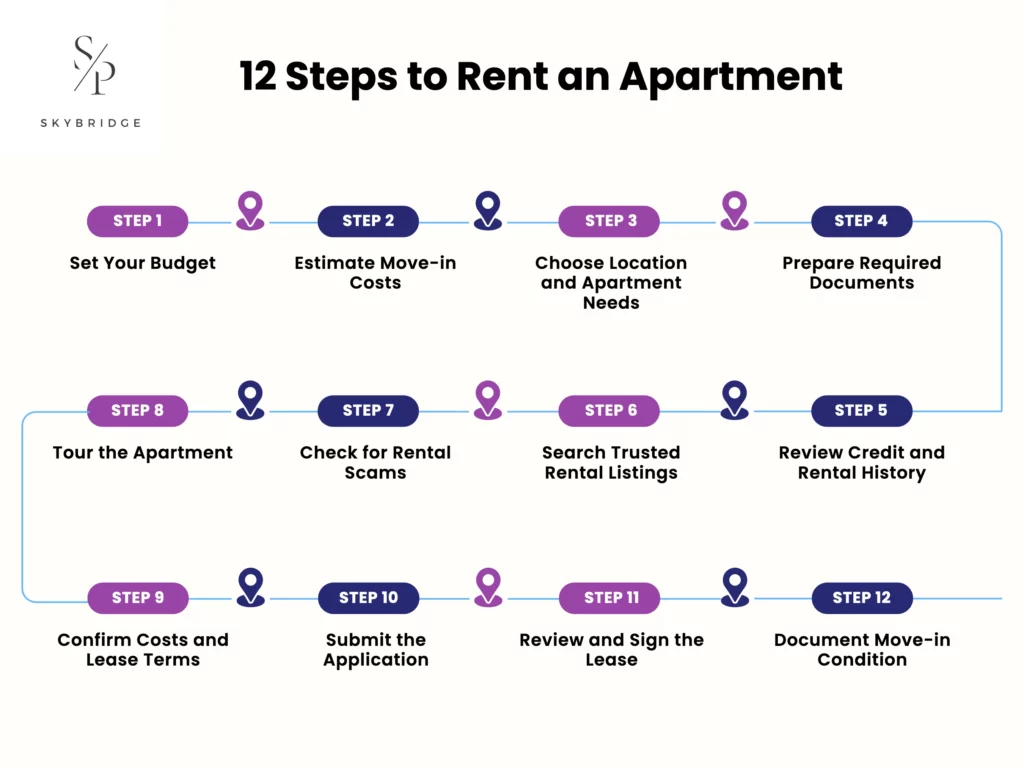
- Set Your Budget: Calculate how much rent you can comfortably afford by applying the 30% income rule and factoring in total housing expenses.
- Estimate Move-in Costs: Add security deposits, move-in fees, application fees, and utility setup costs to determine your upfront budget.
- Choose Location and Apartment Needs: Prioritize your preferred location, space requirements, and essential amenities before comparing rental options.
- Prepare Required Documents: Gather identification, proof of income, rental history, references, and other supporting documents before applying.
- Review Credit and Rental History: Check your credit report and rental history to address any issues that could affect your application approval.
- Search Trusted Rental Listings: Use reputable rental platforms to compare verified listings and identify suitable apartments.
- Check for Rental Scams: Verify listings, landlords, and property details carefully before sharing personal information or sending money.
- Tour the Apartment: Inspect the unit thoroughly and ask questions about costs, lease terms, utilities, and property policies.
- Confirm Costs and Lease Terms: Review all upfront expenses, monthly charges, and lease terms before committing.
- Submit the Application: Complete the rental application accurately and provide supporting documents to support the screening process.
- Review and Sign the Lease: Carefully examine the lease terms, tenant obligations, and property rules before signing the agreement.
- Document Move-in Condition: Record the apartment’s condition with photos, videos, and a checklist to protect your security deposit.
Set Your Budget
Set your apartment budget by limiting rent to no more than 30% of your gross monthly income. Use this guideline as a starting point to determine what you can comfortably afford before searching for an apartment. For example, if you earn $4,000 per month before taxes, aim to keep your monthly rent around $1,200. While this rule helps many renters maintain financial stability, it may be difficult to follow in high-cost markets such as Los Angeles, where rental prices often exceed this benchmark.
Next, calculate your total housing expenses instead of focusing only on rent. Plan for up to 60% of your income to cover necessities, including rent, utilities, and renters’ insurance. Add recurring costs such as electricity, water, gas, and internet service to your budget. Taking this step helps you accurately assess affordability, avoid unexpected expenses, and make informed apartment rental decisions.
Estimate Move-in Costs
Before signing a lease, calculate all move-in costs, so you know exactly how much cash you need upfront. Include a security deposit, move-in fee, application fees, and utility setup costs in your budget. Most landlords require a security deposit equal to one month’s rent to cover potential property damage or unpaid rent. Some apartment communities also charge a move-in fee ranging from 20% to 50% of one month’s rent. Application fees cover rental application processing and background checks, so account for these expenses early in the apartment rental process.
Next, factor in utility setup costs, which may include deposits or activation fees for electricity, water, gas, and internet service. Combined move-in expenses often total 2.5 to 4 times the monthly rent. Calculating these costs in advance helps you build a realistic budget, avoid unexpected financial strain, and move into your apartment with greater confidence.
Choose Location and Apartment Needs
Start by identifying the features that matter most to your daily lifestyle. Decide whether you need a studio, one-bedroom, or larger apartment, and list essential amenities such as parking, in-unit laundry, security features, outdoor space, or pet-friendly policies. For example, renters in Southern California may prioritize apartments near employment centers in Irvine, Anaheim, Long Beach, or San Diego, or choose locations with convenient access to Interstate 5, Interstate 405, or Metrolink stations to shorten daily commutes. Defining these priorities early helps narrow your search and focus on apartments that fit your needs.
After defining your needs, compare locations based on convenience, accessibility, and lifestyle fit. Look at commute times, access to public transit, nearby grocery stores, schools, and other services you use regularly. With these priorities in place, browse rental listings, filter options that match your criteria, and compare apartments side by side. Schedule in-person or virtual tours to evaluate the property’s condition, management quality, and surrounding neighborhood before moving forward with an application.
Prepare Required Documents
Gather all required documents before applying to avoid delays and improve your chances of approval. Most landlords request a government-issued photo ID, such as a driver’s license, passport, or state ID, along with your Social Security number to complete credit and background checks. You will also need proof of income. Employed applicants should prepare two to three recent pay stubs and, in some cases, a recent W-2. Self-employed applicants may need tax returns, 1099 forms, and recent bank statements, while new employees can provide an official offer letter showing their salary and start date.
Next, organize your rental history, including contact information for previous landlords and one or two personal or professional references. Keep a recent credit report and two to three months of bank statements available to demonstrate financial stability. If you have pets, prepare breed, size, and vaccination records, and be ready to provide proof of renter’s insurance if required. Having these documents ready helps streamline the application process and strengthens your rental application.
Review Credit and Rental History
Most landlords review credit and rental history to assess whether an applicant can reliably pay rent and meet lease obligations. During the screening process, they often examine credit reports, payment history, rental history, and eviction records to evaluate financial responsibility and past rental behavior. Many property owners prefer applicants with credit scores above 600, although approval standards vary by property and management company. Reviewing these records before applying can help identify potential issues and give you time to correct inaccuracies or prepare explanations.
If your credit history is not perfect, focus on other factors that demonstrate reliability. Stable employment, a history of on-time payments, and positive references from previous landlords can strengthen your application and improve your chances of approval. Taking these steps before submitting a rental application can help you present a stronger tenant profile and avoid surprises during the screening process.
Search Trusted Rental Listings
Start your apartment search by using trusted rental platforms to find verified listings and reduce the risk of scams. These websites make it easier to compare apartments, review property details, and complete important rental tasks online. Compare listings across multiple platforms and verify property information before applying to identify legitimate rental opportunities and make informed rental decisions.
- Apartments.com: Offers a large inventory of apartments, condos, and townhomes, along with advanced filters for price, amenities, and location. The platform also supports online applications and digital lease signing.
- Rent.com: Provides detailed search tools, online applications, and rent payment features that can help simplify the apartment rental process.
- Trulia.com: Features neighborhood insights, interactive maps, and customizable search options that help renters evaluate both the property and the surrounding area. Many listings also support online applications and digital lease signing.
Check for Rental Scams
Stay alert for rental scam warning signs, especially when searching for apartments online or from another location. Listings with unusually low rent prices, requests for wire transfers, or conflicting property details often indicate fraudulent activity. Fake rental advertisements also frequently appear on social media platforms and classified websites, making it important to verify every listing before moving forward.
Protect yourself by confirming that both the property and the landlord are legitimate before sharing personal information or sending money. Compare listings across trusted rental platforms, review photos carefully, and check that property details remain consistent. Whenever possible, schedule an in-person tour or have a trusted person visit the apartment on your behalf. Taking these precautions can help you avoid common rental scams, protect your finances, and focus on legitimate rental opportunities that meet your needs.
Tour the Apartment
Schedule an apartment tour in advance, preferably by calling the leasing office, so you have enough time to thoroughly evaluate the property. Use the visit to ask important questions about monthly rent, lease terms, included utilities, pet policies, and guest restrictions. Gathering this information early helps you understand the total cost of renting and any rules that may affect your living experience.
During the tour, inspect the apartment carefully rather than focusing only on appearance. Check floors, walls, ceilings, windows, and doors for signs of damage, wear, or maintenance concerns. Make note of any issues and ask whether repairs will be completed before the move-in date. Taking notes and comparing observations across multiple properties can help you evaluate your options objectively and choose an apartment that best fits your needs, budget, and expectations.
Confirm Costs and Lease Terms
Before signing a lease, confirm every cost associated with the apartment so you can budget accurately and avoid unexpected expenses. Most rentals require four upfront payments, including a security deposit, the first month’s rent, a move-in fee, and an application fee. Look beyond the advertised rent and account for ongoing expenses such as utilities, parking fees, maintenance charges, and amenity or late-payment fees. Understanding the full cost of renting can help you avoid financial surprises after moving in.
Carefully review the lease agreement and verify the rent amount, payment schedule, lease duration, and renewal options. Determine whether the agreement is fixed-term or month-to-month, as month-to-month leases often cost 5% to 20% more. Also, review policies related to landlord entry notices, subletting, pet ownership, and occupancy requirements. Clarifying these details before signing helps you understand your financial obligations, tenant responsibilities, and lease terms with confidence.
Submit the Application
Submit your rental application as soon as you find an apartment that matches your needs. The application helps landlords and property managers assess your creditworthiness and determine whether you can reliably pay rent. Most applications require personal information, including your name, current address, phone number, email address, and proof of income. Take time to verify that all information is accurate and complete before submitting the form.
After completing the application and paying the required fee, expect the landlord to conduct credit and background checks as part of the screening process. Keep supporting documents ready, such as recent pay stubs, bank statements, or employment verification, to confirm your financial stability. Some landlords may also request references from previous landlords or employers. Respond promptly to any follow-up requests to help keep the approval process moving smoothly and improve your chances of securing the apartment.
Review and Sign the Lease
Before signing a lease, verify that you meet the minimum age requirement of 18 and take time to understand the legal obligations outlined in the agreement. A lease is a legally binding contract that defines the rights and responsibilities of both the tenant and landlord. Reviewing the document carefully before signing can help protect your financial and legal interests throughout the tenancy.
Focus on key terms such as rent payments, lease duration, subletting rules, and emergency repair procedures. Review clauses that explain responsibility for property damage, permitted renovations, pet policies, parking arrangements, and utility obligations. Look for any restrictions, fees, or conditions that could affect your living experience. If any section is unclear, ask the landlord for clarification before signing. Understanding these terms in advance can help prevent misunderstandings, reduce future disputes, and ensure you enter the lease with confidence.
Document Move-in Condition
Document the apartment’s condition as soon as you move in to create an accurate record and protect yourself from being held responsible for pre-existing damage. Schedule a joint inspection with the landlord or property manager at or around the move-in date and use a detailed checklist to record any concerns. Inspect key areas such as floors, walls, ceilings, doors, windows, plumbing, HVAC systems, appliances, lights, and smoke detectors. Take clear photos or videos to support the written documentation.
Complete this process promptly to capture the unit’s condition before daily use begins. The goal is to identify existing issues, distinguish them from normal wear and tear, and reduce the risk of security deposit disputes at move-out. Keep copies of the checklist, photos, and inspection records throughout your lease. Maintaining organized documentation helps protect your interests and provides reliable evidence if questions arise later.
What Factors Affect Tenants’ Ability to Rent an Apartment?
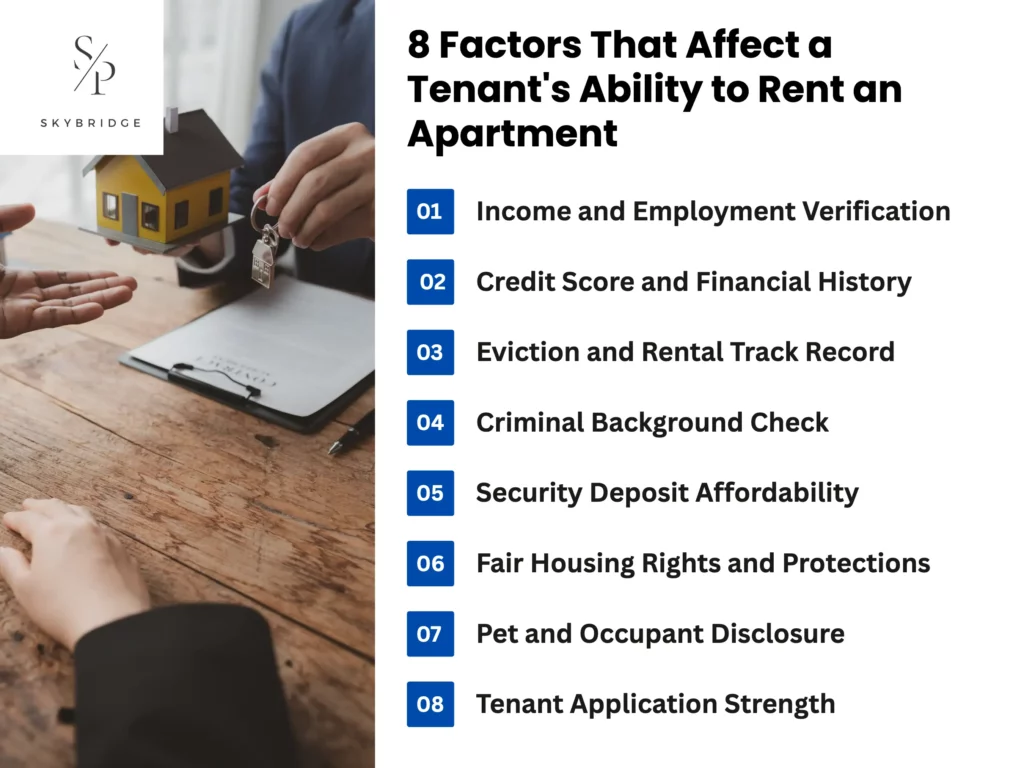
The factors that affect a tenant’s ability to rent an apartment include income and employment verification, credit score and financial history, eviction and rental track record, and criminal background checks. Landlords also consider the affordability of the security deposit, fair housing protections, pet and occupant disclosures, and overall application strength. Together, these factors help assess financial stability, rental reliability, and readiness for tenancy, all of which can influence rental approval decisions.
8 Factors That Affect a Tenant’s Ability to Rent an Apartment
Income and Employment Verification: Demonstrate consistent income with recent pay stubs, employment letters, or tax returns to verify your ability to pay rent.
Credit Score and Financial History: Maintain a strong credit profile and positive payment history to improve rental approval prospects.
Eviction and Rental Track Record: Build a reliable rental history through on-time payments, positive landlord references, and responsible tenancy.
Criminal Background Check: Understand screening requirements and address any relevant criminal history that may affect eligibility.
Security Deposit Affordability: Prepare funds for the required security deposit to demonstrate financial readiness for the lease.
Fair Housing Rights and Protections: Understand your legal protections against housing discrimination throughout the rental process.
Pet and Occupant Disclosure: Provide complete information about all pets and occupants to ensure lease compliance and accurate tenancy records.
Tenant Application Strength: Submit a complete, well-organized application with strong references and prompt communication to increase approval chances.
- Income and Employment Verification
Income and employment verification directly affect rental approval because they demonstrate whether you can consistently afford the apartment. Most property managers expect your gross monthly income to be at least three times the monthly rent. Applicants typically provide recent pay stubs, W-2 forms, employment verification letters, or bank statements to verify earnings. Preparing accurate, up-to-date income documents before applying can streamline the approval process, reduce delays, and strengthen your rental application.
- Credit Score and Financial History
Your credit score and financial history influence how landlords evaluate your ability to meet monthly rent obligations. During the screening process, they review your credit score, payment history, and outstanding debts to assess financial responsibility. Many landlords prefer applicants with credit scores of 600 or higher, although requirements vary. Reviewing your credit report beforehand allows you to correct errors, address financial concerns, and present a stronger rental application.
- Eviction and Rental Track Record
A positive rental track record can significantly improve your chances of securing an apartment. Landlords review previous addresses, landlord references, rent payment history, and eviction records to evaluate how responsibly you fulfilled past lease obligations. Consistent on-time payments and favorable landlord references strengthen your application, while prior evictions or unresolved rental disputes may raise concerns. Providing accurate rental information and reliable references helps build trust during the screening process.
- Criminal Background Check
Criminal background checks can affect rental eligibility by helping landlords evaluate potential safety and liability risks. Screening commonly focuses on serious offenses, including violent crimes, felonies, and sex-related offenses, while older or minor offenses may carry less weight. In many jurisdictions, legal restrictions govern how criminal history can be considered during tenant screening. Understanding these requirements and providing honest information when appropriate can help prevent unnecessary complications.
- Security Deposit Affordability
Your ability to pay the required security deposit can affect whether the leasing process proceeds without delay. Most landlords require a security deposit equal to one or two months’ rent to protect against property damage or unpaid lease obligations. Paying the deposit demonstrates financial readiness and commitment to the rental agreement. Confirming the required amount early and setting aside the necessary funds can help streamline lease approval.
- Fair Housing Rights and Protections
Understanding fair housing rights helps ensure you receive equal treatment throughout the rental application process. Federal law protects applicants from discrimination based on race, color, religion, sex, national origin, disability, and familial status. California extends these protections to additional characteristics, including sexual orientation, gender identity, marital status, and source of income. Knowing these rights helps you recognize unlawful practices and supports fair access to housing opportunities.
- Pet and Occupant Disclosure
Providing accurate pet and occupant information helps prevent lease violations and delays during the approval process. Landlords typically request details about every resident, along with the number, type, and breed of any pets, to meet occupancy rules, insurance requirements, and community policies. Complete disclosure ensures the lease accurately reflects who will live in the apartment. Omitting this information can lead to tenancy issues or violations after move-in.
- Tenant Application Strength
The overall quality of your rental application can influence how landlords compare you with other applicants. A strong application includes complete documentation, reliable references, and prompt communication throughout the approval process. These elements demonstrate organization, responsibility, and commitment to meeting lease obligations. Carefully reviewing your paperwork, submitting all requested documents, and responding promptly to landlord requests can strengthen your application and increase your chances of approval.
What Common Mistakes Should Tenants Avoid When Renting an Apartment?
The common mistakes tenants should avoid when renting an apartment are exceeding the 30% income rule, underestimating hidden costs, signing a lease without reading the fine print, failing to document pre-existing damage, skipping renters’ insurance, renting without an in-person walkthrough, falling for rental scams, and relying on verbal agreements. Understanding these risks and taking a careful, informed approach can help protect your finances, strengthen your rental experience, and support a smoother move-in process.
8 Common Mistakes Tenants Should Avoid When Renting an Apartment
Exceeding the 30% Income Rule on Base Rent: Keep rent within a manageable percentage of your income to maintain affordability and avoid financial strain.
Underestimating Hidden Costs Like Utilities, Parking, and Pet Fees: Account for all additional housing expenses to create a realistic rental budget and prevent unexpected costs.
Signing the Lease Without Reading Fine Print and Policies: Review lease terms carefully to understand your obligations, restrictions, and renewal conditions.
Failing to Document Pre-Existing Damage With Photos and Videos: Record the apartment’s condition before move-in to protect your security deposit and prevent future disputes.
Skipping Renters Insurance Coverage: Maintain renters insurance to safeguard your belongings and reduce financial risk from covered losses.
Renting Without an In-Person Property Walkthrough: Inspect the apartment firsthand or through a verified tour to identify issues and confirm legitimacy.
Falling for Rental Listing Scams: Verify listings, landlords, and payment requests carefully to avoid fraud and protect your personal information.
Relying on Verbal Agreements Instead of Written Communication: Keep rental terms and commitments in writing to ensure clarity and strengthen legal protection.
- Exceeding the 30% Income Rule on Base Rent
Choosing an apartment that exceeds your budget can create long-term financial strain and make it harder to manage other essential expenses. The 30% rule recommends keeping monthly rent at or below 30% of gross income. For example, a renter earning $3,000 per month should spend no more than $900 on rent, while someone earning $4,000 should target about $1,200, according to NerdWallet. Spending more than 30% is considered rent-burdened, while spending more than 50% is considered severely rent-burdened. Although this guideline does not account for taxes or deductions, many landlords also use the 3x rent rule when evaluating affordability.
- Underestimating Hidden Costs Like Utilities, Parking, and Pet Fees
Looking only at the advertised rent can lead to budgeting mistakes and unexpected expenses. Additional costs often include utilities such as electricity, gas, water, and sewage, as well as trash collection, parking fees, pet-related charges, application fees, security deposits, and renters’ insurance. These expenses are frequently excluded from advertised rent but can significantly increase the total cost of renting. Request a full breakdown of charges before signing a lease to avoid financial surprises.
- Signing the Lease Without Reading Fine Print and Policies
Overlooking lease details can result in unexpected obligations and avoidable disputes. Review the lease duration, renewal terms, and penalties for early termination so you understand your commitment and available options. You should also confirm maintenance responsibilities and rules regarding guests or subletting, as these policies affect your tenancy. Understanding these provisions before signing helps protect your rights, prevent misunderstandings, and reduce the risk of lease violations.
- Failing to Document Pre-Existing Damage With Photos and Videos
Missing existing damage before move-in can make it difficult to protect your security deposit later. Inspect walls, floors, appliances, and fixtures for visible wear or damage and record any issues with clear photos and videos. Creating timestamped evidence and a written list of concerns establishes a reliable record of the apartment’s condition. Sharing this documentation with the landlord can help prevent disputes and protect you from being held responsible for pre-existing damage.
- Skipping Renters Insurance Coverage
Leaving your belongings uninsured can expose you to significant financial loss in the event of an unexpected loss. Renters insurance typically covers theft, fire, certain types of property damage, and liability claims involving guests. Many landlords require proof of coverage before move-in, while others strongly recommend it. Maintaining a policy helps protect personal property, reduces financial risk, and provides added peace of mind throughout your tenancy.
- Renting Without an In-Person Property Walkthrough
Renting an apartment without seeing it firsthand increases the risk of overlooking problems or encountering fraudulent listings. Warning signs include limited photos, refusal to provide virtual tours, or requests for payment before any viewing occurs. Positive indicators include verified listings, transparent communication, and detailed virtual walkthroughs. Before committing, ask about the apartment’s condition, recent repairs, neighborhood safety, and nearby amenities. Taking these precautions helps verify legitimacy and supports a safer rental decision.
- Falling for Rental Listing Scams
Rental listing scams can lead to financial loss, identity theft, and unnecessary delays in your apartment search. Common tactics include fake listings, unusually low rent prices, requests for wire transfers, and pressure to act quickly. Warning signs may include landlords who refuse property tours or provide inconsistent information. To reduce risk, verify listings through reputable platforms, confirm the landlord’s identity, and avoid sending money before viewing the apartment.
- Relying on Verbal Agreements Instead of Written Communication
Relying on verbal agreements can create confusion and leave important rental terms open to dispute. Disagreements often arise over rent amounts, repair responsibilities, lease duration, or promised improvements when there is no written record. A written lease clearly outlines the obligations and expectations of both the tenant and landlord, making terms easier to understand and enforce. Keeping agreements in writing helps prevent misunderstandings and provides stronger legal protection if issues arise later.
What Are a Landlord’s Responsibilities After a Tenant Moves In?
The landlord’s responsibilities after a tenant moves in include collecting rent and maintaining payment records, handling maintenance requests, conducting property inspections, and managing lease renewals or termination notices. They must also comply with rental laws, address tenant concerns professionally, accurately return security deposits, and oversee daily property operations as needed. These responsibilities help maintain a safe, compliant, and well-managed rental property throughout the tenancy.
Here is the list of the landlord’s responsibilities after a tenant moves in:
- Collecting Rent on Time and Managing Payment Records
Consistent rent collection helps landlords cover property expenses while encouraging tenants to maintain a positive payment history. Landlords should collect rent on schedule and keep accurate records of every transaction to reduce the risk of disputes over missed or late payments. Best practices include using digital payment systems that automatically track payments or providing receipts for cash transactions. Clear documentation supports transparency, accountability, and smooth lease management.
- Handling Maintenance and Repair Requests Promptly
A landlord should respond to maintenance and repair requests promptly to keep the rental property safe, functional, and legally habitable. Common repairs include plumbing leaks, HVAC malfunctions, and electrical issues that can disrupt daily living if left unresolved. Timely repairs help prevent costly property damage, improve tenant satisfaction, and demonstrate responsible property management throughout the lease.
- Conducting Regular Property Inspections
Regular inspections help landlords identify potential problems before they become costly repairs. These inspections are often conducted annually or semi-annually and may include checking for leaks, testing locks and smoke detectors, inspecting appliances, identifying safety hazards, and verifying authorized occupants. Under California Civil Code Section 1954, landlords generally must provide at least 24 hours’ written notice before entering a rental unit for inspections, except in emergencies. Inspection costs commonly range from about $50 per unit for properties with one to three units and $75 per unit for larger properties.
- Managing Lease Renewals and Termination Notices
Accurately returning security deposits helps landlords remain compliant and avoid unnecessary disputes after move-out. Deposits should generally be returned within 14 days, and any deductions must include a written, itemized statement. Common deductions include unpaid rent, excessive cleaning costs, or repairs for damage beyond normal wear and tear. Following these requirements promotes transparency and protects both landlords and tenants.
- Ensuring Legal Compliance With Local Rental Laws
Following local, state, and federal rental laws is a fundamental responsibility of landlords. This includes maintaining habitability standards, complying with fair housing regulations, meeting safety code requirements, and ensuring that lease agreements comply with legal guidelines. In Greater Los Angeles, landlords may also need to comply with rent control measures, local rent stabilization ordinances, and specific eviction procedures. Staying informed about legal obligations helps protect tenant rights and reduce regulatory risks.
- Handling Tenant Disputes and Complaints Professionally
Professional communication plays a key role in resolving tenant disputes and complaints effectively. Landlords should listen carefully, respond respectfully, and document every complaint and action taken. Common issues include maintenance delays, noise complaints, and lease-related disagreements. When needed, disputes should progress from direct communication to written notices, mediation, or legal action to achieve a fair resolution.
- Managing Security Deposit Returns Accurately
Accurately returning security deposits helps landlords remain compliant and avoid unnecessary disputes. Deposits should generally be returned within 14 days after move-out, and any deductions must be accompanied by a written, itemized statement. Common deductions include unpaid rent, excessive cleaning costs, or repairs for damage beyond normal wear and tear. Following these procedures promotes transparency, protects tenant rights, and ensures a smoother move-out process.
- Partnering With a Property Manager for Efficient Day-To-Day Operations
Hiring a property manager can help landlords manage daily operations more efficiently, especially when overseeing multiple rental units. Property managers commonly handle rent collection, maintenance coordination, tenant communication, and lease administration. They may also assist with legal compliance and resolving tenant concerns. For landlords seeking ongoing support, a local property manager can streamline operations, save time, reduce administrative burdens, and help maintain professional property management.