

You can know if your rental application is denied by calling or emailing the landlord, noticing a lack of response, seeing no formal denial notice, receiving an Adverse Action Notice, or seeing the listing being removed or marked as rented.
Common reasons behind a denial include low credit score, insufficient income, criminal history, past evictions, incomplete documentation, or information found during screening. Pet restrictions, too many occupants, or inconsistencies in the application can also lead a landlord to choose another applicant.
If you find yourself in this situation, it is important to take proactive steps, such as reaching out to the landlord or property manager to request clarification on your application status. Asking for feedback will provide valuable insights, whether it is for applying to other properties or improving your application for future opportunities.
How Landlords Typically Notify Applicants of Denial
Landlords typically notify applicants of a denial through an email, a formal letter, or an adverse action notice within 2 to 3 business days. In some cases, they may not notify applicants of their denial at all, choosing to stay silent instead.
An email is convenient for quick communication and often includes the reason, while a formal letter provides a written record of the outcome. In cases where the rejection occurs due to factors like credit history or background checks, an adverse action notice is often required by law. These denial notifications ensure transparency and help applicants understand why the application was not approved.
If no formal response is received after 2 to 3 days, it is important to follow up with the landlord or property manager to clarify the status of your application.
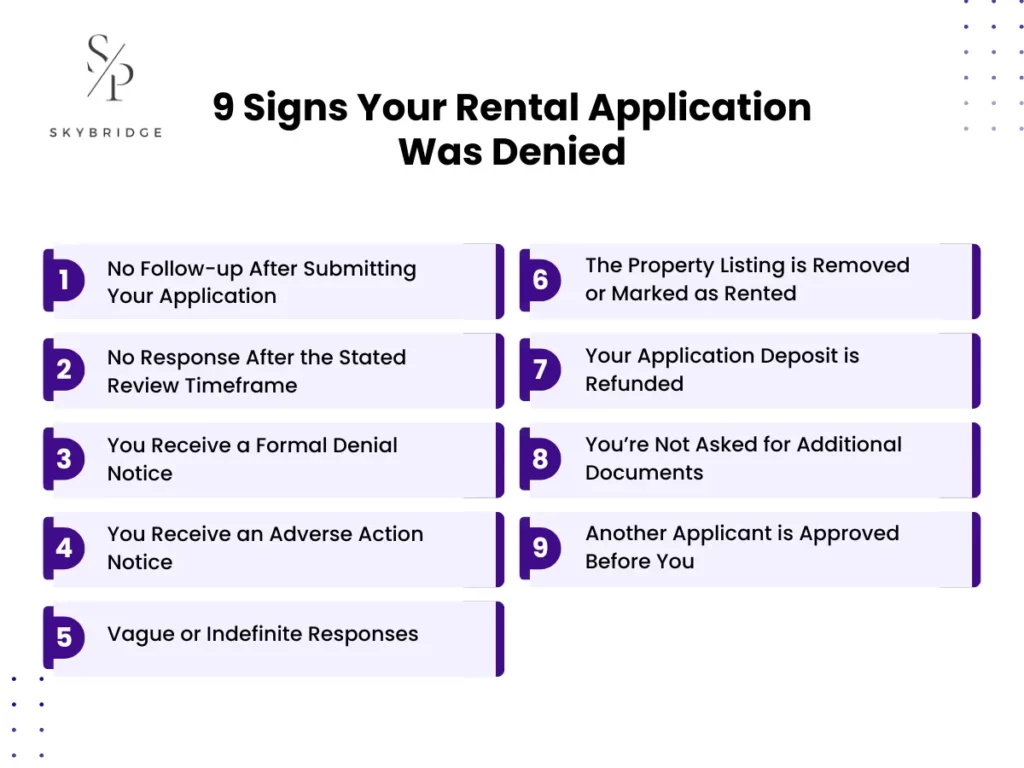
9 Signs Your Rental Application Was Denied
Signs such as a lack of response, the listing being removed or marked as rented, receiving a formal denial notice, or receiving an Adverse Action Notice indicate that your rental application has been denied. These usually mean the landlord has selected another applicant, and that your application is no longer under review.
No Follow-up After Submitting Your Application
If you submit your application and do not receive any follow-up or updates even after 3 business days, it is a strong indicator that your application was unsuccessful. Landlords or property managers usually contact applicants to either schedule a viewing, request additional documents, or provide updates on the review process. However, a lack of communication could suggest that the landlord has already made a decision regarding your application, and it may have been rejected.
If there is still no communication after a reasonable waiting period, reach out to the landlord or property manager to know your application status. Doing this helps you understand the denial reason, so you can improve your profile for future rental applications.
No Response After the Stated Review Timeframe
Not receiving a response within 2 to 3 business days can indicate that the landlord has denied your application. Delays beyond this period often suggest that the landlord has either moved on to other applicants or finalized a decision regarding your application. However, delays can also occur on the landlord’s end due to other circumstances, so you may end up waiting for up to a week before you receive a response.
It is advisable to follow up with the landlord or property manager to confirm your application status if the review deadline has passed without an update. If you are unable to reach them through calls or emails, or if your attempts are ignored, it is best to begin applying to other properties.
You Receive a Formal Denial Notice
Receiving a formal denial notice via email or a letter is a clear sign that your rental application has been rejected. This notice typically includes a reason for the denial and may provide details on next steps or alternatives, such as how to improve your application for future rentals. While there is no single deadline requirement for sending a denial notice, it may take a week or even longer for the landlord to issue it.
If you receive this formal notice, it is best to start applying to other properties. You may also seek clarification if the reasons are unclear or if you want more information on how to strengthen future applications.
You Receive an Adverse Action Notice
An adverse action notice is sent when your rental application is denied due to specific reasons, such as a poor credit score, criminal background, or eviction history, or a high debt-to-income ratio. For example, if your credit report reveals a low score or a past eviction, the landlord may decide to reject your application. This notice is a legal requirement, and it informs you that the landlord has taken negative action based on the information found during the screening process.
If you receive this notice, you must review the details and check your credit report or background to ensure the information is accurate. You may also dispute the notice by contacting the credit reporting agency (CRA) or screening agency, which will resolve it within 30 days.
Vague or Indefinite Responses
When landlords provide vague responses like “we are still reviewing” or “we have not decided yet,” it may indicate that your application is being overlooked or that you are no longer being considered. These types of responses lack a clear timeline or commitment, leaving you uncertain about your application’s status. If you continue to receive unclear answers without a specific decision or timeframe, it may suggest that your application has been unsuccessful.
Under Fair Housing laws, if you believe your denial is based on the information in a screening report, you have the right to know which company provided that report. This allows you to review the report and dispute any errors.
The Property Listing is Removed or Marked as Rented
If the rental listing you applied for is suddenly removed or marked as “rented,” it may be a sign that the landlord has chosen another applicant. This typically happens once a lease agreement is signed with a new tenant who was seen as a more favorable fit than you. Applicants should check the listing status frequently to stay updated, and they should follow up with the landlord if they see that the listing has been removed or marked as rented to directly confirm their application status.
Your Application Deposit is Refunded
Getting a refund of your application deposit is a clear signal that your rental application has been denied. Landlords typically do not issue a refund until they have made a decision, especially if they plan to move forward with your application. So a refund generally indicates that they have selected another applicant or determined that your application does not meet the necessary criteria.
Applicants should contact the landlord to confirm whether their application was officially rejected and to understand the reason for the decision, which will help guide their next steps.
You’re Not Asked for Additional Documents
If you are not asked for any additional documentation after submitting your rental application, it may suggest that the landlord is not interested in accepting your application. Landlords generally request further documents such as proof of income, references, or identification to complete the review process. The absence of these requests can indicate that a decision has already been made.
To avoid unnecessary delays, applicants should ask the landlord beforehand if any additional documents are required. This ensures that all necessary information to accurately process the application has been provided.
Another Applicant is Approved Before You
Another applicant being approved before you is a strong sign that your application has been rejected. Some landlords make decisions quickly, and if they find a suitable candidate, they may approve them before reviewing other applications fully. If you learn that another tenant has been approved before you receive a response, it most likely means that your application was not successful.
In certain cases, a landlord may still review your application if your qualifications match or exceed their criteria. They are permitted to move forward with a different applicant if a contract with the previously approved applicant has not been signed yet, which means there may still be an opportunity for reconsideration.
What Are the Common Reasons for Your Rental Application Denial?
Rental applications are generally denied because of low credit scores, insufficient income, repeated past evictions, or criminal history found during the screening process. Understanding the most common causes of denial can help you identify potential gaps in your application and address them before applying.
The 10 most common reasons for rental application denial are:
- Poor Credit Score: A credit score under 600 in an application is viewed as risky because it signals inconsistent or poor financial management, while scores above 700 are generally seen as favorable by landlords.
- Insufficient Income: Landlords require applicants to have income that meets a certain threshold to ensure they can afford the rent. As a general rule of thumb, rent cost should be no more than 30% of your monthly income.
- Past Evictions: A history of evictions can signal that you may not pay rent on time or adhere to agreements. Even a single past eviction can harm your chances of approval because evictions cause significant financial losses for property owners.
- Weak References: References that describe late rent payment, property damage, or lease violations can reduce an applicant’s chances, since landlords rely on past behavior to predict how reliable and responsible you are as a renter.
- Incomplete Documentation: Failing to provide necessary documents like pay slips, bank statements, identification, or references can delay or stop the review process entirely, leading to a denial.
- Criminal History: Serious violent or drug-related offenses are major red flags for many landlords, while minor offenses like underage DUI and traffic violations from long ago are often viewed more leniently.
- Pets: Landlords are allowed to reject applicants with pets to minimize the risks of property damage, noise complaints, insurance limitations, or allergies. However, under the Fair Housing Act, they can not refuse service animals or emotional support animals.
- Debt-to-Income Ratio: A high debt-to-income ratio signals that you may struggle to pay rent. Ratios under 36% improve approval chances since these are seen positively.
- Falsified Information on Application: Providing partial or false information, such as inflated income, fake employment, altered bank statements, or inaccurate rental history, can result in immediate rejection.
- Frequent Moving: A pattern of moving frequently within short periods suggests instability, criminal activities, or potential issues with lease compliance, which may make landlords hesitant to approve your application.
Under the Fair Housing Act, landlords cannot deny an applicant based on disability, race, national origin, religion, sex, or family status. These categories are legally protected, and any denial based on these characteristics is unlawful. Tenants who believe discrimination played a role in their denial can file a complaint with the U.S. Department of Housing and Urban Development (HUD) or their local fair housing agency.
What to Do After Your Rental Application Is Denied?
After your rental application is denied, reach out to the landlord for the specific reason behind the rejection, provide stronger financial documents and references, review your credit report for any errors, and consider offering a larger security deposit. Taking these steps can help address any concerns and improve your profile.
Even after making these adjustments, if your application is denied, identify the reasons behind the decision so you can take proactive measures to strengthen your next application. Addressing any remaining issues, such as financial gaps, documentation problems, or credit concerns, can greatly enhance your chances of success in future applications. By proactively fixing these areas, you will be in a stronger position when applying for your next rental.